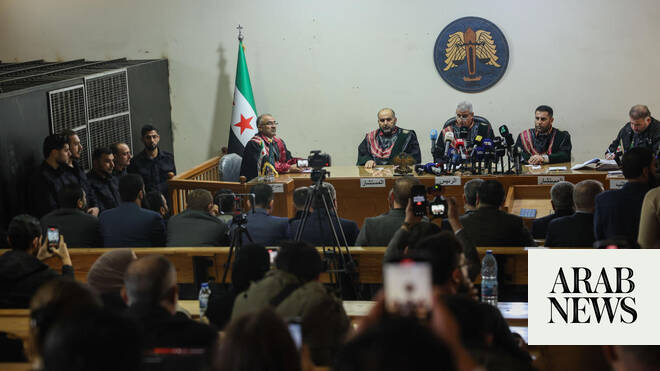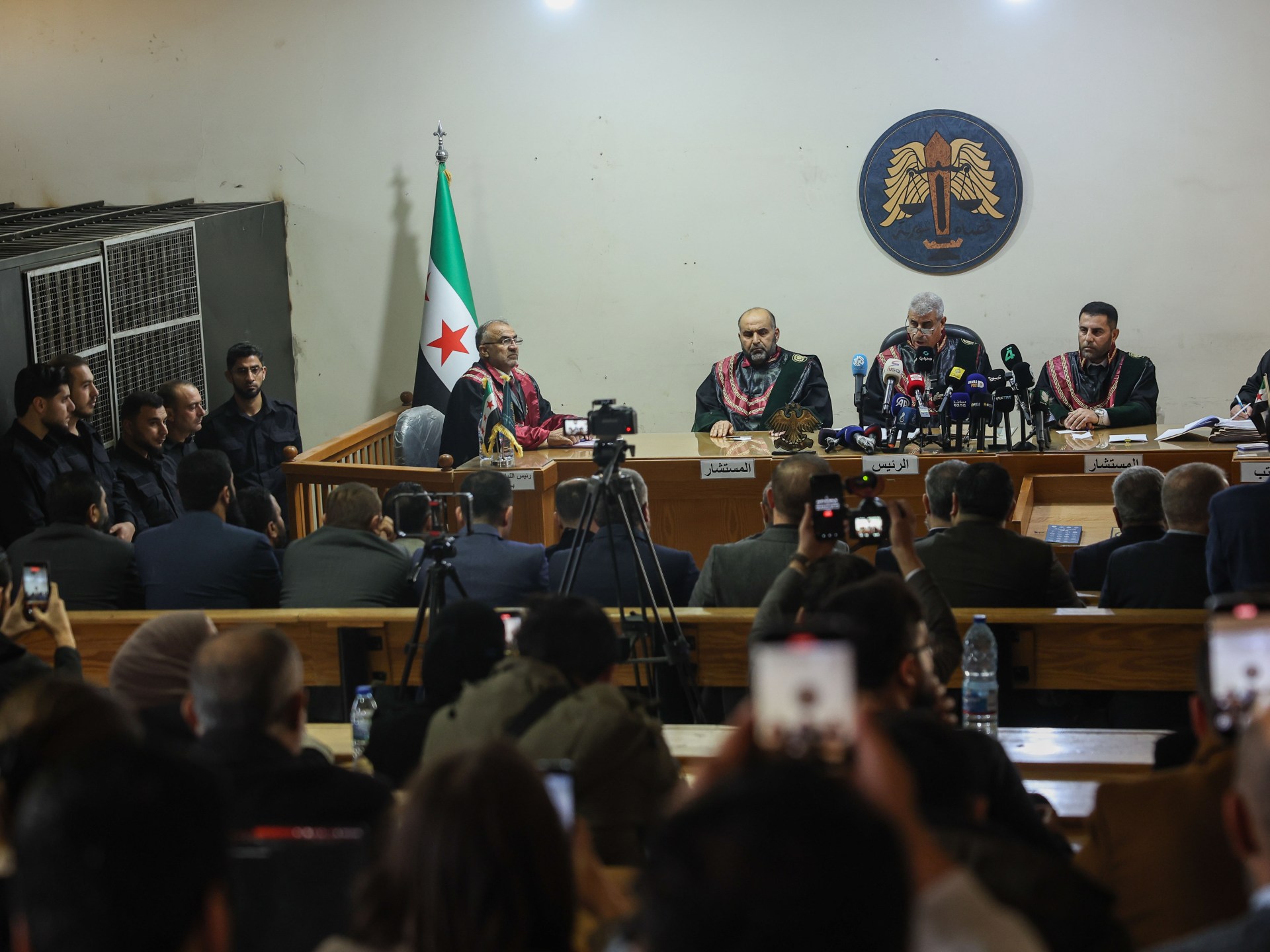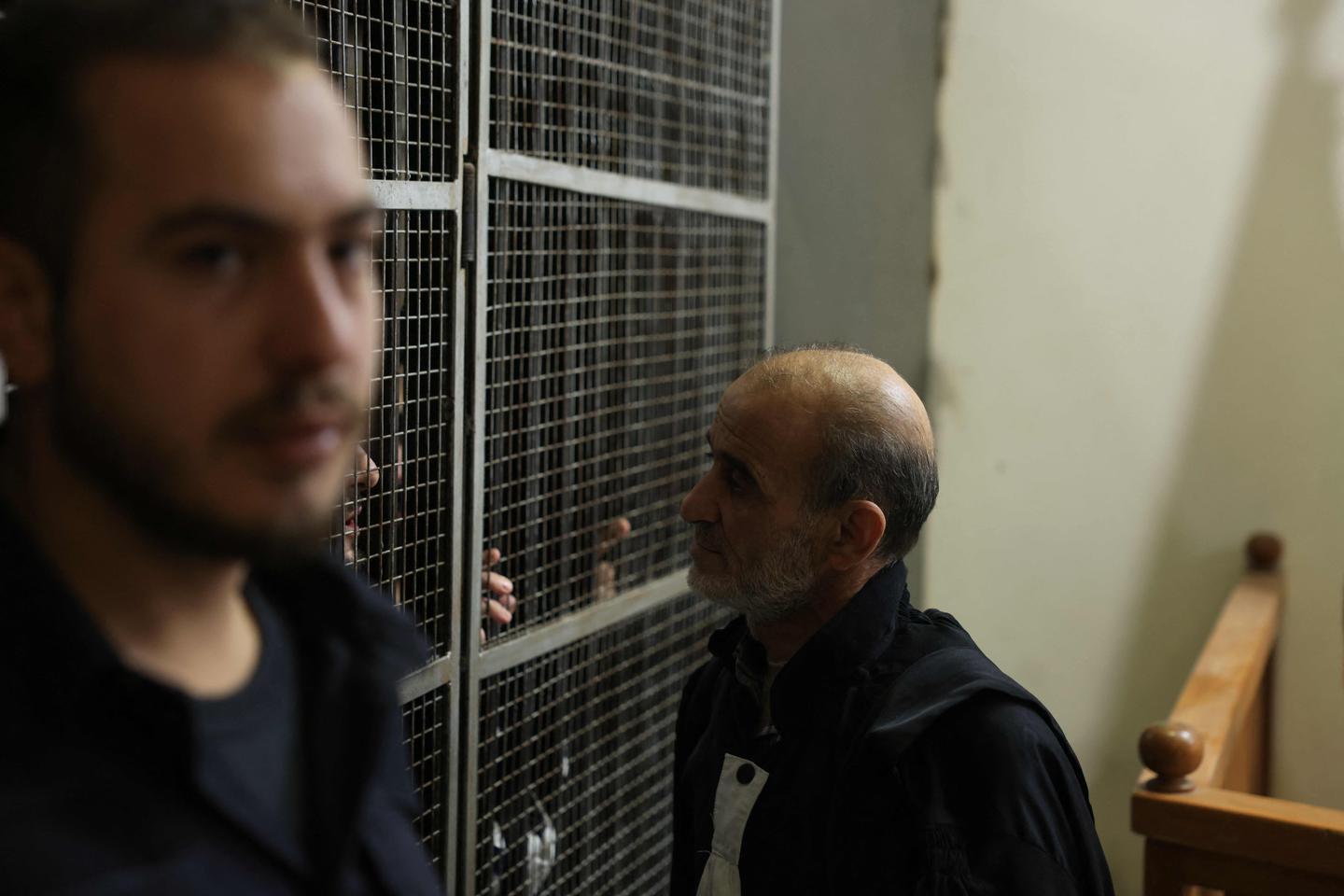
Inside the courtroom at the Aleppo Palace of Justice (Syria), November 18, 2025. BAKR ALKASEM/AFP
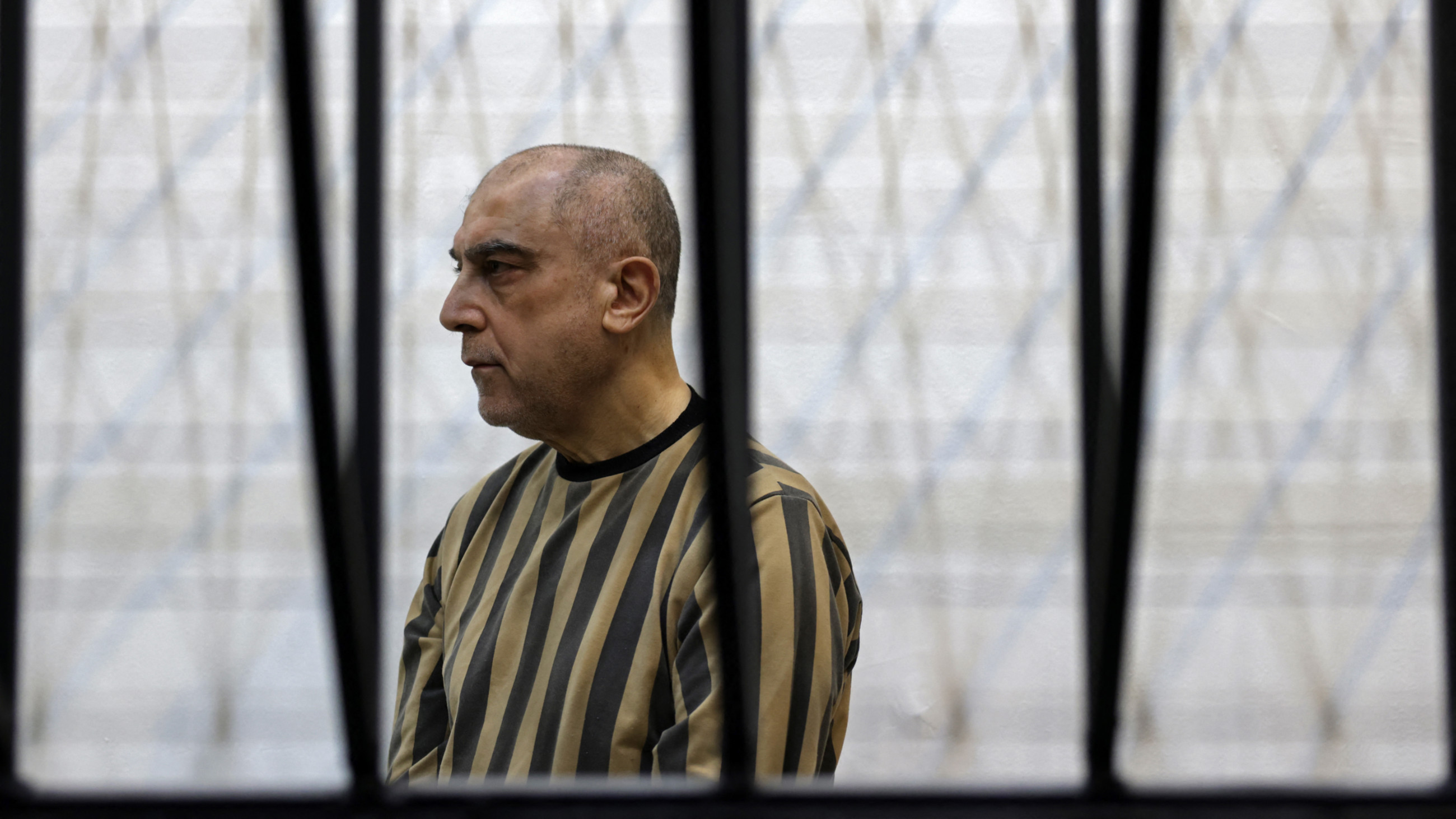
With hoods pulled over their heads, seven defendants were brought in by the military police, unshackled, some in uniform, into a room at the Aleppo Palace of Justice. Another seven, handcuffed and with their heads lowered, followed in single file. Members of the security forces belonging to Syria's new authorities and supporters of former dictator Bashar al-Assad sat together in the dock as the trial opened on Tuesday, November 18, in northern Syria's largest city, to judge the crimes committed from March 7 to 9 on the Alawite coast.
Clashes broke out after a rebellion organized by former officers loyal to al-Assad against the security forces in coastal cities. The counter-offensive led by these forces, along with armed factions and volunteers, escalated into massacres of Alawite civilians, a religious minority from which the al-Assad clan descends. A government commission of inquiry concluded in July that more than 1,400 people – mostly civilians, along with 238 members of the security forces – were killed.
In the cramped courtroom, given the trial's significance, dozens of Syrian and foreign journalists filled the benches behind a handful of families. "The transparency we are witnessing in this trial is unprecedented. Justice will be served for all the defendants, regardless of their military background, faith or ideology," promised Baraa Abdel Rahman, spokesperson for the Ministry of Justice. "This is a milestone for strengthening the rule of law. Without a truly fair and transparent trial, there will be no stability in the country," he added while highlighting the issue of arms control.