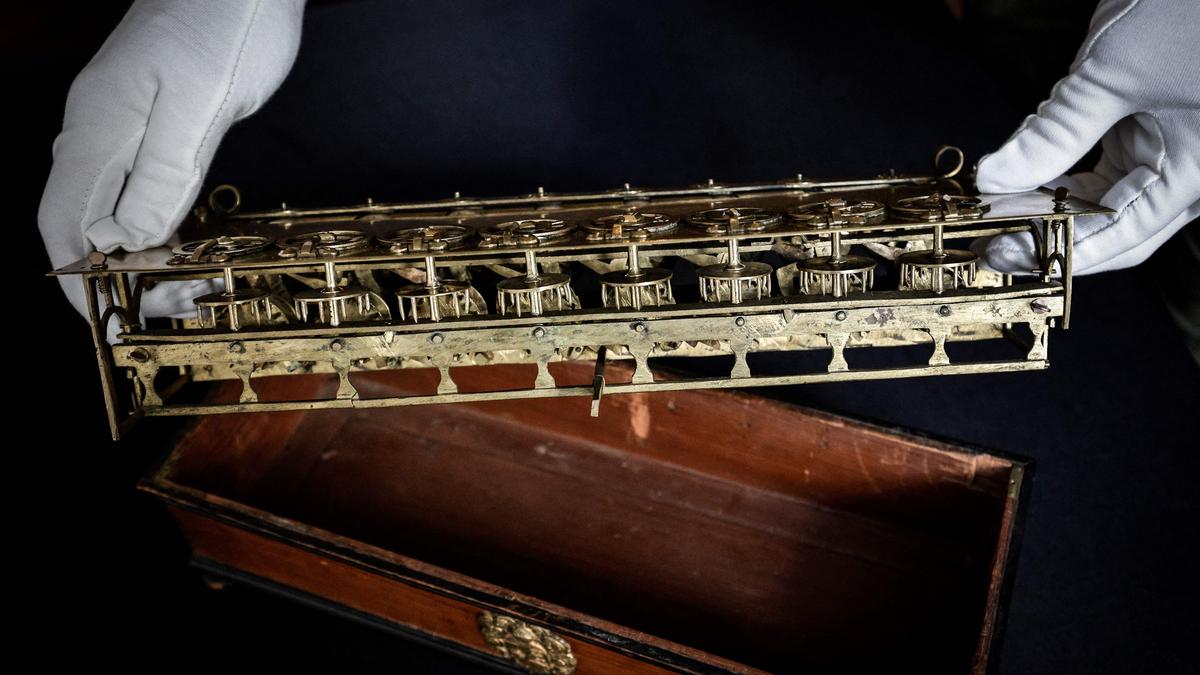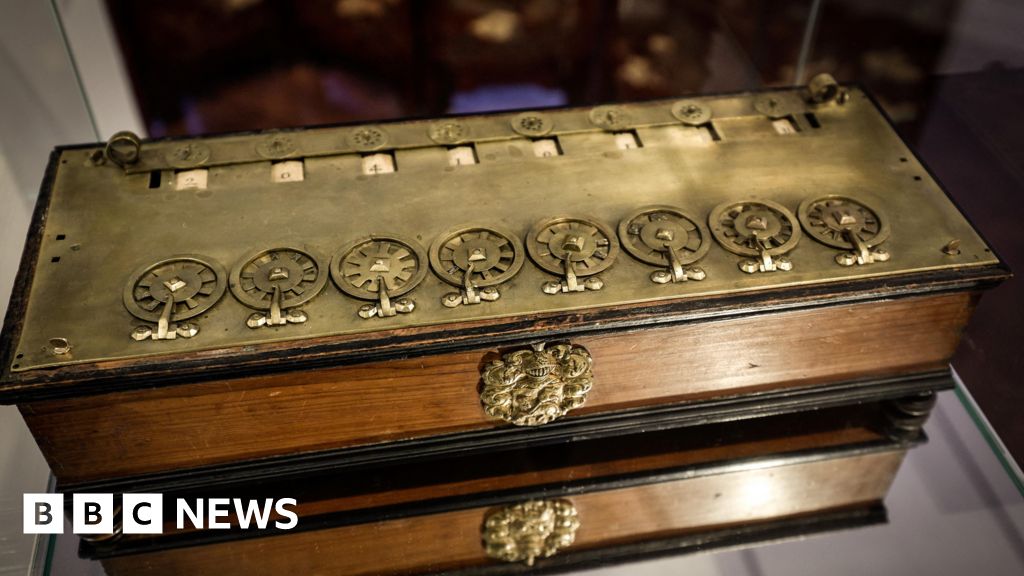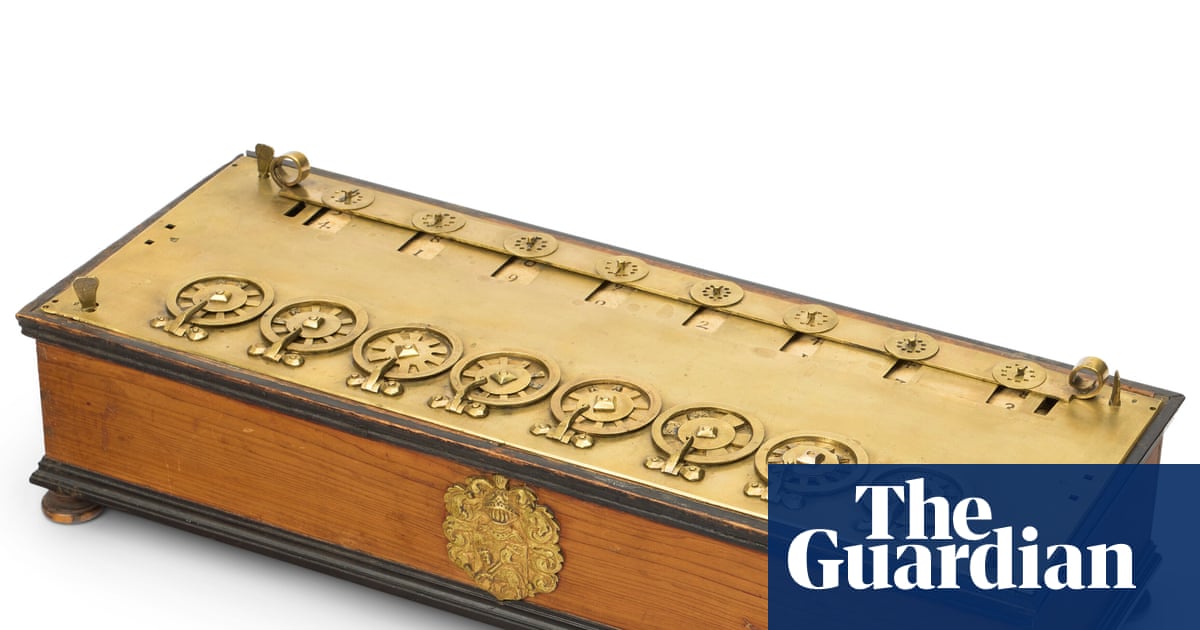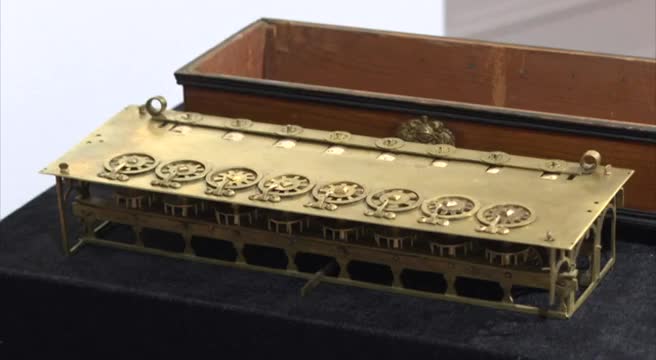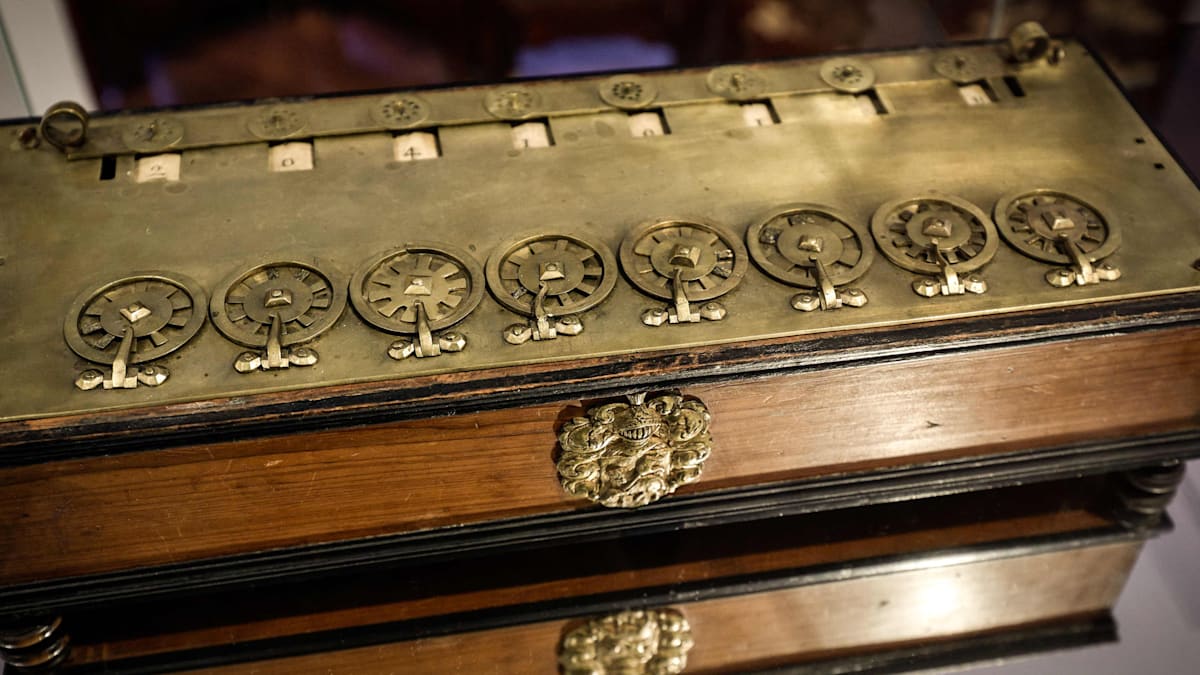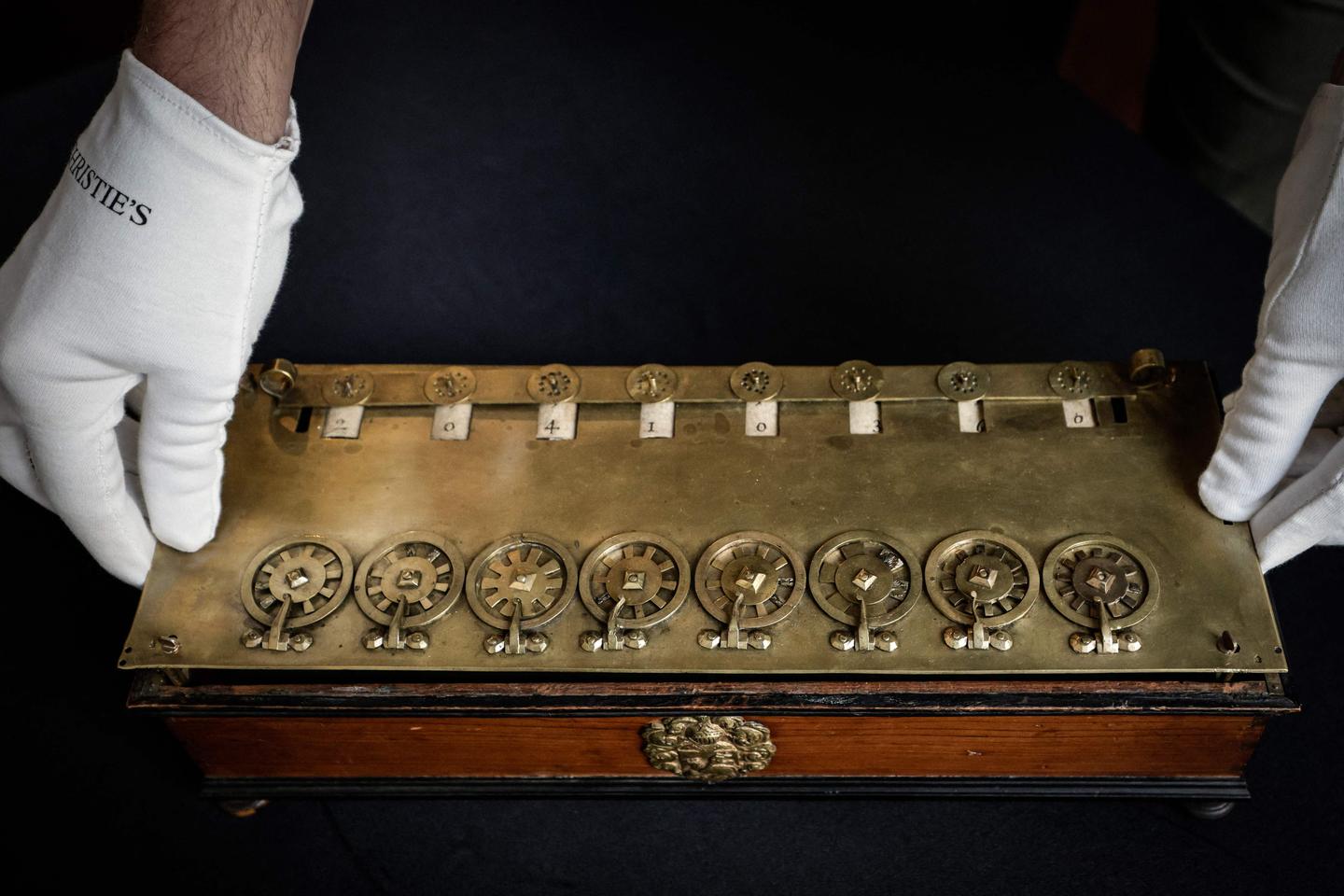
This photograph shows La Pascaline, the first mechanical calculating machine, invented by French polymath Blaise Pascal, displayed at the Christie's auction house in Paris, on September 11, 2025. STEPHANE DE SAKUTIN / AFP
Christie's said on Wednesday, November 19, that it was suspending the Paris auction of one of just a handful of examples of the world's first calculating machine, developed by French mathematician and inventor Blaise Pascal in 1642. The auction of La Pascaline had been scheduled for Wednesday afternoon, but late on Tuesday, a Paris court suspended its export authorization – meaning buyers would not be able to take it abroad.
This example is one of only nine still existing, and the only one believed to be in private hands –others are held in museums. Christie's had dubbed the box, decorated with ebony, as "the most important scientific instrument ever offered at auction," and it was expected to fetch 2-3 million euros. The auction house had described the machine as "nothing less than the first attempt in history to substitute the work of a machine for that of the human mind."
It said it had halted the sale at the instructions of the piece's owner, after the Paris administrative court suspended an export authorization in a provisional ruling. The sale, part of an auction of the library of late collector Leon Parce, would be suspended pending the court's final decision, Christie's said. "Pending the final judgment, given the provisional nature of this decision and in accordance with the instructions of its client, Christie's is suspending the sale of La Pascaline," it told Agence France-Presse.