There never seems to be a shortage of good crime shows on TV, and network television is teeming with detectives who think -- and act -- differently.
This fall, new seasons of Elsbeth, High Potential, Patience and Watson have aired, and they all feature leads who share similar characteristics: They're outsiders, they're socially awkward, they can be emotionally distant, and their minds operate in unconventional ways.
In fact, they all possess traits that align with what many people now associate with neurodivergence -- what scholar Nick Walker defines as "a mind that functions in ways that diverge significantly from the dominant societal standards of 'normal.'"
As a scholar of popular culture, I've long been fascinated by this recurring character type -- detectives who might, today, be diagnosed as having autism spectrum disorder.
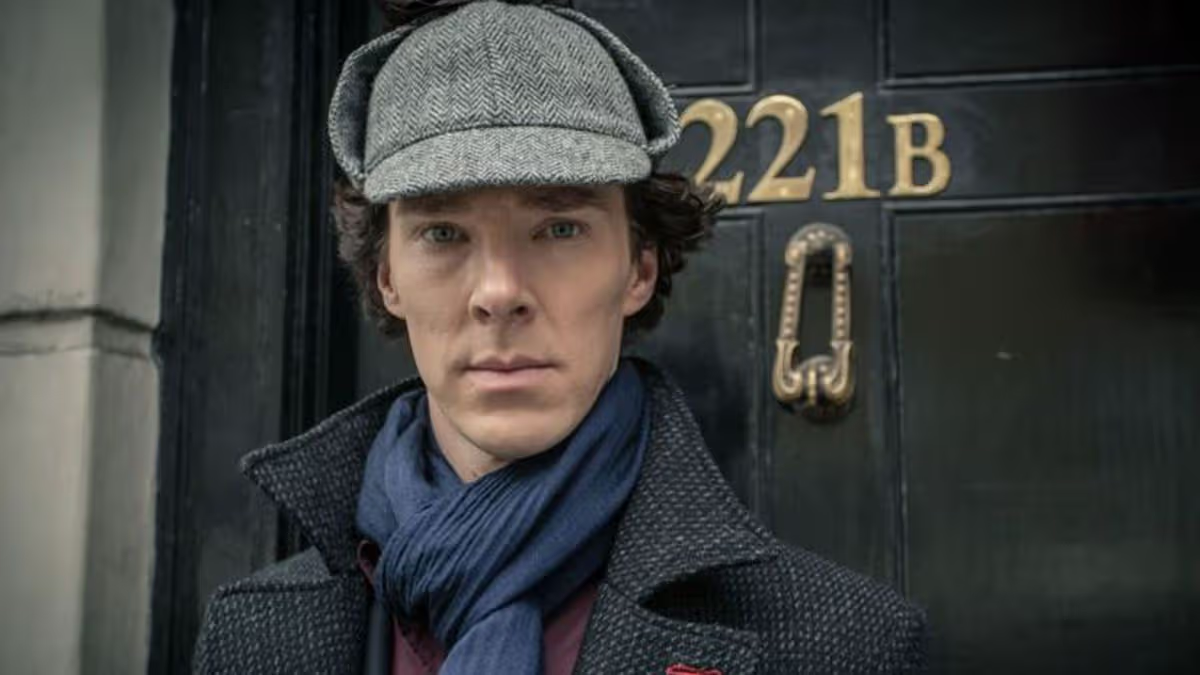
While researching my forthcoming book, The Autistic Detective, I've come to realize that most detectives in popular culture -- yes, even Sherlock Holmes -- exhibited neurodivergent characteristics, long before the term existed.