The author of The Employees goes back to 17th-century Denmark for an intensely poetic portrait of everyday sorcery and female solidarity
O
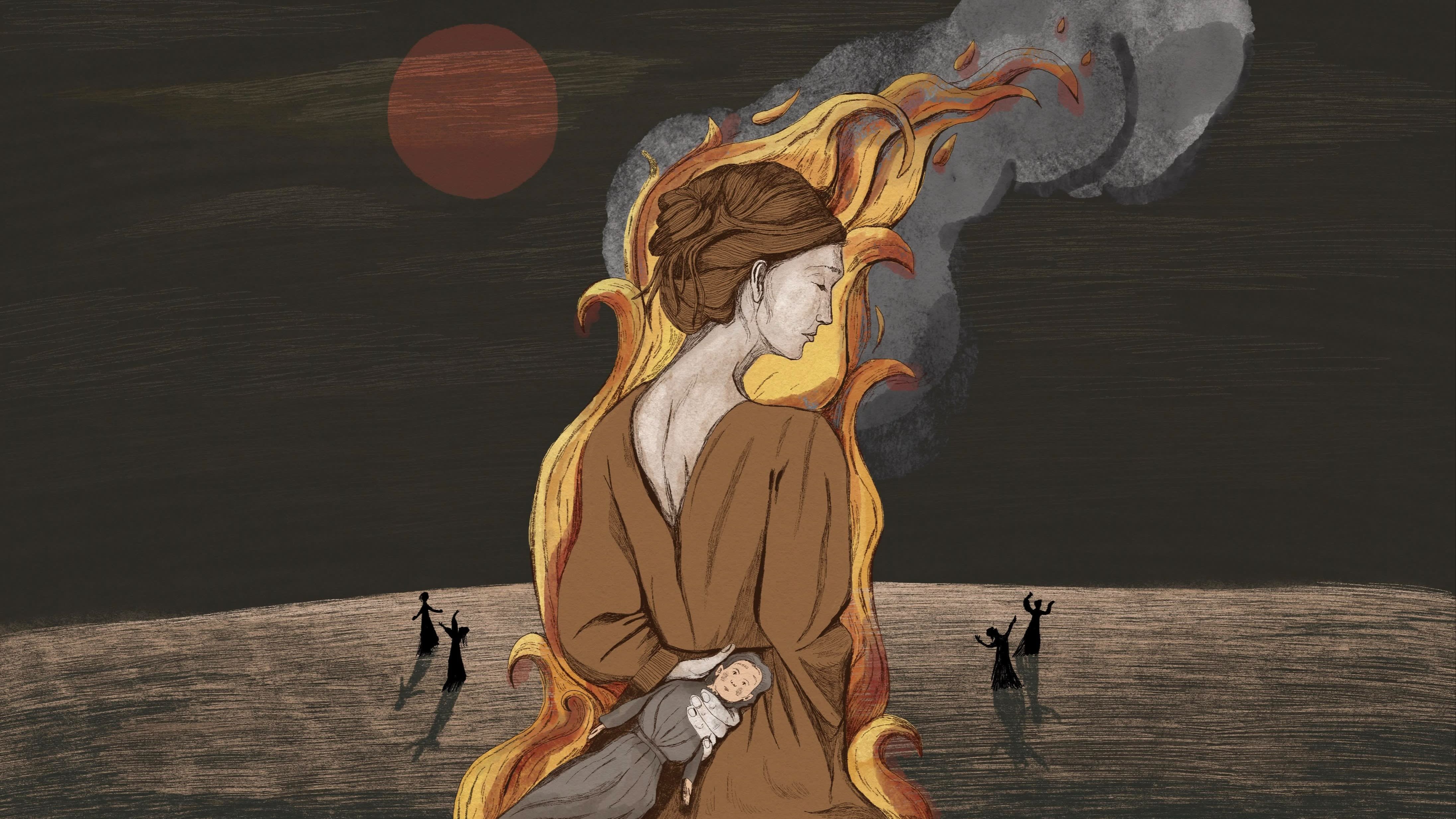
n 26 June 1621, in Copenhagen, a woman was beheaded – which was unusual, but only in the manner of her death. According to one historian, during the years 1617 to 1625, in Denmark a “witch” was burned every five days. The first time this happens in Danish author Olga Ravn’s fourth novel, the condemned woman is “tied to the ladder, and the ladder pushed into the bonfire”. Her daughter watches as she falls, her eye “so strangely orange from within. And then in the heat it explodes.”
The child is watched, in turn, by a wax doll who sees everything: everything in this scene, and everything everywhere, through all space and all the time since it was fashioned. It sees the worms burrowing through the soil in which it is buried; the streets of the world in which it was made. It inhabits the bodies that walked those streets: “And I was in the king’s ear, and I was in the king’s mouth, and I was in the king’s loose tooth and in the quicksilver of his liver, and did hear.”
On a basic level, the wax child is a useful narrative device. But it also complicates everything. The temptation, from the distance of the 21st century, is to assume charges against so-called witches to be baseless. But in this case, a well-known one in Denmark, the charges included the making of wax children – and Ravn begins with Christenze Krukow, a real Danish noblewoman who was accused of witchcraft three times during her lifetime, making this wax baby.