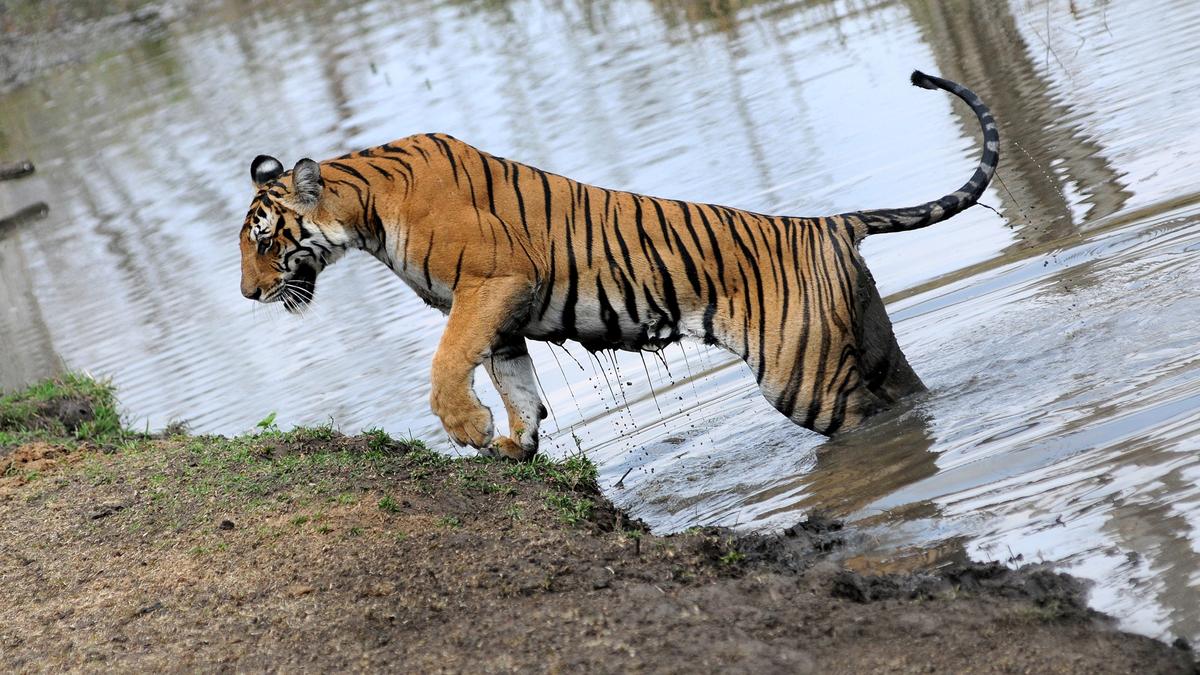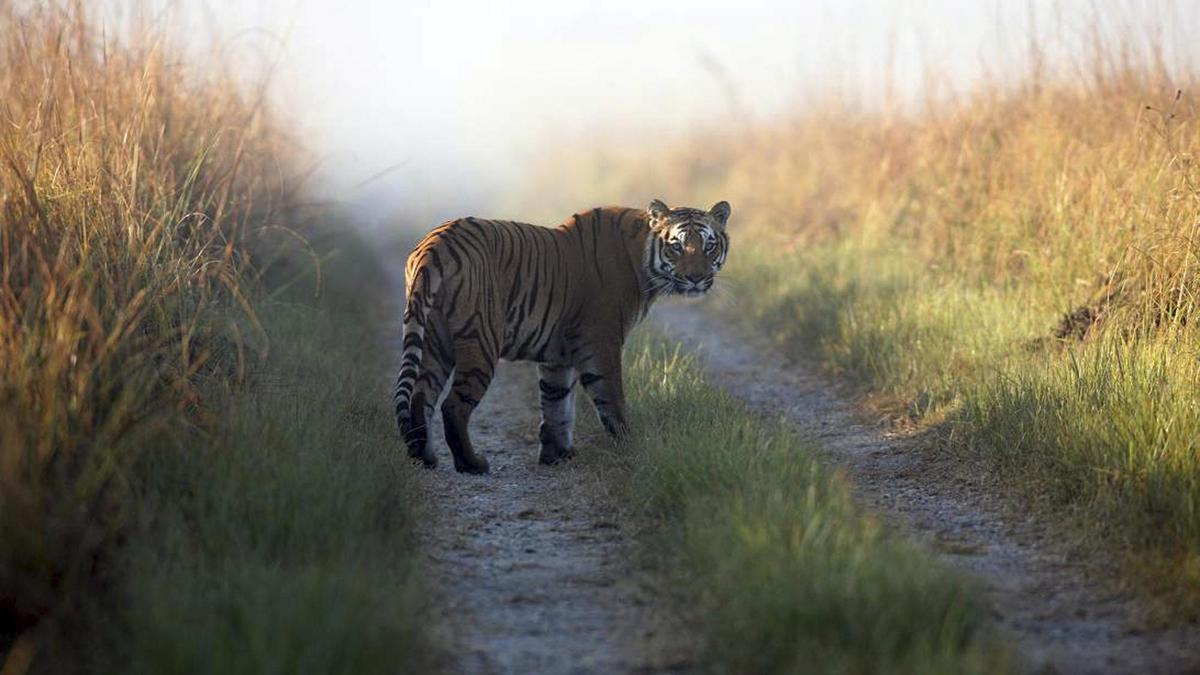
Tiger safaris, the Supreme Court ordered, should not be permitted in the core or a critical tiger habitat areas, and only allowed in ‘non-forest land’ or ‘degraded forest land’ in buffer areas, provided they were not part of a tiger corridor. File photo: Corbett Tiger Reserve via AP
The Supreme Court on Monday, in a judgment, said States must actively consider notifying ‘human-wildlife conflict’ as a natural disaster.A Bench headed by the Chief Justice of India B.R. Gavai directed States to pay out an ex-gratia amount of ₹10 lakh to victims of human-wildlife conflicts under the Centrally Sponsored Umbrella Scheme of Integrated Development of Wildlife Habitats.“All States should have smooth and inclusive compensation policies for crop damage, loss of life of both human and cattle. In order to reduce the timelines to mitigate the issues resulting out of human-wildlife conflict, close coordination between different agencies and departments with mandated responsibilities should be ensured,” the Supreme Court ordered.The court was hearing a petition alleging illegal tree-felling and construction in the Corbett Tiger Reserve, one of the oldest in the country.The judgment made the State of Uttarakhand fully liable to restore and repair the Corbett ecology. The State, in consultation with the Central Empowered Committee, was directed to submit a restoration plan for the reserve in two months, begin demolishing illegal constructions there in three months, and file a compliance affidavit in the apex court in a year.The judgment, authored by Chief Justice Gavai, directed States to notify buffer and core areas of their tiger reserves within the next six months. The court further ordered States to prepare a Tiger Conservation Plan within three months.Chief Justice Gavai, speaking for the court in his judgment, held that eco-sensitive zones (ESZs) should not be restricted to merely sanctuaries and national parks, and must include the buffer and peripheral areas of tiger reserves The court, therefore, directed States to notify ESZs around their tiger reserves, including buffer and fringe areas, within a year from this judgment.Tiger safaris, the court ordered, should not be permitted in the core or a critical tiger habitat areas, and only allowed in ‘non-forest land’ or ‘degraded forest land’ in buffer areas, provided they were not part of a tiger corridor. Safaris should be allowed only in association with a full-fledged rescue and rehabilitation centre for tigers where conflict, injured, or abandoned animals were housed for care. Earnings from the safaris should be ploughed back into tiger conservation, the court said.“Ecotourism cannot resemble mass tourism and must be adequately regulated and adhere strictly to the National Tiger Conservation Authority guidelines,” the court underscored.The judgment said new eco-friendly resorts may be allowed in buffer areas but not in any identified corridor. It called for a complete ban on night tourism.“India assumes a special responsibility as it is home to more than 80% of the world’s free-ranging tiger population,” the Supreme Court noted. Published - November 17, 2025 12:56 pm IST