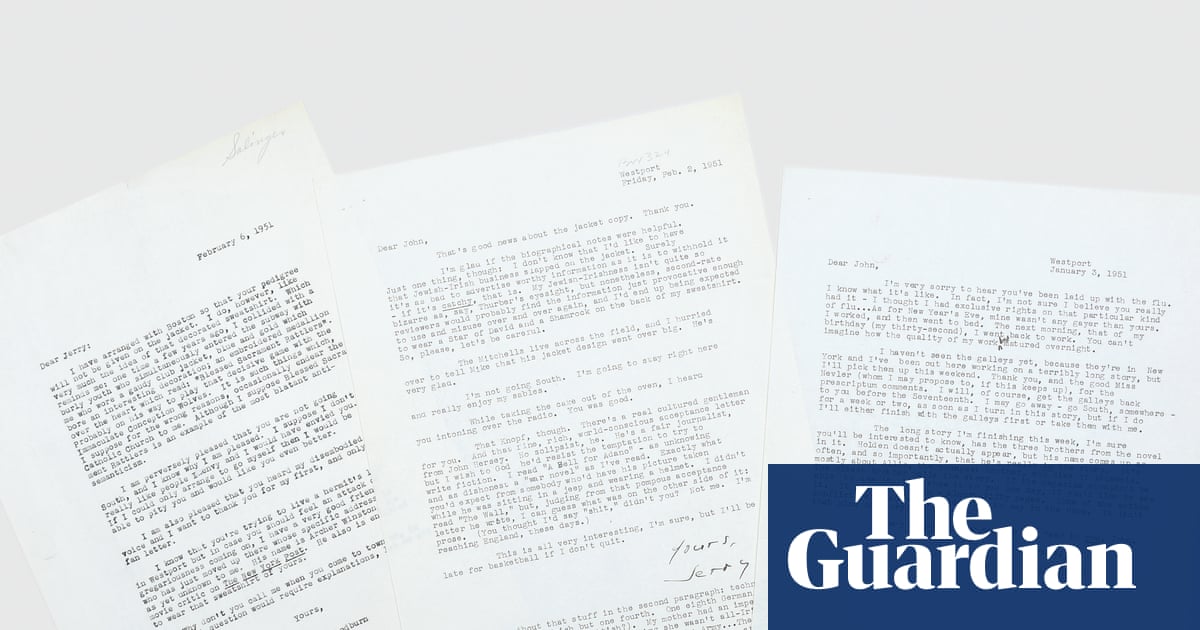
Friends, enemies and lovers animate more than 60 years of the author’s remarkable correspondence
John Updike had the mind of a middling middle-class postwar American male, and the prose style of a literary genius. Such a lord of language was he that even the notoriously grudging Vladimir Nabokov afforded him a meed of praise. A reviewer, musing on the disproportion between the style and content of Updike’s fiction, likened him to a lobster with one hugely overgrown claw. It was a comparison Updike was to remember – for all his bland urbanity, on display from start to finish in this mighty volume of his letters, he could be prickly, and did not take slights lightly.
As a novelist he aimed, as he once put it, to “give the mundane its beautiful due”. Apart from a few rare and in some cases ill-advised ventures into the exotic – the court at Elsinore, Africa, the future – his abiding subject was the quotidian life of “ordinary” Americans in the decades between the end of the second world war and the coming of a new technological age in the closing years of the 20th century.
He was born in 1932 in Pennsylvania, living for 13 years in Shillington before he moved with his parents and grandparents into a farmhouse in a rural redoubt called, aptly, Plowville. He was an only child, and he loved and cared for his father and, in particular, his mother, until the end of their days.