RIYADH: The Middle East’s sports economy has a $75 billion growth opportunity, driven by the need to close a significant participation gap, a new report showed.
While 85 percent of the region’s population regularly consumes sports content, only 30 percent actively participate — highlighting a disconnect that could unlock substantial economic value if addressed, according to Oliver Wyman.
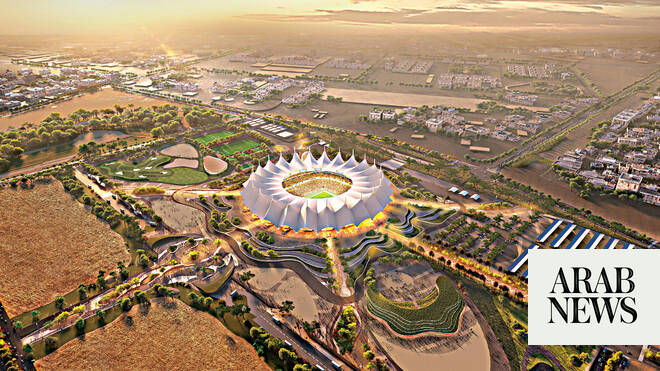
Titled “Unlocking the Middle East’s Sport Economy,” the report outlines how the region is entering a pivotal phase as it prepares to host global events such as the 2030 Asian Games in Doha, the 2034 Asian Games in Riyadh, and the 2034 FIFA World Cup in Saudi Arabia.
Governments across the Middle East have already committed more than $100 billion to sports infrastructure through 2034, spanning stadiums, wellness districts, and community recreation spaces. This wave of investment coincides with demographic advantages, as nearly 60 percent of the population is under the age of 30.
These conditions position sport as a transformative driver of both economic and social development. Saudi Arabia alone could generate up to $200 billion in revenue from tourism, media, and global investment linked to its sports ambitions.