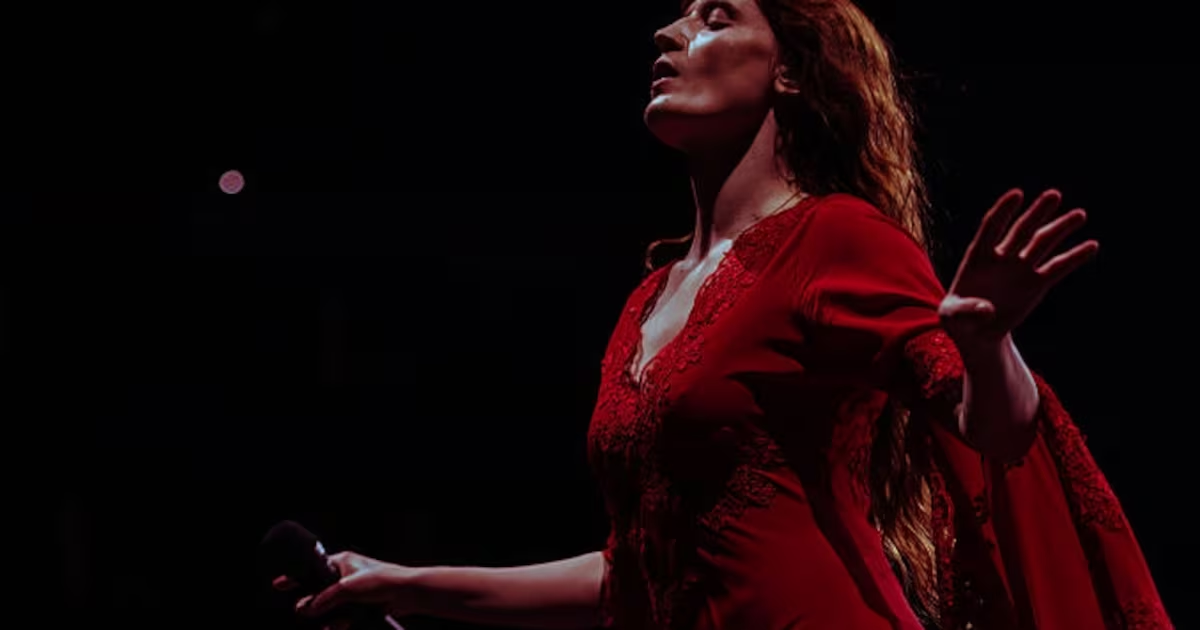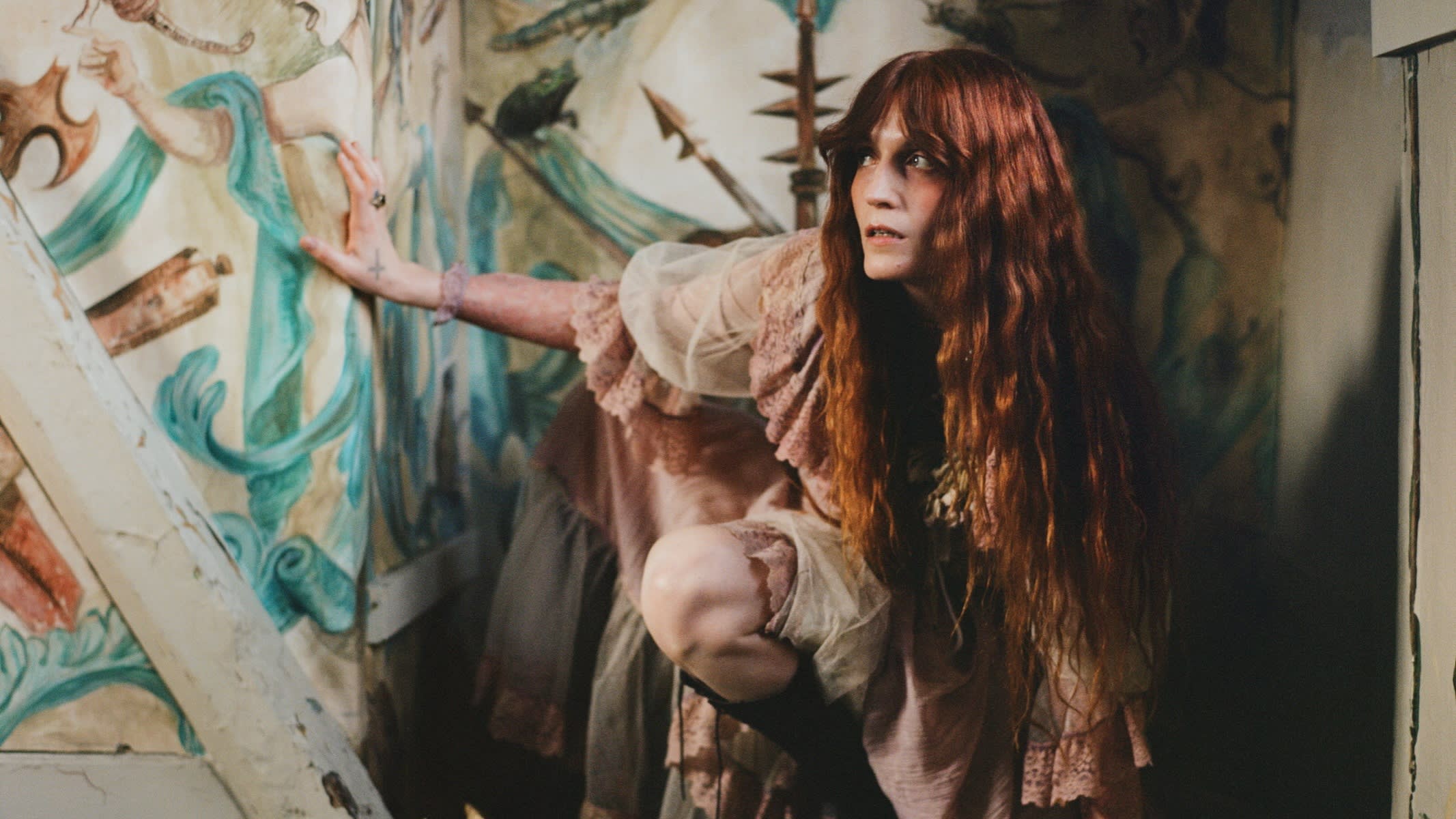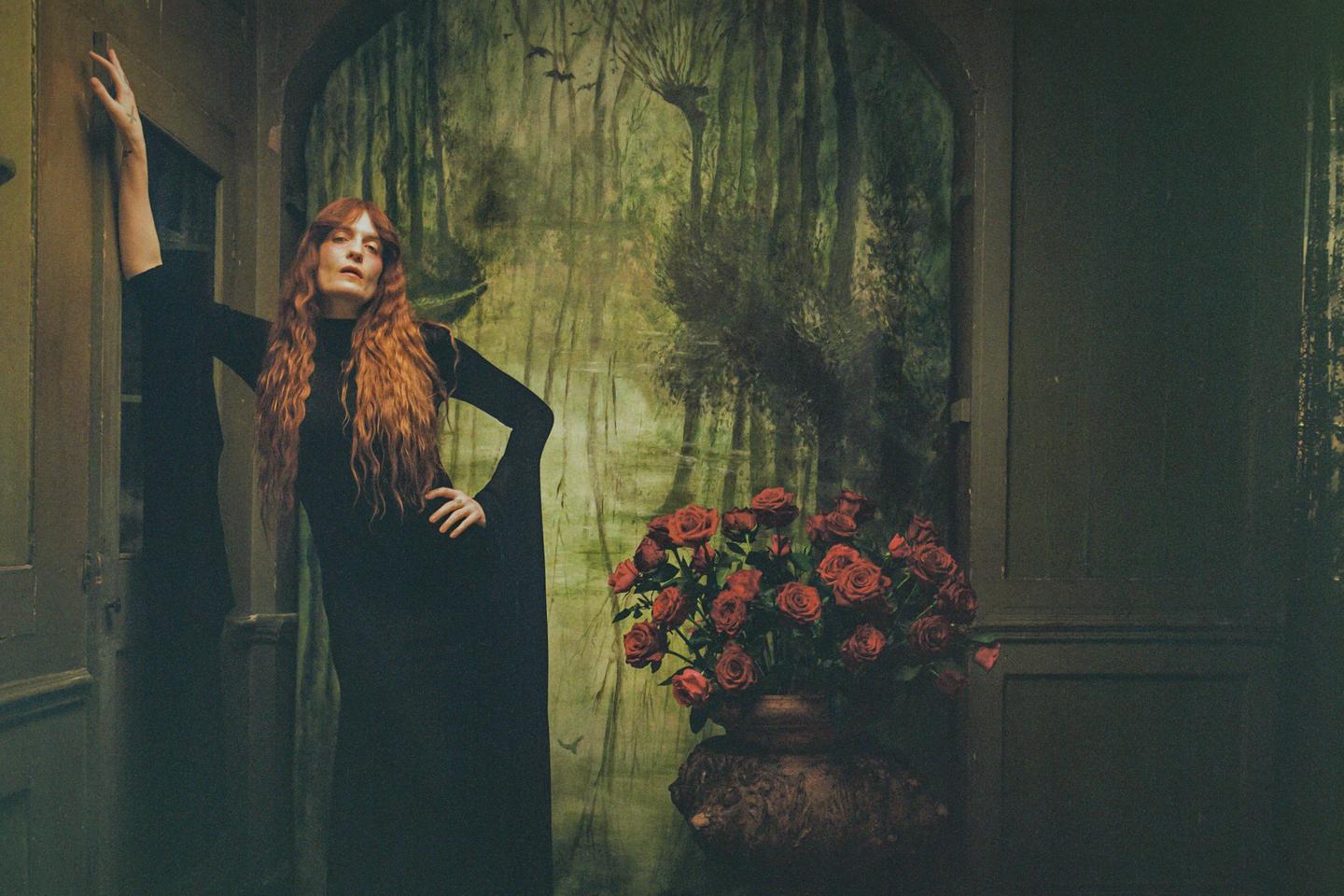
Florence and the Machine in London, 2025. AUTUMN DE WILDE
The cover of Everybody Scream, the sixth album by the British quintet Florence and the Machine, is as striking as it is provocative. Stretched out on a bed surrounded by extinguished candles, lead singer Florence Welch adopts a smoldering pose: her eyes half-closed, legs apart, lifting her skirts to her upper thighs. Distorted by a fish-eye lens – a visual effect favored by horror film directors – the image leaves room for ambiguity. Is it an act of self-pleasure or occult ritual? Seduction or surgery? Fondling or giving birth? Perhaps a bit of it all.
In the summer of 2023, during the band's European tour, the singer suffered a miscarriage. Like a scene from a horror movie, as she came close to giving life, she had a brush with death: a ruptured fallopian tube, internal bleeding and an emergency hospitalization. During her recovery, the English artist immersed herself in the history of witchcraft. "That [experience] took me down a path of magic and medicine," confided the 39-year-old red-haired rocker. This resonates with La Sorcière (Satanism and Witchcraft), published in 1862 by Jules Michelet, in which the French historian summarized the issue: "The only physician of the people for a thousand years was the Witch."