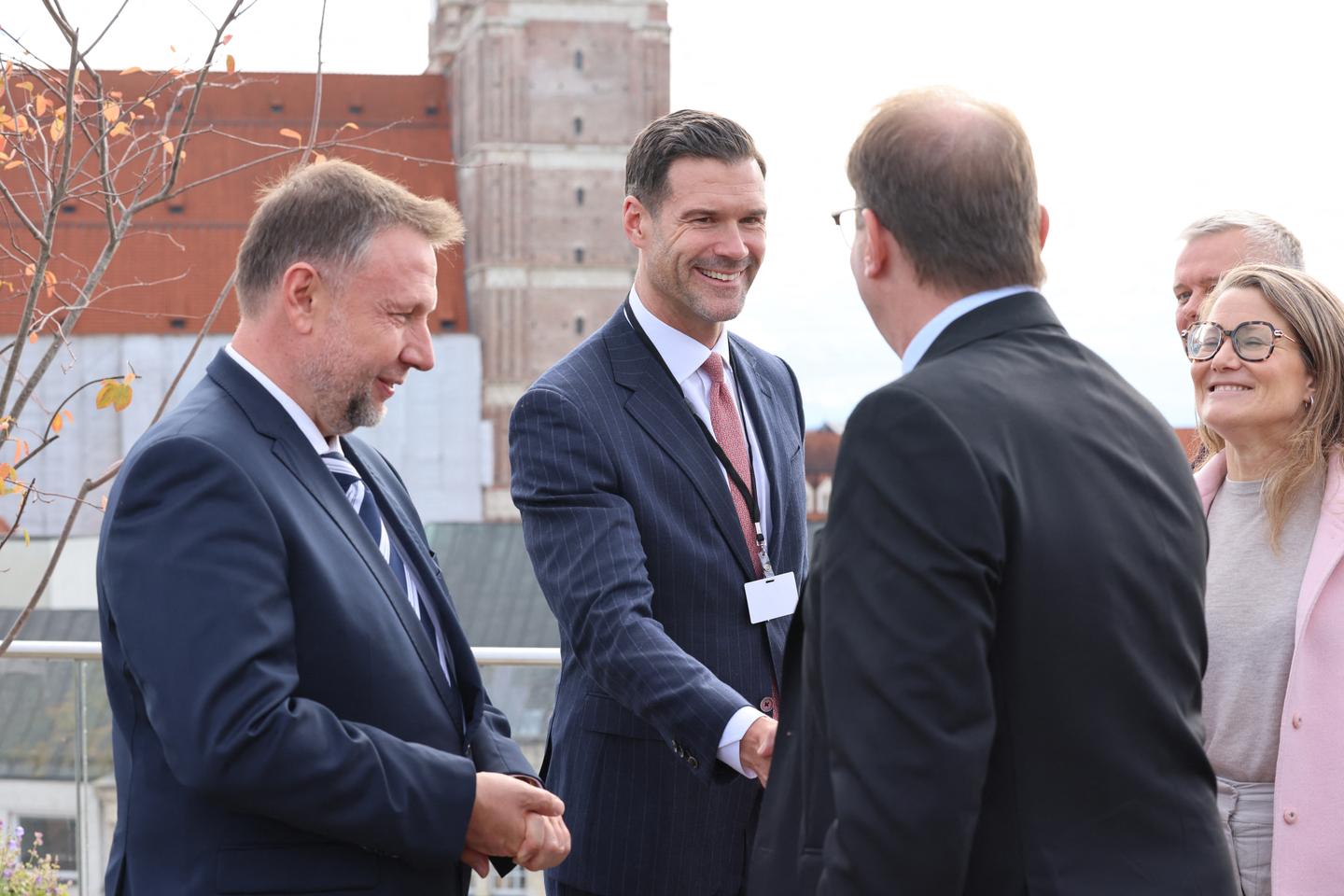
Swedish immigration minister Johan Forssell (second from left) during the Munich Migration Meeting, in Munich, October 4, 2025. ALEXANDRA BEIER / AFP
The revolt began in Jokkmokk, a small municipality of 4,700 residents above the Arctic Circle. It then spread across northern Sweden before reaching the rest of the country. By November 6, more than 130 municipalities (out of 290) and around 10 regions had refused to assist the national coordinator appointed by the liberal-conservative government to accelerate the voluntary return of migrants to their countries of origin.
In addition to restricting arrivals, the right-wing and far-right coalition, in power since autumn 2022, has made departures one of its priorities. These include the forced departures of immigrants whose residency rights have expired or whose asylum applications have been rejected. But the government has also encouraged the voluntary return of people of foreign origin who are legally residing in Sweden. On October 30, Stockholm announced that the incentive payment for those agreeing to leave would rise from 10,000 kronor (€900) per adult to 350,000 kronor as of January 1, 2026.
According to immigration minister Johan Forssell, this assistance is primarily intended "for people who, for various reasons, do not feel comfortable or are not sufficiently integrated into Swedish society." The government plans to allocate 2.5 billion kronor over three years for this effort. This move comes despite a government-commissioned study by economist Joakim Ruist, which concluded in August 2024 that such a measure was ineffective and could have negative consequences for integration.