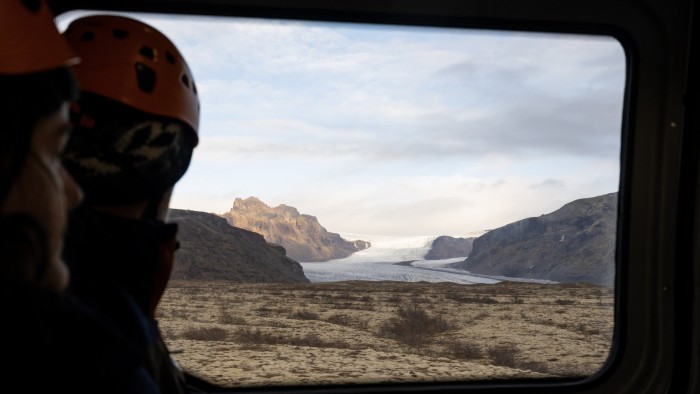
In the stillness of an October morning near Iceland’s southern coast, the soft crunch of crampons can be heard as a tour group crosses the Sólheimajökull glacier. As they pass by, a team of young researchers from the University of Iceland prepare their equipment to drill five metres into the century-old ice.
Led by Jonas Liebsch, a German PhD student and lecturer, and equipped with a GPS backpack, harnesses and helmets, the researchers bore a hole the size of a golf ball and drop a small metal pin, attached to a wire, through it. They then hike further up the glacier to take readings closer to the summit. When they return in spring, they will measure how far the glacier, which is part of the Mýrdalsjökull ice cap, has shifted and how much ice has melted away.
“This is a very dynamic environment, but what we’re seeing here is not good,” says Liebsch of the ice lost on glaciers across Iceland. “The story is the same everywhere on Earth with very, very, very few exceptions. [The glaciers] are out of balance.”
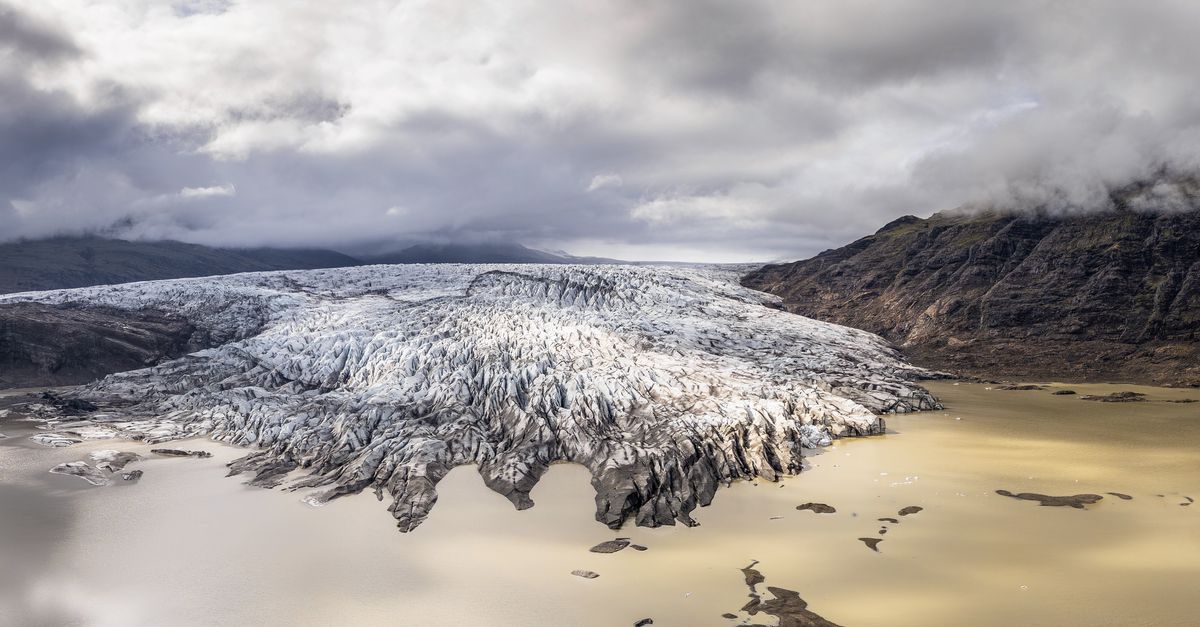
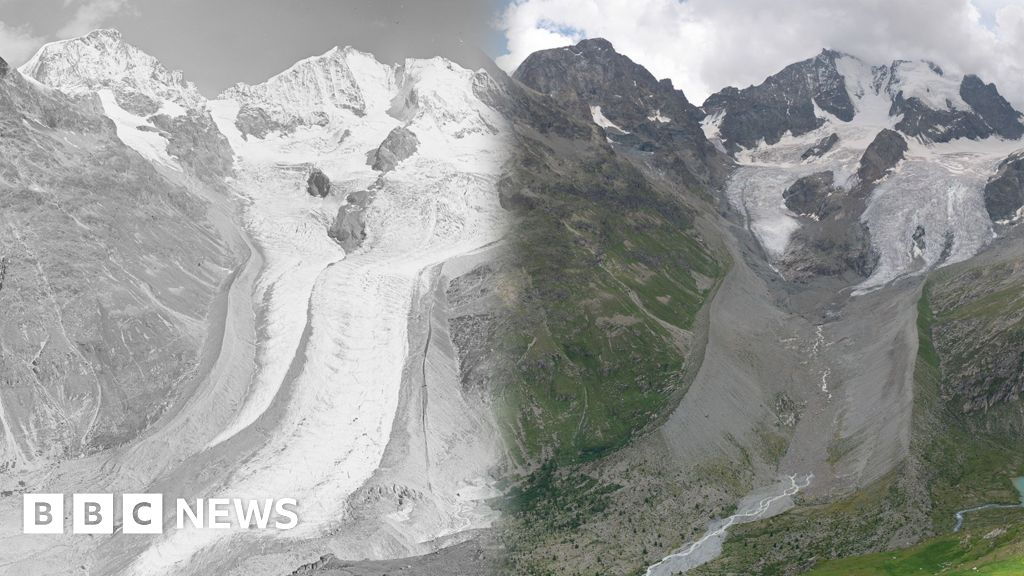
Since 1890, Iceland’s glaciers have lost about 18 per cent of their surface area. Vatnajökull — Europe’s largest ice cap — has shrunk by more than 400 sq km, roughly the size of the Isle of Wight, and lost an estimated 150–200 cubic kilometres of ice.