https://arab.news/ysg29
When the Muslim World League unveiled its “Building Bridges of Understanding and Peace Between East and West” initiative from the UN podium in 2023, it marked a significant shift in interfaith diplomacy — one that deserves renewed attention as global tensions intensify.
The timing could not be more critical. Across the Middle East, dialogue has given way to rising hatred, racism and religious polarization. Israel’s military campaign in Gaza, alongside operations in the West Bank, Lebanon and Syria, has been accompanied by increasingly radical rhetoric from Israeli officials invoking religious texts to mobilize public sentiment. Settler attacks on Palestinians in Jerusalem and the West Bank have followed, creating a dangerous cycle that fuels extremism on both sides and pushes Muslim and Jewish communities toward heightened sectarianism that threatens regional and international stability.
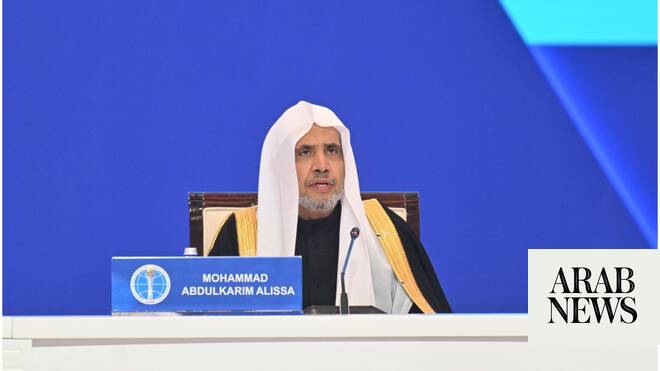
Addressing this religious powder keg requires courage and wisdom from faith leaders. The Muslim World League’s initiative offers precisely such a framework — a values-based roadmap for defusing tensions through what Secretary-General Dr. Mohammed bin Abdulkarim Al-Issa describes as “communication for mutual understanding and cooperation among nations and peoples.” He frames this not as political expediency but as “a divine call present in all heavenly religions,” while insisting that “every civilization possesses its own identity whose right to exist must be respected, however deep our disagreements.”