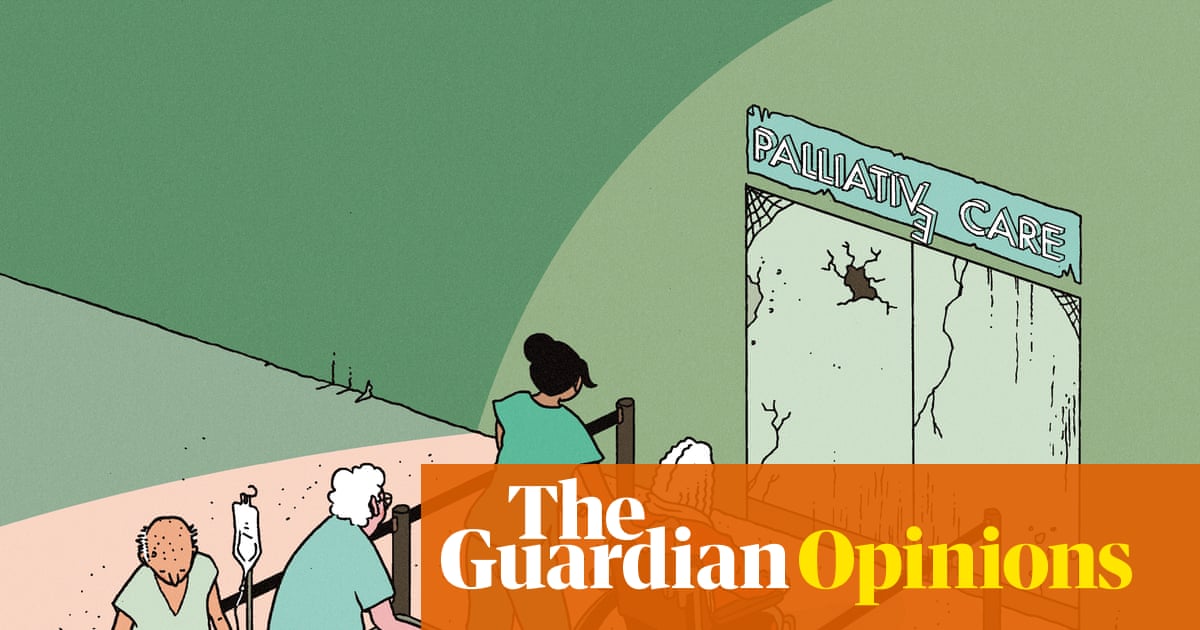
While the government debates assisted dying, palliative care is an afterthought. And many more people face death without the care and support they need
A
baby, in Britain, in 2025, takes its stuttering final breaths. All deaths in infancy are harrowing. But the fact that this particular death might have been prevented – had neonatal care not depended so heavily on charity, had the NHS not failed to fund more than two-thirds of the healthcare babies need – is unforgivable.
Mercifully, the dystopian scenario I’ve just described does not exist in the UK today. Although paediatric care is undeniably overstretched, it is at least regarded as a core, bedrock NHS service.
We would never tolerate a government that chose to defund most neonatal services, gambling instead that charities would act to fill the gap. Yet this is exactly the situation faced by people needing end-of-life care. Remarkably, the famously “cradle to grave” NHS funds only about 30% of hospice care in the UK. The shortfall is made up from charitable donations: the goodwill of local individuals and businesses stepping in where the state has chosen to walk away.