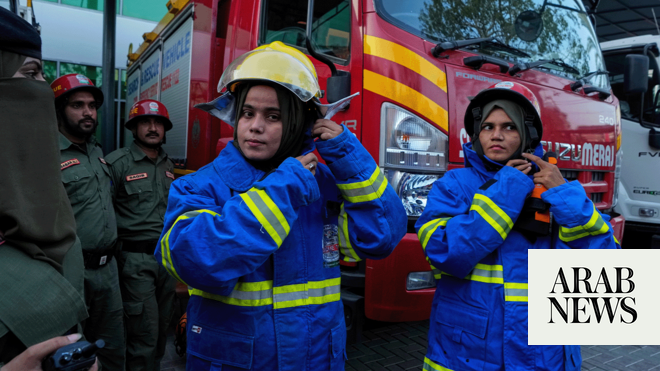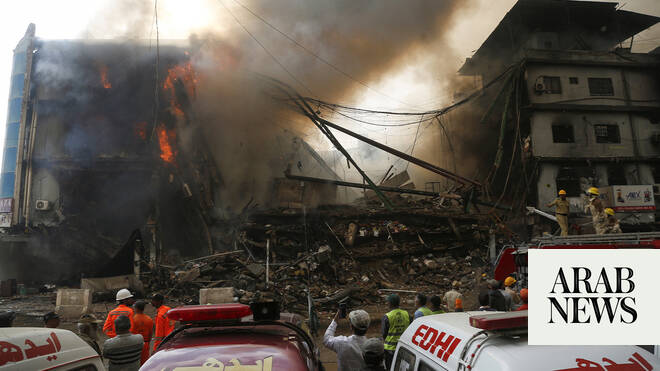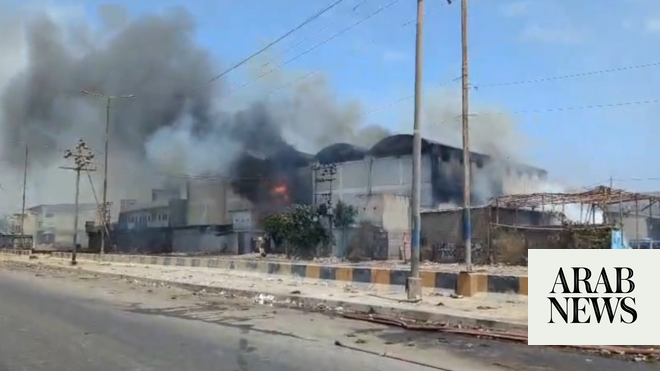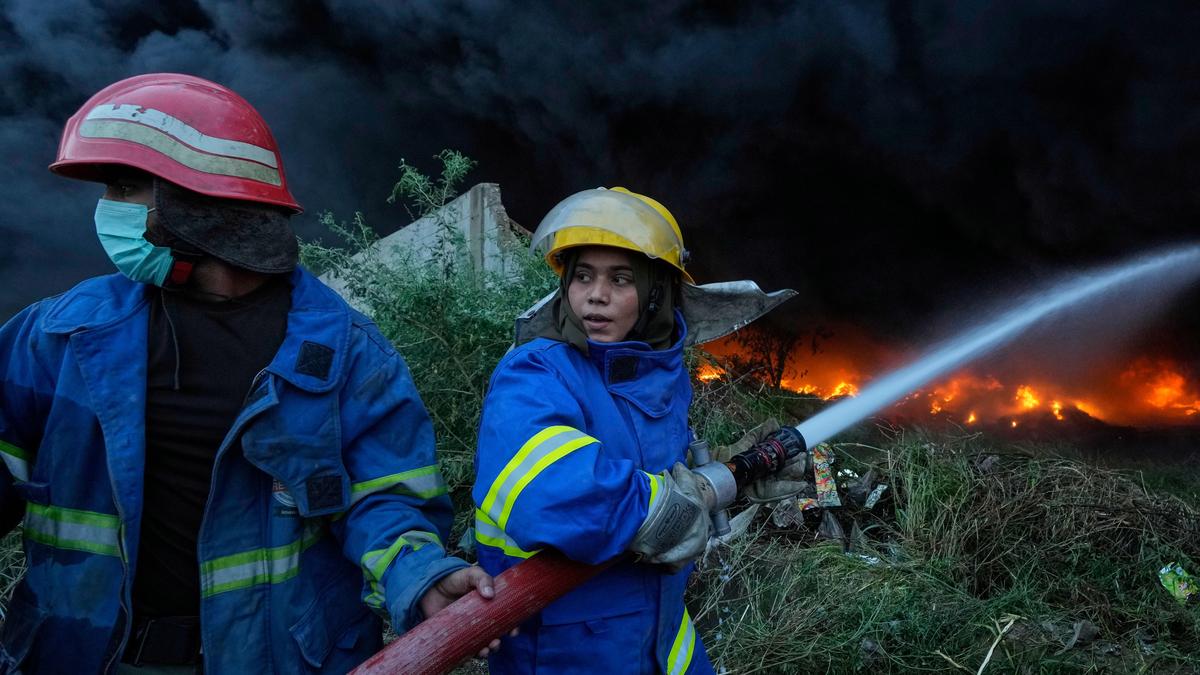
Thick black smoke clawed at the sky last week over the industrial zone in Pakistan's largest city as firefighter Syeda Masooma Zaidi raced toward the raging blaze in Karachi.
The storage facility was packed with truck and car tires, and the flames leapt hungrily, black plumes twisting skyward. Heat shimmered off the asphalt, turning the air heavy and acrid, stinging her eyes and lungs.
Ms. Zaidi did not hesitate amid the deafening roar, hose in hand, her helmet strapped tight. The 23-year-old and the rest of her firefighting team — all men — aimed the jets of water at the molten rubber, which hissed and steamed under the torrent. The team worked methodically, every movement precise, every second critical.
Hours later, the blaze was under control. Nearby factories were spared, no lives were lost — though the damage ran into tens of thousands of dollars (millions of Pakistani rupees). When the firefighters emerged from the smoke, their faces streaked with soot, dozens of onlookers cheered behind safety lines.
Ms. Zaidi is a rare sight in a country where women firefighters were mostly unheard-of until 2024. Her career — like those of other women in Pakistan's emergency services — underscores the gradual inroads being made in the staunchly patriarchal and traditional Islamic nation.