Online influencers like Andrew Tate have a smaller impact than thought but there’s still grim news about boys who hold harmful ideas about masculinity
T
here’s a moment in a boy’s life when it almost hurts to look at them, so beautiful and vulnerable are they. Manhood is right there knocking on their door, and these tow-headed, big-eyed boys open it and for a time there is one foot in, one foot out, trying out this new space, going back into the comfort of the old. Back and forth.
It’s a vexing time. Some boys are more like men, some boys are more like babies. They vary massively in size and adult masculinity. Hormones surge, or may yet be a year away. At about the same time, they are leaving the top of the heap at primary school, where they know everyone and everyone knows them, and they go to the bottom of the heap at high school, a daunting experience for everyone, girls too.
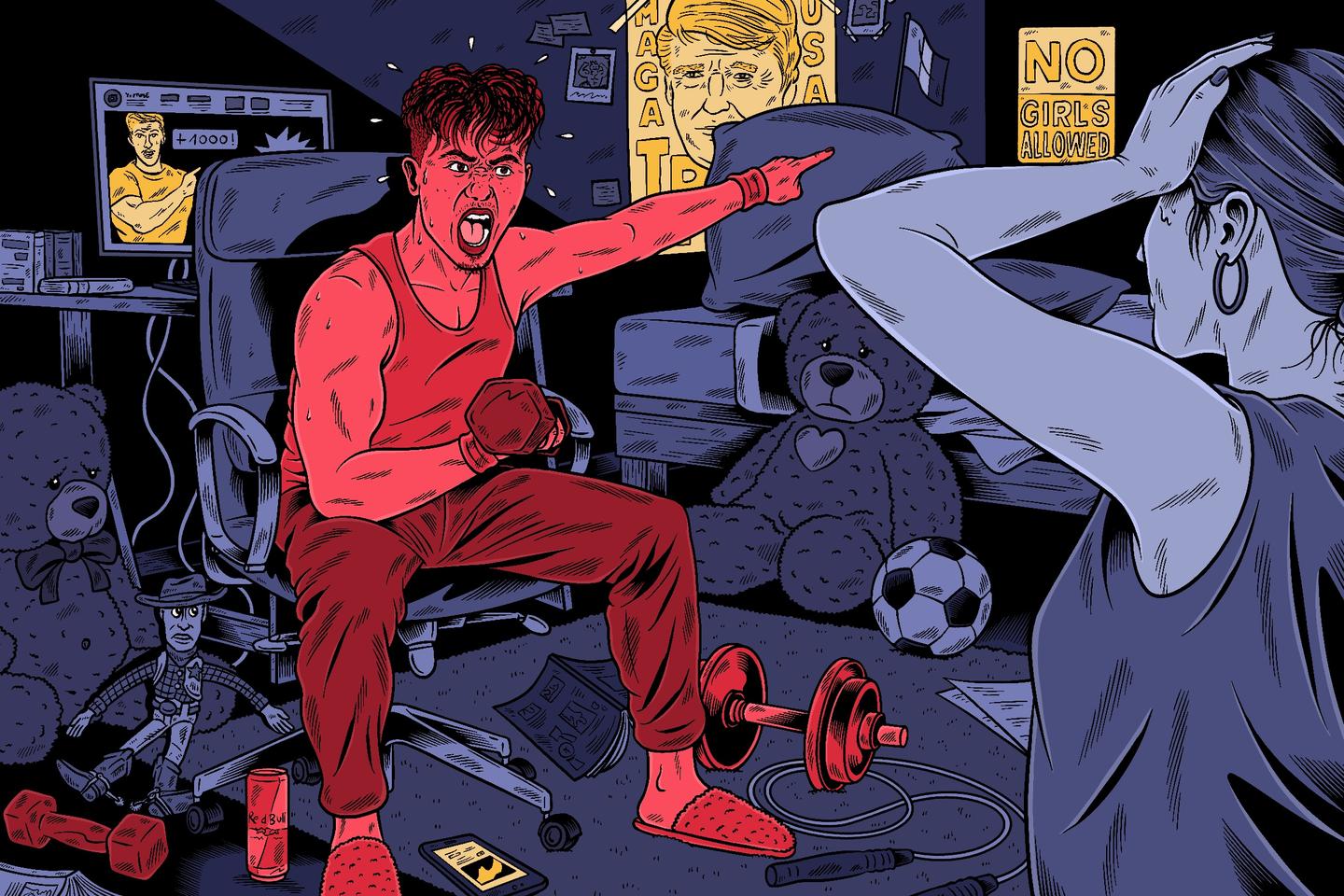
Then, experts say, boys start test-driving their masculinity, performing it for their peers, looking for approval. By the time they are 14, some things have been set. Identities are formed, behaviours emerge, risk-taking grows. Some boys will deal with these new pressures and feelings dysfunctionally, and this is the minority of boys who will start behaving with what is now widely known as toxic masculinity.