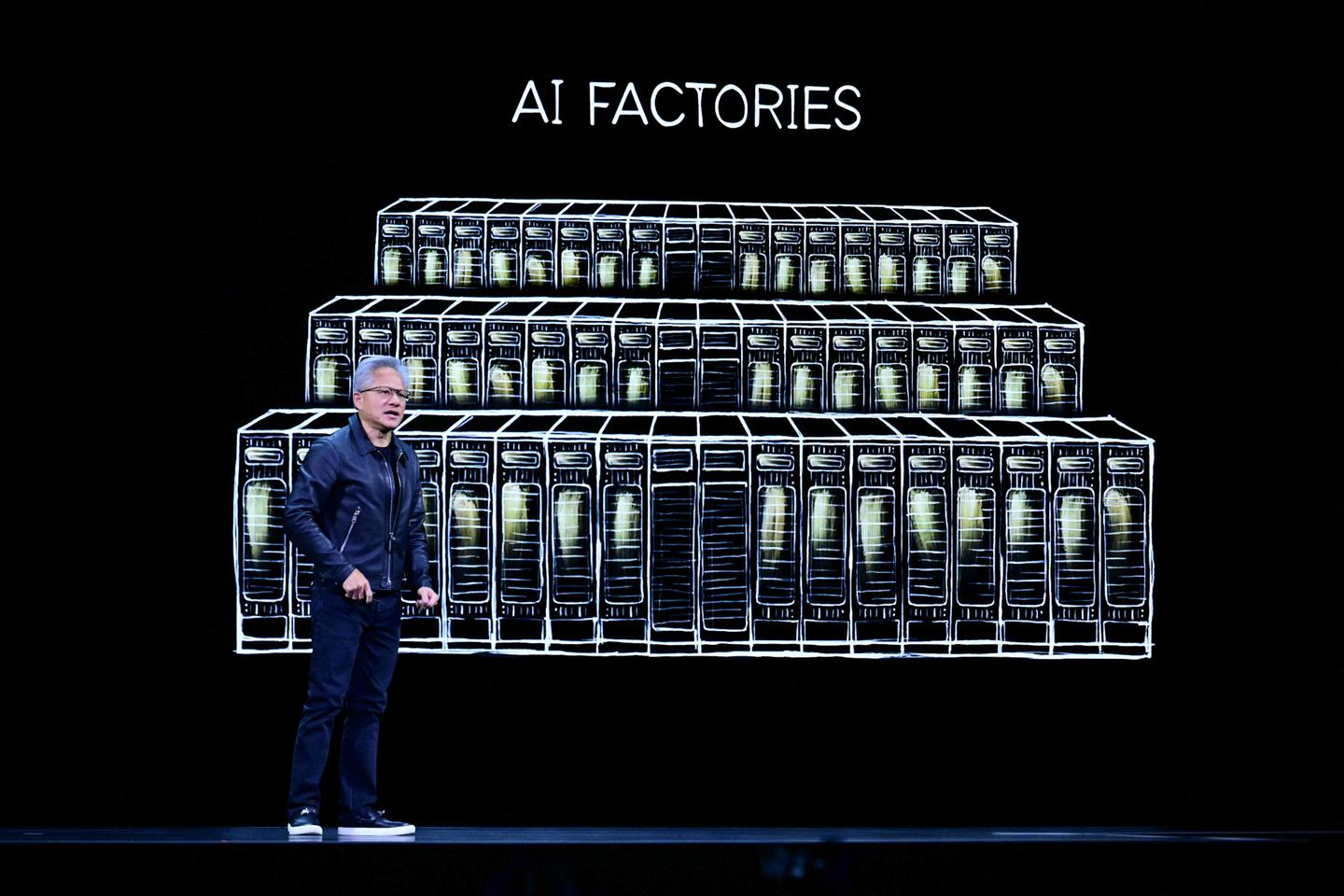
Jensen Huang, CEO of Nvidia, at Nvidia GTC, a global conference on artificial intelligence, in Washington, on October 28, 2025. JIM WATSON / AFP
T
he unusual has become the norm on Wall Street. On Friday, October 31, the New York Stock Exchange ended its sixth consecutive month in the green, the longest streak since the Covid-19 pandemic. Over the past week alone, the S&P 500, the main index, reached a new record; chipmaker Nvidia crossed the $5 trillion valuation mark; and tech giants announced hundreds of billions of dollars in investments in artificial intelligence (AI).
Superlatives abound: The optimists say it's a "rush," a "boom," a "surge"; according to the pessimists, it's an "overheating," "madness" or even a "bubble" – the word that frightens the markets the most. Those who take a more measured view are trying to draw some lessons from a situation where the usual rules no longer seem to apply. Three stand out.
A flutter of wings in Silicon Valley is now enough to shake up the entire market. On Tuesday, October 28, while the S&P 500 reached a historic high, 400 of the 500 companies that make up the index were actually down. The main index was buoyed by only a minority of companies: the tech giants.