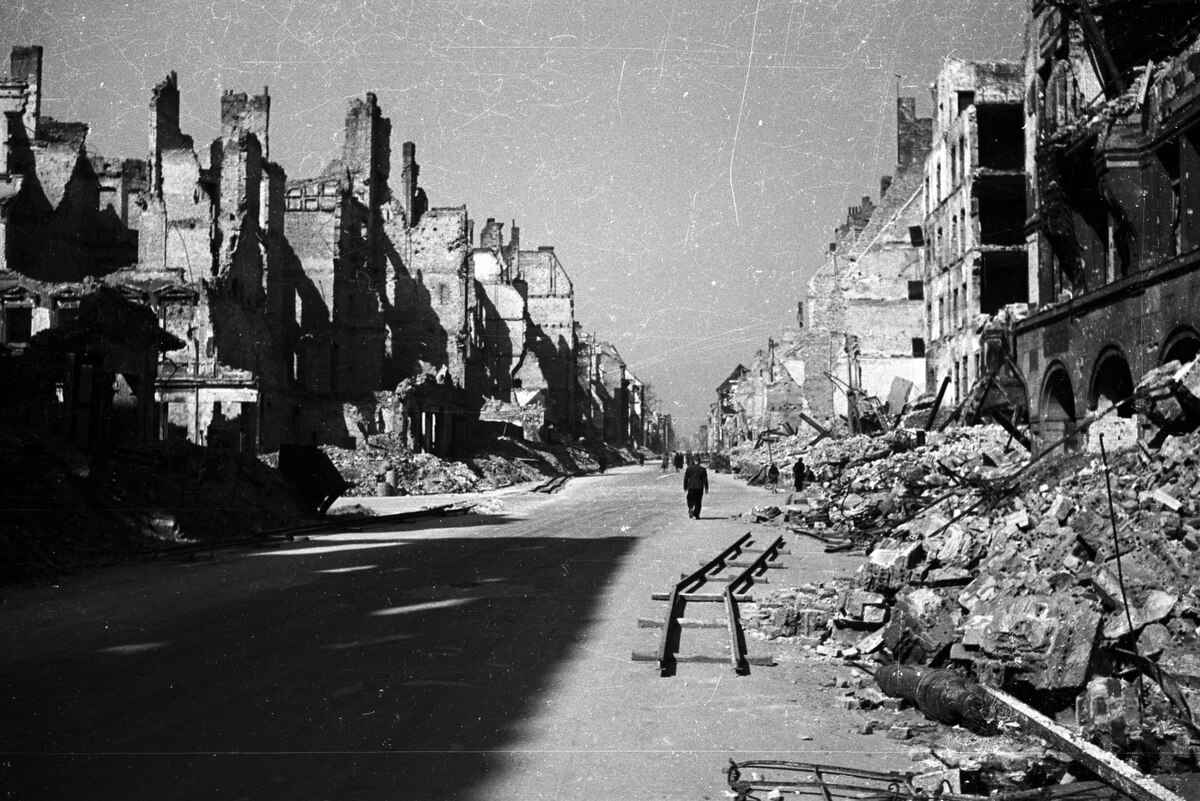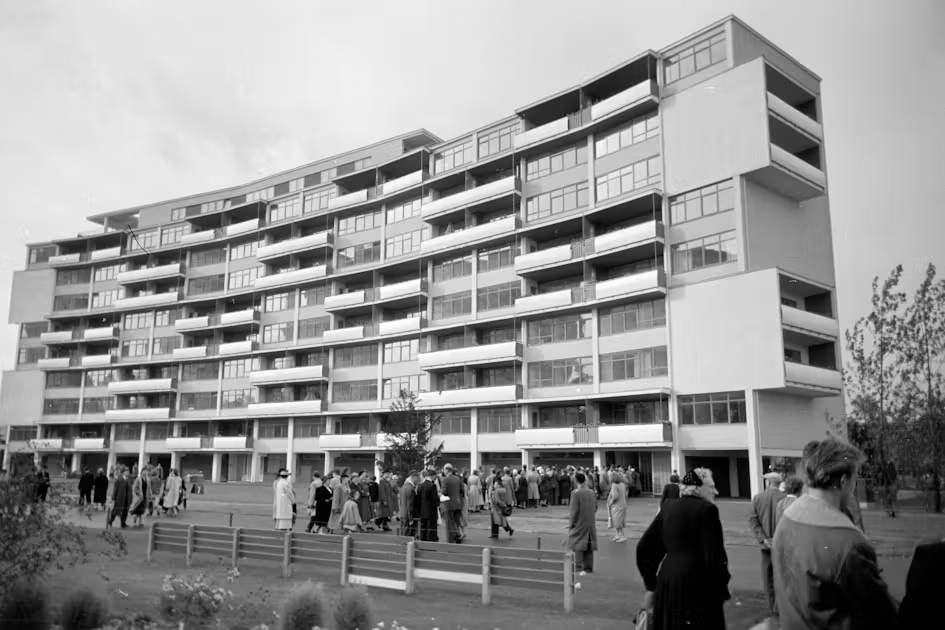
On a sunny July day in 1957, crowds of politicians and citizens from West Berlin gathered around the Hansaplatz, an area next to the city’s historic Tiergarten park. They had convened for the debut of the City of Tomorrow, an ambitious urban planning project to restore the extensively war-damaged, 60-acre neighbourhood. More than 50 renowned architects from 14 different countries had been asked to design edifices that were to present new forms of living; by the summer of 1957 about 30 buildings had been erected. Completed by the early 1960s, the quarter remains a midcentury architectural showcase: among the most notable buildings are an eight-storey building designed by Alvar Aalto, a seven-storey Oscar Niemeyer apartment block, a “vertical city” with 527 apartments designed by Le Corbusier, bungalows conceived by Danish architect Arne Jacobsen, and German architect Ludwig Lemmer’s memorial church.
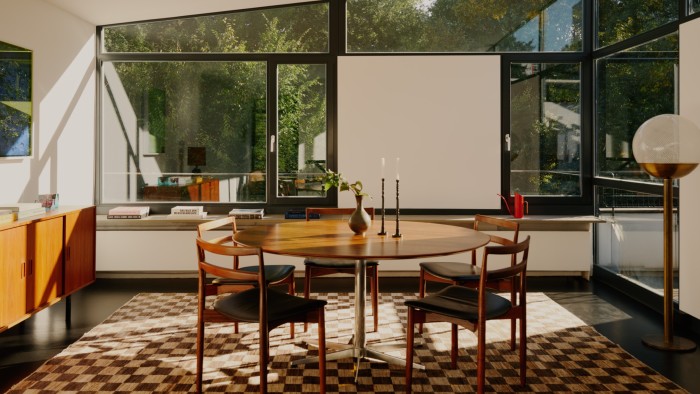
The Eternithaus, built in 1957 by Paul Baumgarten, viewed from the back © Robert Rieger
But one of the most interesting and compelling solutions for future living in the neighbourhood was the Eternithaus, designed by Berlin-based Paul Baumgarten. Instead of creating seven terraced houses, he imagined and built what he called a “residential ship” with seven 1,000sq ft two-storey maisonettes topped with private rooftop terraces. The ground floor, designed to be a commercial space, was almost completely encased in glass, creating the illusion of a floating floor above the park.