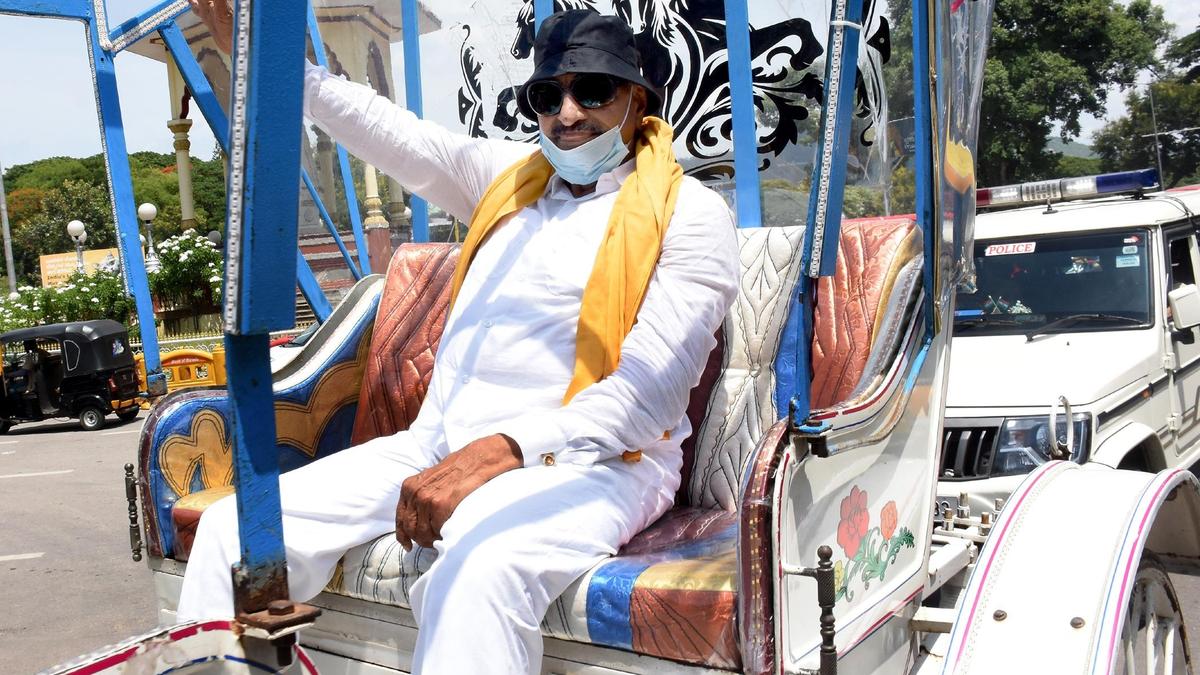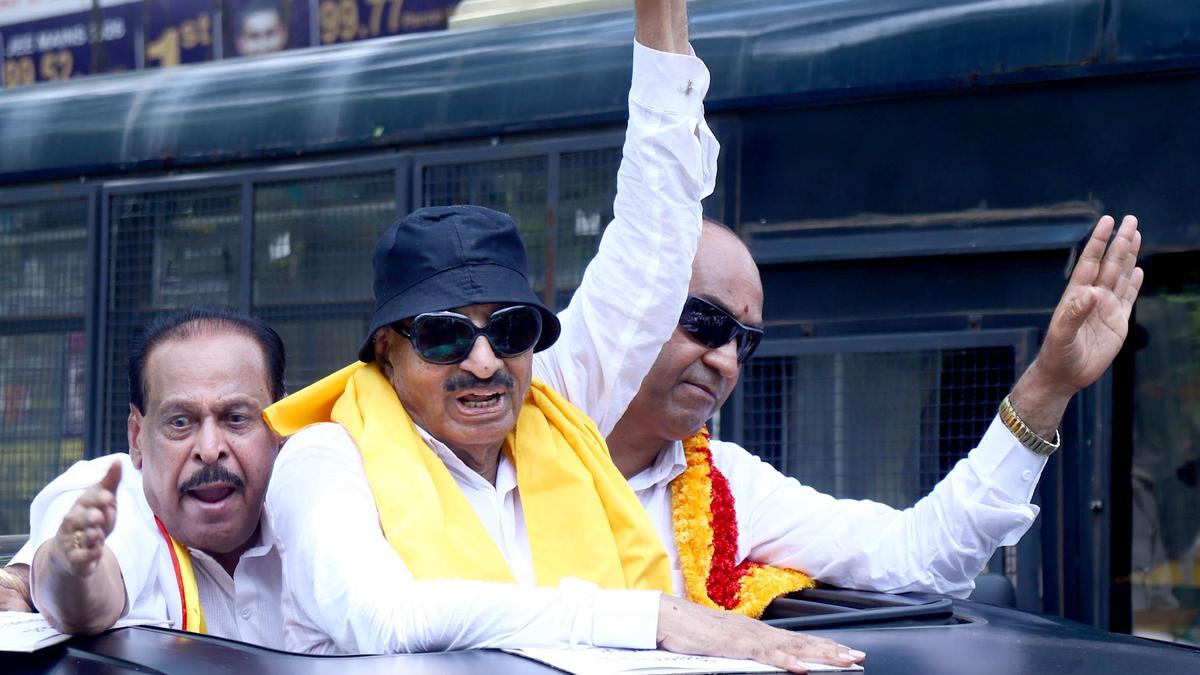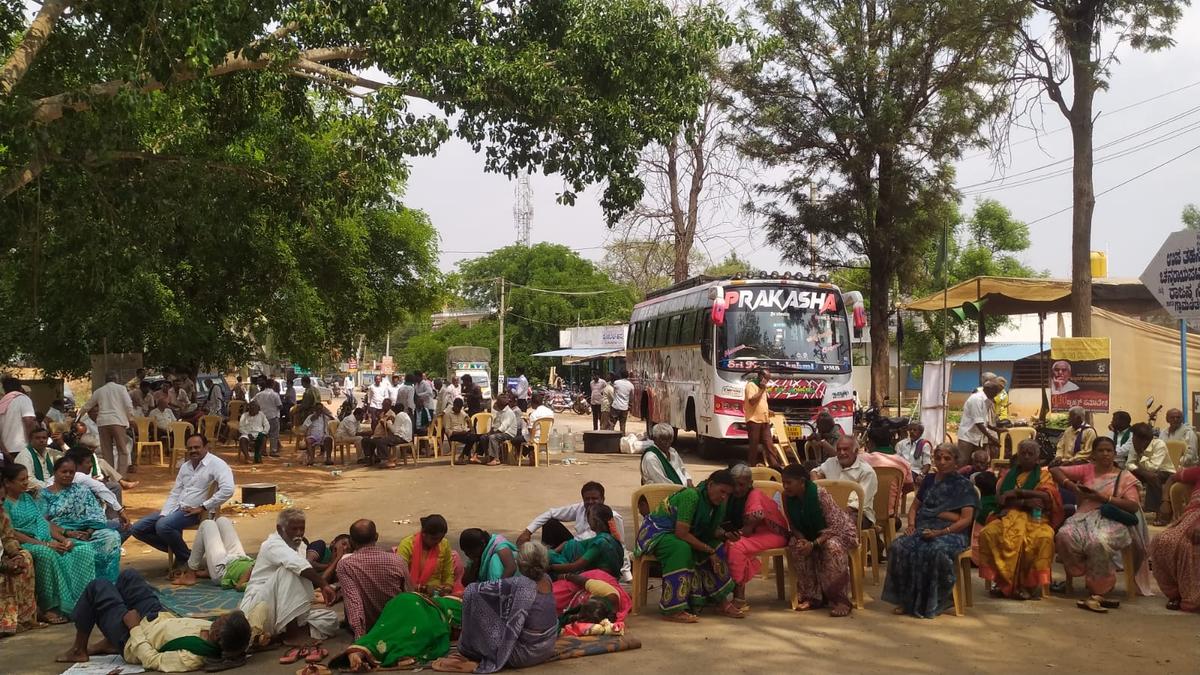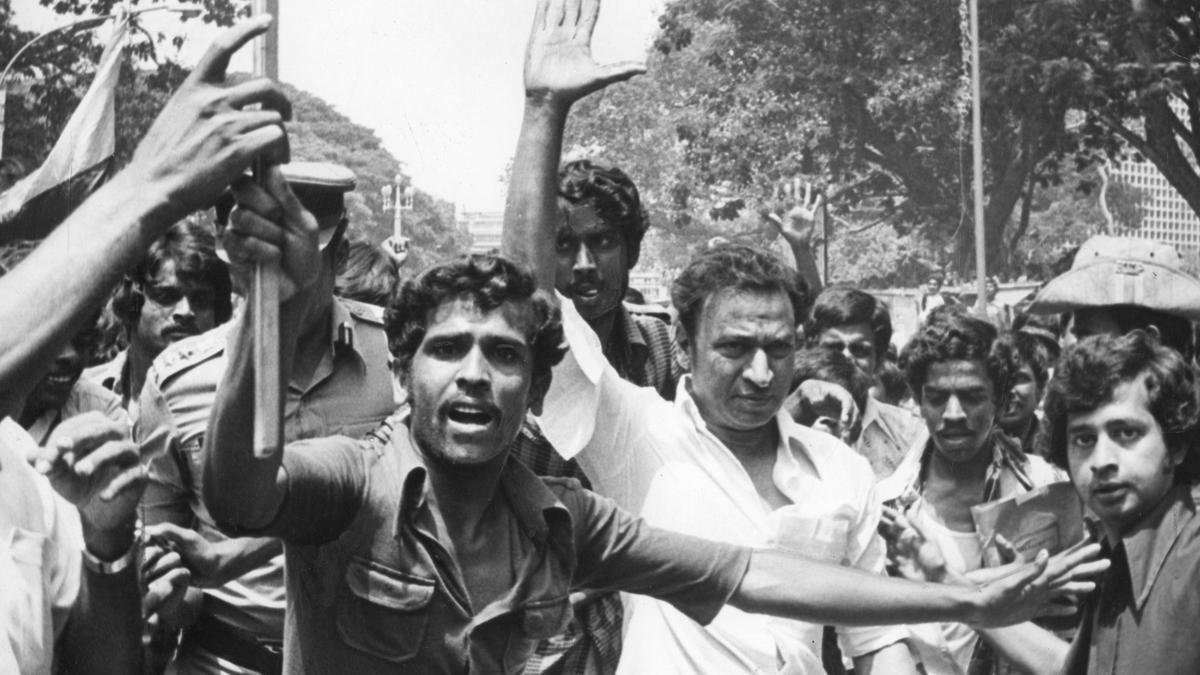
For generations of schoolchildren, Vatal Nagaraj was a familiar name — the man whose protests could unexpectedly give them a day off from school, be it over Cauvery water sharing issue or Kannada name boards. Few among them understood that behind the noise and spectacle lay a deeper history of Kannada identity and activism.
What was unfolding as “street drama” for the uninitatited was, in fact, just the latest chapter in a centuries-old struggle: one that began in poetry and evolved through various phases of politics.
Writers and activists view the Kannada movement as unfolding in four phases: the 1950s as a struggle for unification as a linguistic State, the 1960s as a period of celebration and assertion of identity, the 1970s as an era of drives for policy changes and movement against migrants, and the most recent phase as one focused on demand for federalism.
The gensis
Yet, Kannada writer Baraguru Ramachandrappa argues that the Kannada movement has existed since the 10th century, citing Adikavi Pampa’s words “Maarga mattu Desi” — an assertion of Kannada identity against the dominance of Sanskrit. However, it was centuries later in the 1900s that it emerged as a “movement” of a completely different nature.