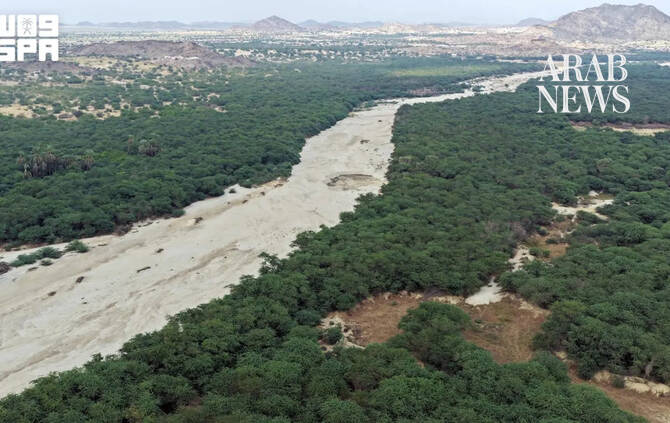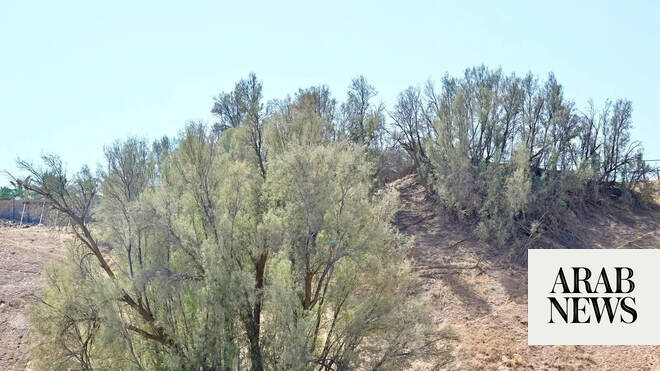
RIYADH: The acacia tree is of significant importance to both the environment and culture in Saudi Arabia. It provides shelter for migratory birds and protects travelers and Bedouins in the Arabian Peninsula’s hot desert.
Among the many environmental benefits of the acacia tree is its ability to prevent desertification; its roots improve soil fertility; it provides shade and lower temperatures; it stores carbon and reduces carbon dioxide levels; and it stabilizes dunes in desert areas.
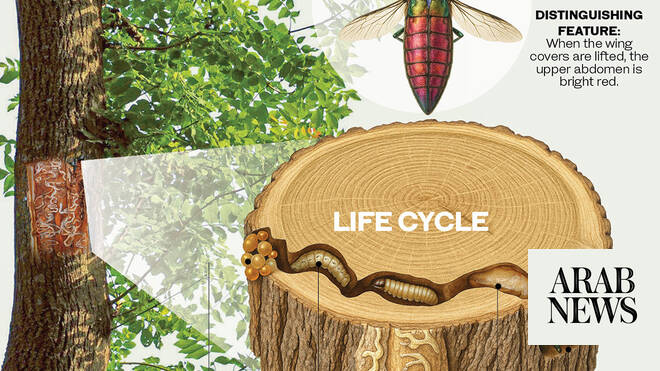
An invasive beetle — scientific name Agrilus planipennis Fairmaire — has been attacking trees for years, killing many of them in the Kingdom, including perennial trees.
The 'Emerald ash borer' (scientific name: Agrilus planipennis Fairmaire) is a highly destructive wood-boring beetle feeding on the phloem of ash trees. (Supplied)
Oubaid Alouni, an environmental consultant and former consultant at the National Center for Vegetation Cover Development and Combating Desertification, explained the role of the acacia tree in the ecosystem and how the pest threatens its existence.