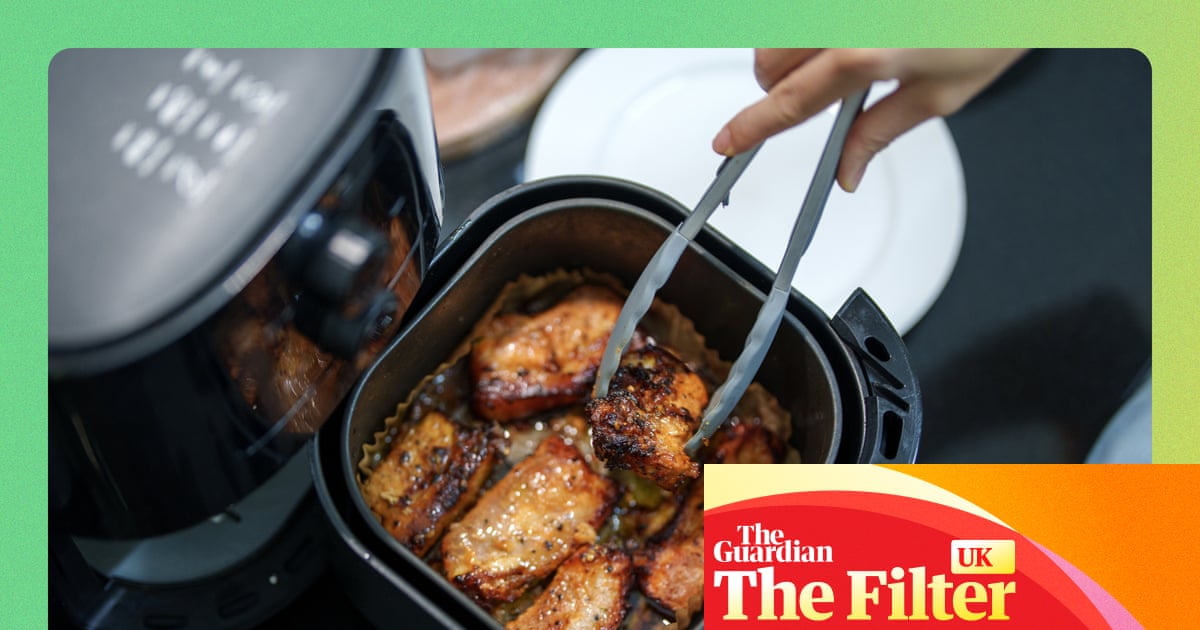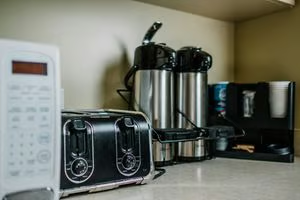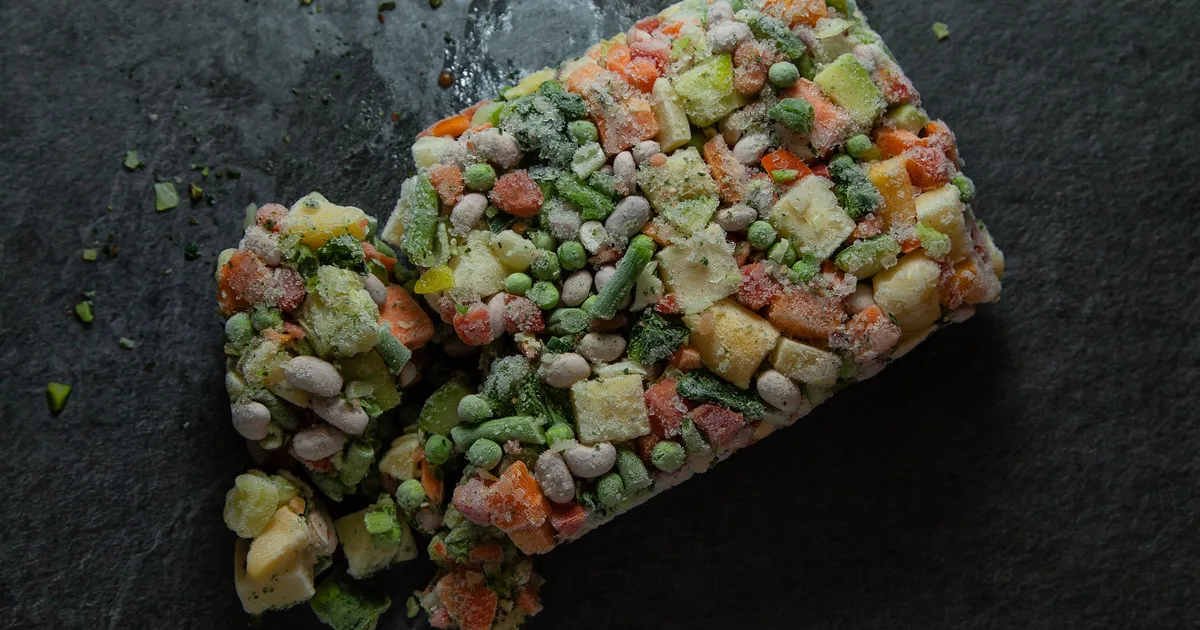
There are kitchen appliances that seem indispensable to modern life. I don’t mean the big, essential ones, like fridges and ovens, but the smaller ones that make food prep and cooking faster, easier and more efficient. Stand mixers, blenders, food processors … if you spend a lot of time in the kitchen, these may be the small appliances you can’t live without.During my single gal days in Florida, a microwave was my go-to kitchen appliance, especially since I did very little cooking for myself. I’d use the microwave to cook a veggie burger, heat a single-serving frozen entree, reheat my Chipotle leftovers, boil a mug of water for tea, and simmer my rage (cue Fiona Apple’s ”Tidal,” please). I’ve still got some low-level rage, but I jettisoned the microwave (and sadly, the Chipotle) in 2009, when I moved to Italy. In the whirlwind of things I had to adjust to when I downsized, changed countries, languages and cultures and started living with Paolo, my soon-to-be husband, not having a microwave barely blipped on my radar. I hardly missed it then, and, 16 years later, it’s become so unnecessary in my kitchen that I never think about having one. That’s partly a result of me living in Italy, but it’s also because I’ve changed my cooking methods and, perhaps most important, my perspective: I just don’t need the convenience that a microwave offers. And you probably don’t either. Microwaves take up a ton of precious counter space.To see if I was the only oddball with no microwave, I conducted an informal survey of friends on Facebook. And I found that more people than I expected don’t have microwaves. Several mentioned lack of space as a major reason for skipping the microwave. “Microwaves take up a huge amount of space, especially when you live in a one-bedroom apartment,” said Kelly Medford, an artist based in Rome. South Carolina resident Kim Giovacco lived in a tiny house for years, where space was a commodity. “It was very easy to get used to not having one. They are big space wasters,” she said.When I moved to Italy, I moved into Paolo’s apartment, a smallish two-bedroom with an even smaller L-shaped kitchen. Even the fridge was a tiny under-the-counter model with a minuscule freezer compartment, a far cry from the giant French door refrigerator and freezer I’d had in Florida (which typically contained condiments, a head of lettuce, a half-finished bottle of wine and the aforementioned Chipotle leftovers). Most of the counter surface was gobbled up by the sink and stove, so there was simply no room for a microwave even if I’d wanted one. In fact, someone had the bright idea to gift us a microwave as a wedding present. To make space for it, we had to buy one of those Ikea-type kitchen carts to set the microwave on, and park the cart under a window. It had microwave, convection and grill functions and was large and loud. I rarely used it, as I was afraid I would do something wrong and make it blow up. When we moved houses, I left it behind. Adjusting to no microwave was pretty easy.Another big reason I’ve grown accustomed to a microwave-less life is because in Italy, we shop, eat and cook differently. This was especially true when I first arrived here; grocery stores didn’t sell a wide range of frozen meals, and the frozen foods they did sell were mostly vegetables (cooked on the stove or oven), pizzas (cooked in the oven) or gelato (no cooking required). While that’s changed in the last decade or so with the arrival of more ready-made frozen foods, there are still no equivalents to TV dinners, macaroni and cheese in a cardboard box, or canned soups you dump in a bowl and heat in the microwave. Massimo Ravera via Getty ImagesFrozen vegetables can be reheated just as well (though maybe not as quickly) on the stovetop as in a microwave.The lack of convenience foods means I had to learn to cook differently (or maybe I just had to learn to cook), by buying ingredients and preparing meals. Homemade soups, pasta sauces, roast meats, baked goods (because there are no cake mixes or refrigerator cookie dough here) were all things I learned to make and for which a microwave was completely useless. Besides, as my Facebook pal Caroline Trefler said, “Anything that I could make in a microwave I can make on the stovetop or in the oven.”But what about reheating? In my nonscientific survey of my Facebook community, respondents who do have microwaves cited the ease of reheating — mostly their cold coffee. (Just drink your coffee while it’s hot, people. Or drink espresso!) But that’s a lot of counter space or would-be cabinet space to dedicate to reheating coffee or leftovers. In the 30 years she’s lived in Italy, Venice resident Jill Weinerich Luppi has never had a microwave. “I have no idea what they are used for besides heating up leftovers. When I need to do that, I either heat things up on the stove or in the oven.”Reheating items on the stove or in the oven felt like a bother to me at first, but then I just got used to it. Yes, I have to stand guard at the stove as food reheats, and dirty a pan and a wooden spoon. But I’m not a complete masochist — I have a dishwasher, and that’s what it’s for. The case against (and for) microwaves:In my case, at least, choosing to live without a microwave was less about being virtuous and more about practicality. But some people see microwaves as the small appliance equivalent to Velveeta (which by the way, melts way better in a microwave than it does on the stove) — a symbol of everything that’s wrong with modern life: poor nutrition, instant gratification and the dissolution of shared meals around the family dinner table. For others, it’s (literally) a matter of taste. “Food tastes better when it is not heated in the microwave,” said Deborah Schwartz Cunningham, whose microwave broke a few years ago and wasn’t replaced. “I also find myself buying less processed foods.” Several cited “cooking real food” and not “nuking their food” as a motive for going microwave-less. But according to fitness and nutrition coach Ashlee Van Buskirk, it’s not microwaves that are to blame for bad eating habits, but rather the glut of low-nutrition foods. “Processed foods are aggressively marketed to specific populations, including children, low-income groups, and racial and ethnic minorities, and are often highly accessible within these communities,” Van Buskirk said.Jupiterimages via Getty ImagesHave you ever stopped to think about how processed the frozen foods are that you microwave?She adds that for low-income families, especially, frozen and canned foods, which are easily heated in the microwave, “represent a critical resource due to their affordability, nutrient density, and extended shelf life, which reduces food waste. These products also provide access to nutritious options in food deserts, where fresh produce is limited.” And as far as nuked food is concerned, Bradley Lampe, principal research toxicologist at the National Science Foundation, said there’s no reason to break out the Geiger counter. “A microwave oven in good working condition poses little to no safety concern,” Lampe said. “Microwave radiation does not present the same types of concerns as X-rays, because microwaves are lower energy and non-ionizing.” Lampe also pointed to an FDA article that states using a microwave didn’t affect nutritional value or safety. So there, you virtuous Luddites.Given the choice, I’d still opt out.When we moved to a larger home and had the chance to redo our kitchen, the initial design included a built-in microwave over the oven. I thought about the 1.5-2 cubic feet of kitchen space I’d have to sacrifice just to have a box in which to reheat food, and I had the designer swap it out for more cabinet space.For my most recent birthday, my husband and daughter gave me an air fryer — a big one, with two cooking chambers. It takes up a lot of counter space, almost as much as a microwave might. But they spent so much time researching and selecting the right model, I didn’t have the heart to reject the gift. It’s fast, convenient and yields good results. Would I have bought one for myself? Probably not. And I’ll still happily heat up my leftovers on the stove, no nuking required.
I Cut This Household Item Out Of My Life, And I Can't Believe How Much It Upsets People
This is controversial, but ... I got rid of this counter-space hog, and you can, too.
1,410 words~6 min read