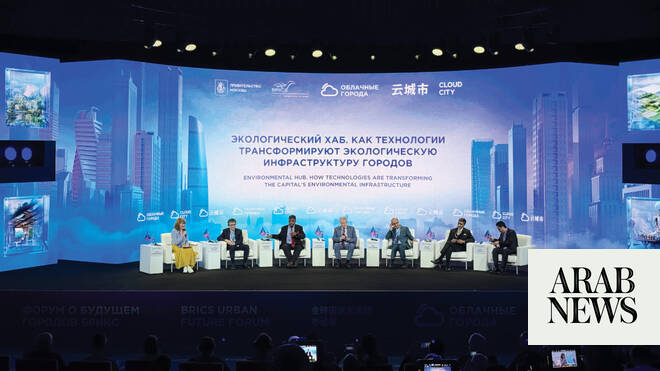
RIYADH: For years, the vision of the “smart city” has been sold on a promise of hyper-efficiency: a world of sensors, seamless traffic, and artificial intelligence-driven automation.
But as a wave of next-generation urban projects rises from the deserts of the Middle East and North Africa, a more profound question is emerging: What should a smart city actually do for its people?
The recent BRICS Urban Future Forum in Moscow, which drew thousands of global experts, made it clear that the conversation has shifted. The buzzwords of AI, robotics, and IoT were ever-present, but the central theme was one of human-centric transformation. But how do you turn that theme into a reality?
For Aisha Bin Bishr, former chief executive officer of the Dubai Digital Development Agency and former deputy chairman of the Board of Directors of EMAAR Development, the answer lies not in a specific technology, but in a foundational principle.
In an interview with Arab News on the sidelines of the forum, she identified the crucial mechanism: “From my experience, the most critical mechanism is trust through governments.”