Stretching back to 2012, the government investigation into grooming gangs has a controversial history
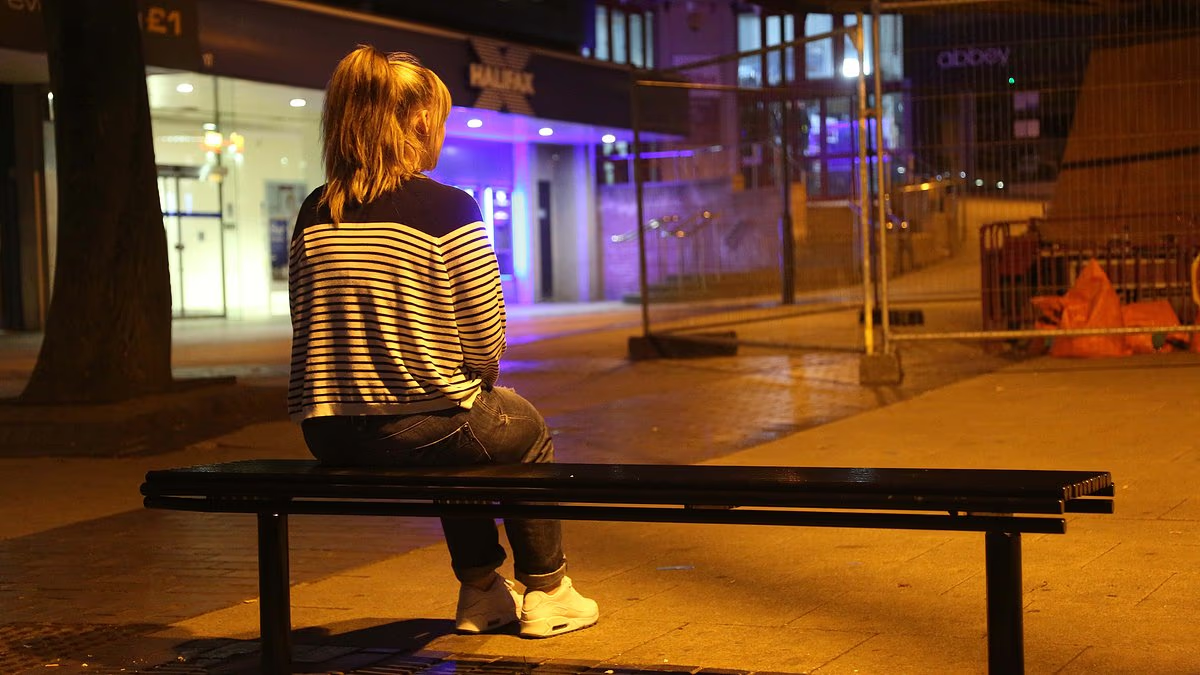
In late 2012, Samantha Walker-Roberts took a Megabus from Manchester to London, bound for the Houses of Parliament. In an airless room in Westminster, she told Keith Vaz, then chair of the home affairs select committee, her story.
In October 2006, aged 12, she had gone to a police station in Oldham, Greater Manchester, to report that she had been sexually assaulted in a graveyard. Staff at the station were dismissive, she told Vaz, and encouraged her to accept a lift home from two men loitering near the doorway. She ended the night in a detached house in a quiet cul-de-sac, where multiple men took turns to rape and abuse her.
Vaz, a former Labour MP, had been tasked with investigating “localised grooming” – gangs of men preying on teenagers in certain towns and cities across England. Despite a growing fear that men of South Asian origin were overrepresented, Walker-Roberts recalls being attacked by men of various ethnicities. Her case was sent to a new child sexual exploitation taskforce called Operation Messenger. A string of failings meant just one man – Shakil Chowdhury, a British citizen born in Bangladesh – was convicted.