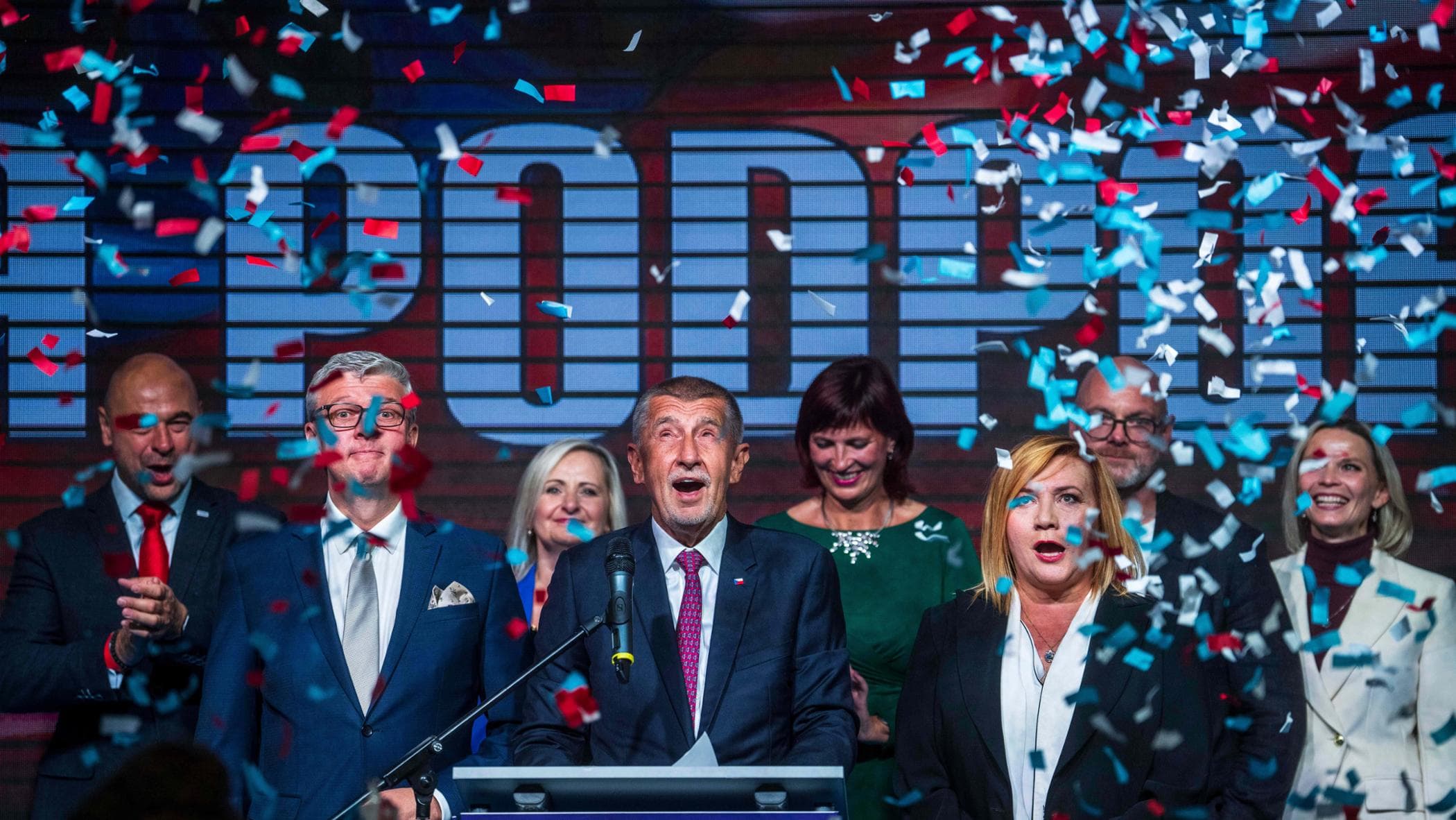
The likely new Czech government will add one more state opposed to the EU’s green deal and migration and asylum pact
I
f you open your window on a quiet street in central Prague, the first sound you hear is the trrrrk-trrrrk-trrrrk of carry-on suitcases trundling across paving stones, as tourists walk to their hotel or Airbnb. (The Czech capital had 8 million visitors last year.) As they trek around Prague Castle and fill the Old Town bars with cheerful chatter, these visitors – many of them probably unaware of the recent election victory of rightwing populist nationalist parties – may think this is just another normal European country. And you know what: they will be right.
Some more extensively informed newspaper commentators, reaching for an attention-grabbing generalisation, tell a different story. This is eastern Europe reverting to type, they say. After Hungary, Poland and Slovakia, now Czechia as well! The truth is more interesting – and more worrying.
Thirty six years ago, at the time of the velvet revolution in autumn 1989, people in Prague would constantly tell me they just wanted theirs to be a “normal” country. By normal, they meant like (West) Germany, France, Britain, Spain or Italy. Well, now it is. It’s just that the normality has shifted in the meantime. Back then, the prevailing western normal was liberal, internationalist, pro-European; now it’s increasingly anti-liberal, nationalist and Eurosceptic. In the Czech election campaign, the incumbent prime minister, Petr Fiala, tried to mobilise Czech voters by asking: “Do we want to move towards the east or towards the west?” . But what does that mean, when the west is the US president, Donald Trump, and the Italian prime minister, Giorgia Meloni, not to mention Nigel Farage’s Reform UK, Germany’s Alternative für Deutschland and France’s Rassemblement National, all currently leading in opinion polls?