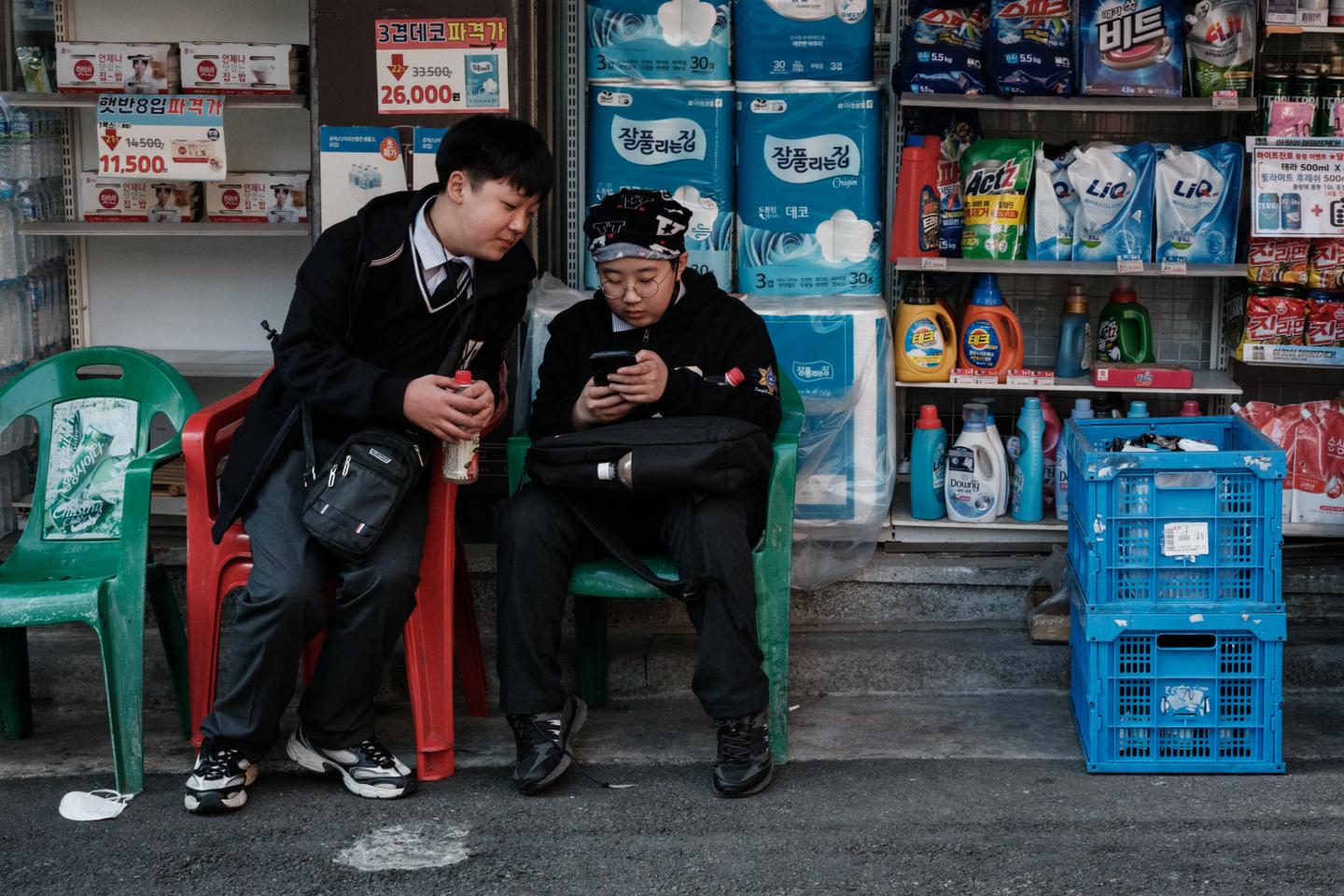
Students in front of a store in Seoul, March 21, 2025. YASUYOSHI CHIBA / AFP
Between January and June, Kim Tae-woo spent 4 million South Korean won (about €2,500) on online games using his family's credit card. "I was spending a lot, but it was never enough," admitted the teenager (whose name has been changed, as with all minors quoted), displaying a maturity beyond his years. "Today, I really feel sorry for my parents and I regret it."
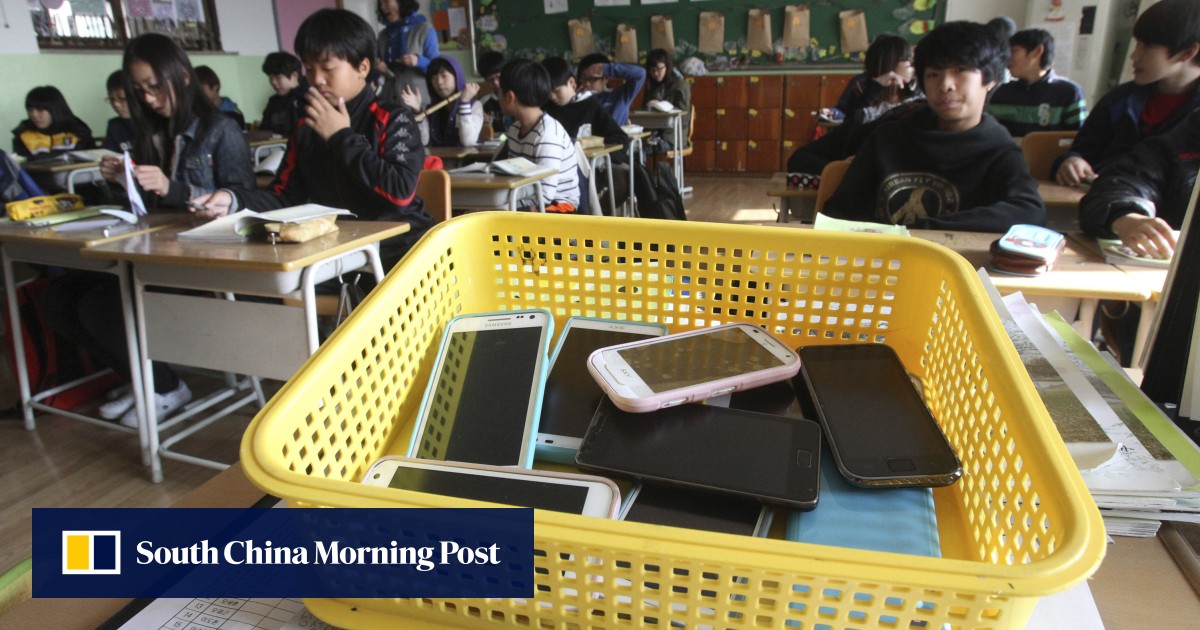
This 13-year-old South Korean is among about 30 middle and high schoolers who attended a two-week "therapeutic" camp in August at the National Youth Internet Dream Village, a government-run center for treating digital addiction among young people. Located in Muju, in the mountainous heart of South Korea, the center offers one-to-four-week programs to treat dependency on the internet, smartphones and, more recently, online gaming. Since opening in 2014, it has welcomed several thousand teenagers. Upon arrival, everyone must surrender their digital devices.
"At first, I was always thinking about my game. Now, not at all. I even enjoy not using my phone anymore," said Kim Tae-woo. Every day, educators, psychologists and social workers guided the young participants through their stay. "Some, whose addiction is severe, become violent and even try to run away," reported Lee Sung-ho, a 22-year-old mentor.