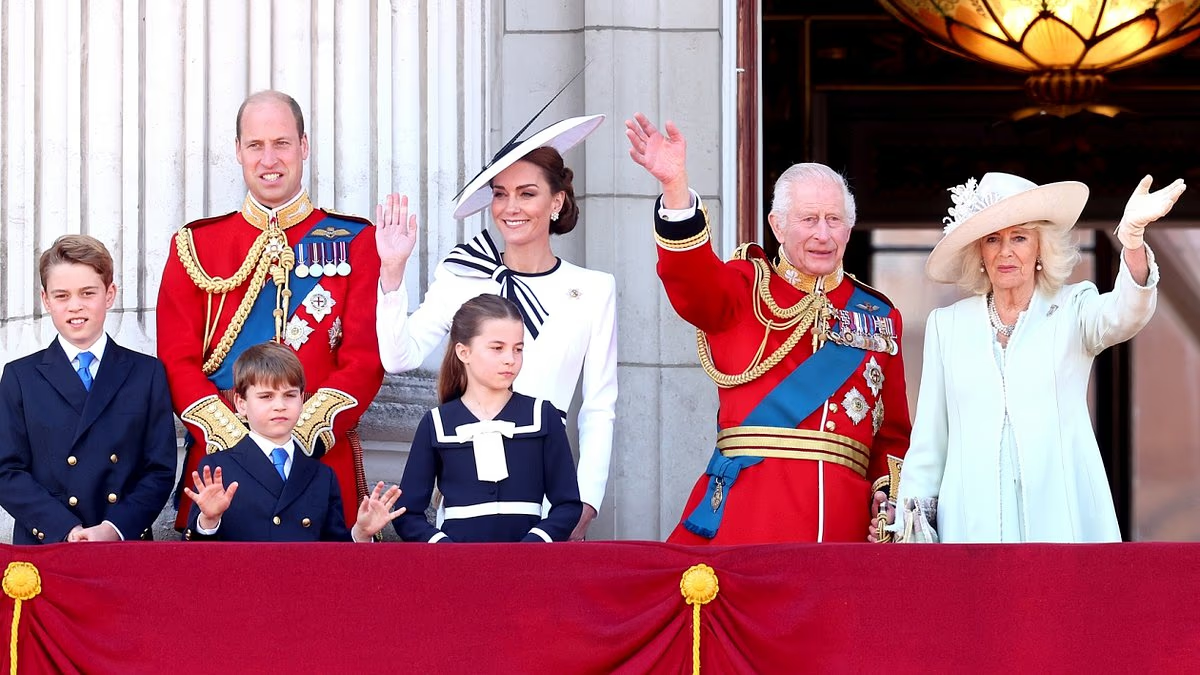
‘The Firm’ as a modernising strategy was already falling apart, but with the shocking allegations so fully in the public domain, it has now collapsed
T
he royal family was always a disaster waiting to happen. Its creation as a marketable entity in the 1960s by the late Queen Elizabeth II was meant to “modernise” the monarchy for the 20th century. It worked, but only up to a point. Her son Prince Andrew has long been its biggest liability, this week in trouble yet again due to his alleged behaviour within that ghoulish circle, the friends of Jeffrey Epstein.
King Charles now has a decision to make as to how far he can allow his brother’s past behaviour to tarnish the family’s image. That image is the essence of royalty. Monarchy has no other authentication. The constitutional position of head of state in a democracy is subject to the will of parliament, but also to the “will” of the people. It was the latter will that forced the abdication of Edward VIII in 1936 over marrying a divorcee. A royal personage cannot stand for re-election. He or she is acceptable to the generality of public opinion or they are nothing.
When in 1969 the late queen was persuaded, reluctantly, by her husband, Philip, and her press secretary, William Heseltine, to allow a film to be made called Royal Family, it was a constitutional decision. Elizabeth was not to retreat like other postwar European monarchs at the time into an anonymous obscurity, to stick to their bicycles. She would refresh Britain’s semi-divine concept of monarchy as embodied in an “ordinary family”. It was portrayed as “the Firm”, a term that originated with Elizabeth’s father, George VI.