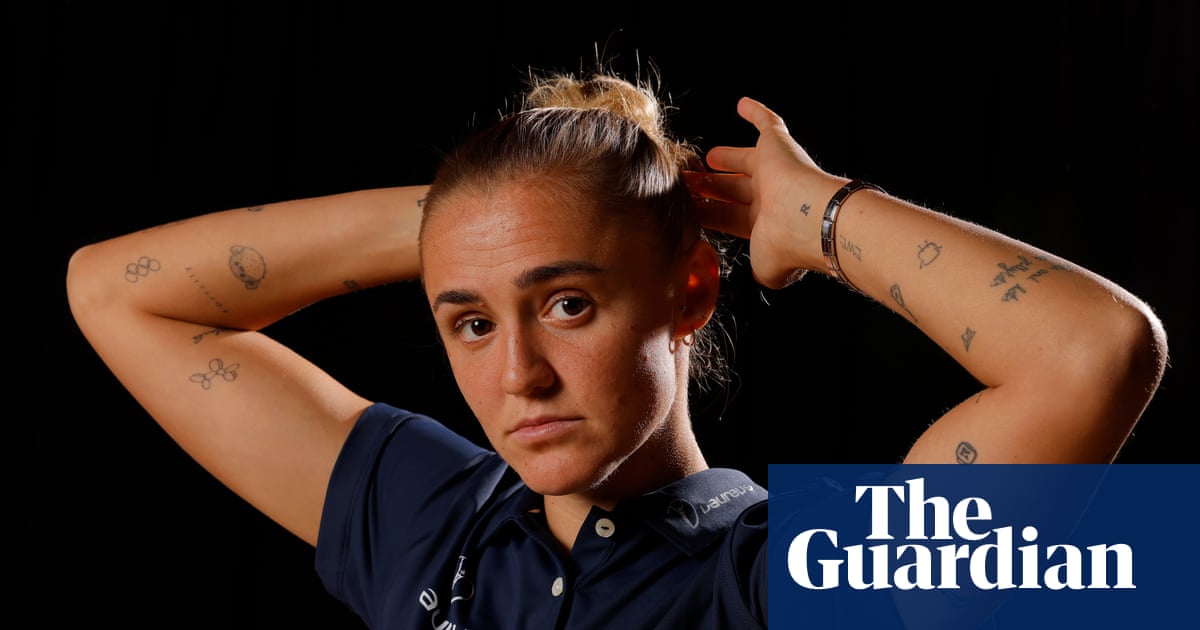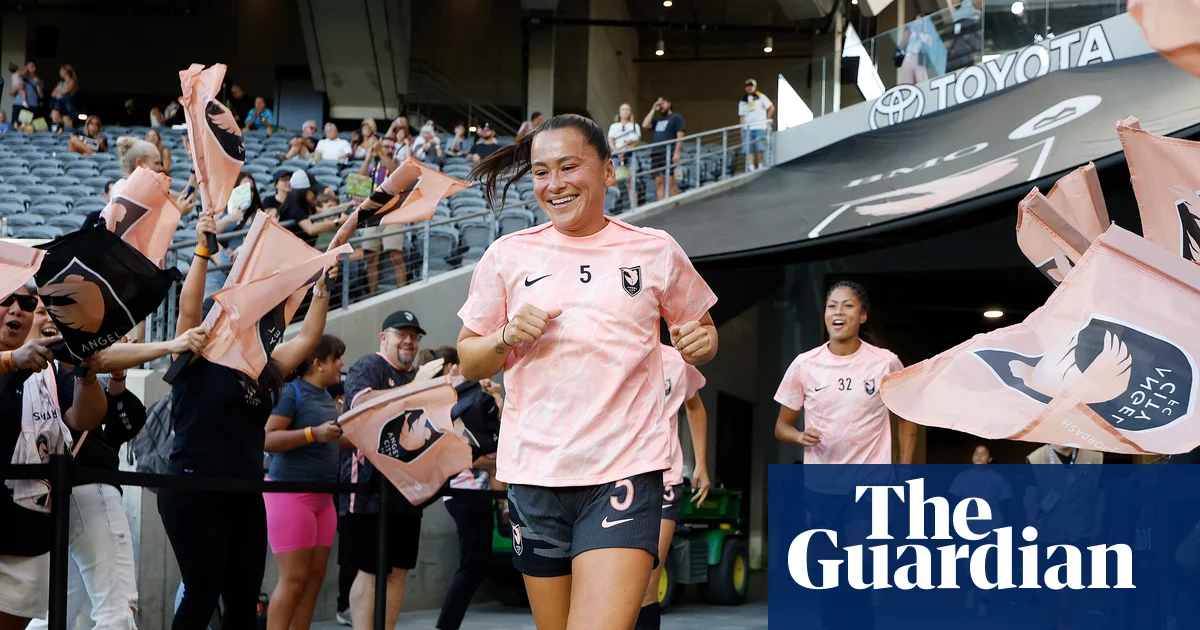
Under a blazing-hot sun, among a crowd of 90,185 at the Rose Bowl in Pasadena on 10 July 1999, an 11-year-old girl was standing behind the goal where Brandi Chastain struck the penalty that won the World Cup for the United States, soaking in pure inspiration. Ali Riley, now 37, captain of New Zealand and a veteran of five World Cup campaigns, looks back on witnessing that moment in person and says: “That made me want to be a strong woman that could show her abs in front of the entire world and be on the front page of a newspaper. I think about how uncool it was to be good at sports, back then, and that moment was pivotal for me to see those women do what they did and be celebrated for it.”On Sunday it will be Riley being celebrated at what is being billed as her farewell match at her home-town club Angel City, who named her as their first captain in 2022. She is retiring at the end of this season after a remarkable career that has included 163 international caps, four Olympic Games and spells with Rosengård, Bayern Munich and Chelsea, and Sunday is poised to be Angel City’s final home game of a season in which the playoffs appear to be beyond them. Her decision to retire comes after a year in which she has been through IVF, seen her childhood Los Angeles home burn down and got married, all while attempting to rehabilitate from a chronic nerve injury, so being able to hang up her boots on her own terms, back in Angel City’s squad, may be her biggest achievement.Brandi Chastain’s celebration after winning the 1999 World Cup inspired Ali Riley. Photograph: Robert Beck/Sports Illustrated/Getty Images“I went into a 50-50, landed awkwardly, and I just felt burning down my whole left leg,” Riley says, of the initial injury to a muscle in her glutes, the obturator internus, in 2023, the complications from which led to her nerve injury. “I had never felt anything like that before, and for months I couldn’t walk. You get like these lightning strikes burning your leg. I called them ‘zingers’.“I had medical professionals saying to me: ‘It’s in your head, so if you meditate, you won’t feel it.’ That’s not correct, that did not help me. We were trying medication, injections, but the pain, it takes your breath away, like someone stabbing you. I went in the gym every day for seven months and saw no progress. And then we found a doctor in Salt Lake city who – I thank him – tried a different injection and eventually I got to where I am right now. I can use my leg to play soccer. For two hours I can be on the field and feel great. The rest of the day is still pretty tough. I can perform, I can train and I get to be with my team. But physically and emotionally, I can’t do this for longer than probably another couple of games, so I can’t keep living like this. I am retiring because I have to take care of myself.”Riley returned to Angel City’s matchday squad in August, crying tears of joy with her teammates and medical staff, but has not got beyond being an unused substitute, though the hope is for her make an appearance on Sunday. She wants more knowledge for people needing treatment for nerve injuries and more discussion in soccer around motherhood and supporting aspiring parents. “I did two rounds of IVF during my injury – it’s something we should be speaking about more,” she says. “There is a very short window and an egg retrieval can be very uncomfortable [so] I really hope that we get even more support.“It’s not something that anyone spoke to me about and doing IVF at age 37, it’s a lot harder than if you freeze your eggs earlier in your career. We’re seeing more players have kids and return to play, which is so important for that visibility. Right now it’s not possible for everyone. But women can do anything if we are given the support and the resources.”Ali Riley (left) playing for New Zealand against the US, where she was born, in 2023. Photograph: Hannah Peters/Getty ImagesJust after her IVF, Riley’s heart broke when her parents’ house, where she had grown up in the Pacific Palisades area of Los Angeles, burned down in January’s destructive fires.Riley appears to feel immense sadness as she recalls seeing her neighbourhood burn, but has also a strong sense of perspective, grateful to have her loved ones safe and around her, as well as her memories. “I’m so lucky to have grown up in a place like the Palisades where I was so safe and I was able to be a kid and play outside until dark – it’s where I learned how to play soccer.” She says her parents are planning to rebuild. “I really try to turn everything into a positive,” she says, “and not think so much about my own or our own suffering but wanting to give back and still spread joy.”Three days later she was getting married, and she begins to well up and she speaks of her gratitude for her husband’s contribution to her comeback from injury.“I don’t know what I would do without Lucas because there were many, many days when I was depressed and he has really picked up everything that I used to have more energy for, and brought me so much joy. He’s really been the one to help me get out of the house, do the grocery shopping and make us dinner. I had lost myself a lot and I became definitely a shell of myself and I don’t ever want that to happen again.”Those low points will not be what she remembers most, though, when she reflects on her career of nearly two decades. Her international career with New Zealand, where her father is from, gives her the greatest pride, all the tiring economy-class journeys worth it when she helped her country earn their first World Cup victory.
‘I can’t keep living like this’: Ali Riley on ending her stellar soccer career
Angel City and New Zealand defender on injury pain, losing her childhood home in LA’s wildfires and why the sport needs to talk more about IVF
1,385 words~6 min read