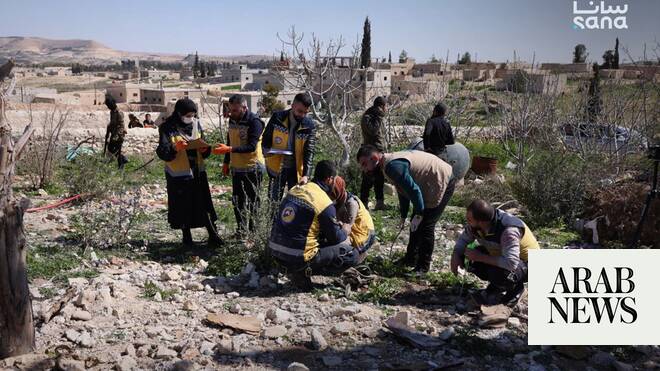
A burly bearded man in a blue tunic moved swiftly through grassy stubble on a windswept road in rural Damascus, collecting bones with his bare hands.
He added a jaw to the pile, before gently picking up a skull. Briefly, he kissed it - a moment of tenderness for one of the many victims of Bashar al-Assad. Ten months after Assad was ousted from power last December, in a lightning rebel advance, mass graves are still being uncovered.
The Syrian dictator's legacy is embedded in the soil here - skeletal remains where crops should be. There are now more than 60 grave sites and counting.
One of the latest came to light in al-Otaiba village, in the district of Eastern Ghouta, where a shepherd stumbled on clothing and human remains after straw was burnt off.
The authorities believe as many as 175 bodies were bulldozed into a mass grave in this former opposition stronghold.