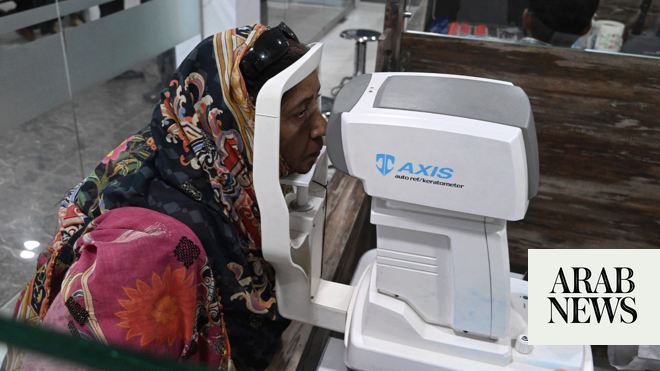
KARACHI: Pakistan has recorded a dramatic reduction in blindness rates, from 1.78 percent in 1990 to just 0.5 percent today, according to a study by one of the country’s leading non-profit eye hospitals, which credited decades of joint effort by public and private stakeholders for the improvement.
Founded in 1985, the Al-Shifa Trust Eye Hospital provides free and subsidized eye care through a national network of hospitals and outreach programs. The organization’s extensive fieldwork, data collection, and partnerships with government health departments have made it a key reference point for national blindness statistics and trends.
Pakistan’s health experts have long cited preventable eye diseases, including cataracts, trachoma and diabetic retinopathy, as a major cause of disability. But as the population grows and life expectancy rises, genetic disorders and lifestyle-related conditions are expected to form a growing share of the country’s vision loss burden, experts warned on Thursday.
Speaking at an event on World Sight Day, which falls on Oct. 9 each year, prominent ophthalmologist Dr. Tayyab Afghani said while the country’s success against avoidable blindness was encouraging, the focus must now shift toward new and complex causes of vision loss.