Show Caption
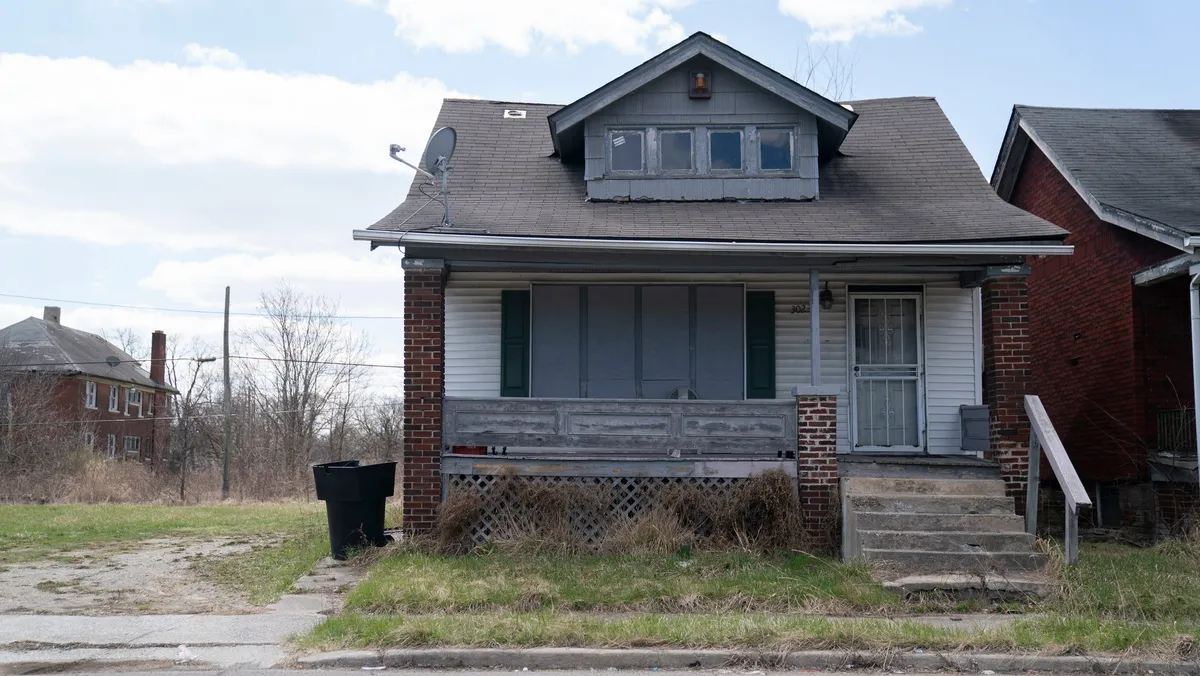
Consumer advocates and policymakers have long been concerned with banking deserts – areas where residents have no access to depository institutions and must rely on more expensive, less secure services like check cashers.A new report is drawing attention to mortgage deserts – areas where home sales are far more likely to be financed with cash than with a home loan. That ranges from Hudspeth County, Texas, where only 2% of home sales involved a mortgage, to Detroit, where nearly two-thirds of sales did.It's important to document where mortgage use – often a proxy for mortgage access – is rare, argues the report, from the progressive Consumer Federation of America.“Without access to mortgages, homeownership would be out of reach for most people,” wrote Sharon Cornelissen, CFA’s director of housing and report author. “Mortgage access is uneven across communities, shaping exclusion and unequal opportunities.”While mortgage deserts exist in both rural and urban communities, the reasons for them differ. In rural areas, a greater share of the housing stock may be manufactured homes, which have traditionally been harder to finance with mortgages, although new developments in construction and regulatory changes are helping to change that.Rural counties may also have a greater proportion of lower-priced homes. In most of the counties CFA classifies as rural mortgage deserts, average home values range from $53,000 to $91,200, significantly lower than the national median owner-occupied home value of $303,400 as of 2023.“Small-dollar” mortgages are often challenging to obtain. Lenders generally have to put the same amount of labor and resources into writing mortgages of any size, so they may avoid lower-cost ones. They may also struggle to underwrite less expensive homes because they need extensive repairs: "In what is called 'the appraisal gap,' the combined costs of buying and fixing up these homes often exceeds the post-renovation appraised value," Cornelissen explained.Finally, in rural mortgage deserts, Black residents make up twice the share of the population compared to other rural areas: 15% versus 7%.In contrast, most top urban mortgage deserts are historically disinvested, predominantly Black cities such as Baltimore, Memphis, and Philadelphia. Many such cities lost jobs with the decline of the manufacturing industry in the 20th century, and many still have an overhang of distressed or vacant homes that help drag down property values overall.As the report points out, mortgages don't just enable the purchase of a home, they also grant more financial flexibility to their users. Homeowners have a luxury renters rarely get – a more stable monthly payment over time, as well as the opportunity to refinance the payment to a lower rate when rates fall.Owners also accrue home equity that can be used to finance home repairs, education, or other expenses – or can be turned into reverse mortgages for senior citizens. And as USA TODAY has reported, by forcing owners to save, Americans who own wind up with far more wealth than renters do."Without mortgages, families cannot become homeowners, cash investors have free rein, and communities struggle to build wealth," Cornelissen concluded in a release.