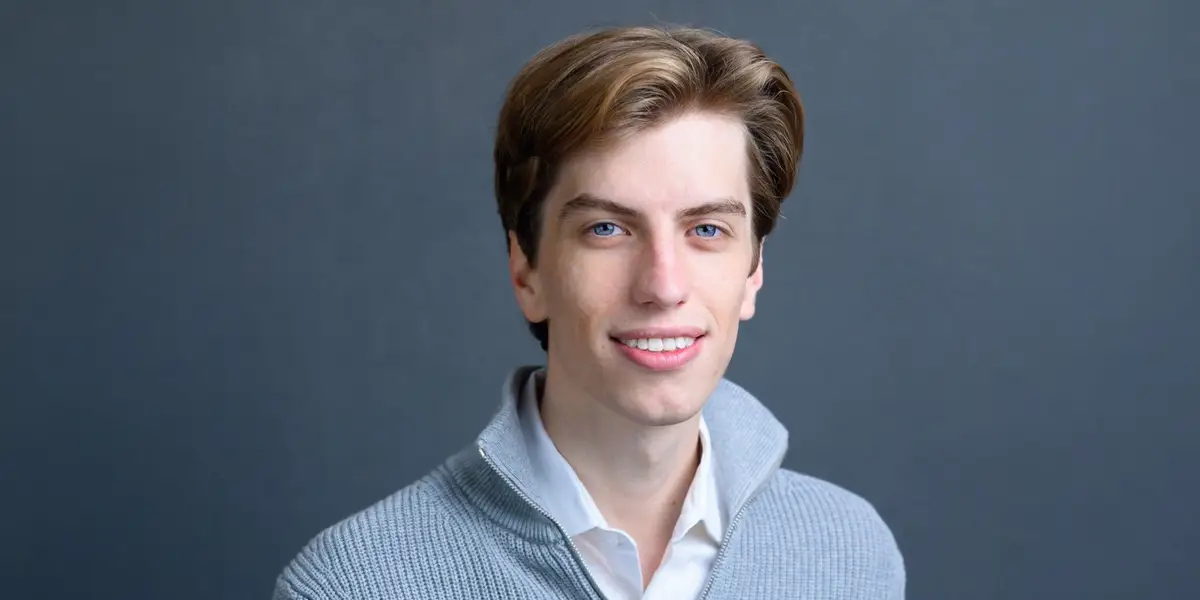
Of all the unlikely stories to emerge from the current AI frenzy, few are more striking than that of Leopold Aschenbrenner.
The 23-year-old’s career didn’t exactly start auspiciously: He spent time at the philanthropy arm of Sam Bankman-Fried’s now-bankrupt FTX cryptocurrency exchange before a controversial year at OpenAI, where he was ultimately fired. Then, just two months after being booted out of the most influential company in AI, he penned an AI manifesto that went viral—President Trump’s daughter Ivanka even praised it on social media—and used it as a launching pad for a hedge fund that now manages more than $1.5 billion. That’s modest by hedge-fund standards but remarkable for someone barely out of college. Just four years after graduating from Columbia, Aschenbrenner is holding private discussions with tech CEOs, investors, and policymakers who treat him as a kind of prophet of the AI age.
It’s an astonishing ascent, one that has many asking not just how this German-born early-career AI researcher pulled it off, but whether the hype surrounding him matches the reality. To some, Aschenbrenner is a rare genius who saw the moment—the coming of humanlike artificial general intelligence, China’s accelerating AI race, and the vast fortunes awaiting those who move first—more clearly than anyone else. To others, including several former OpenAI colleagues, he’s a lucky novice with no finance track record, repackaging hype into a hedge fund pitch.