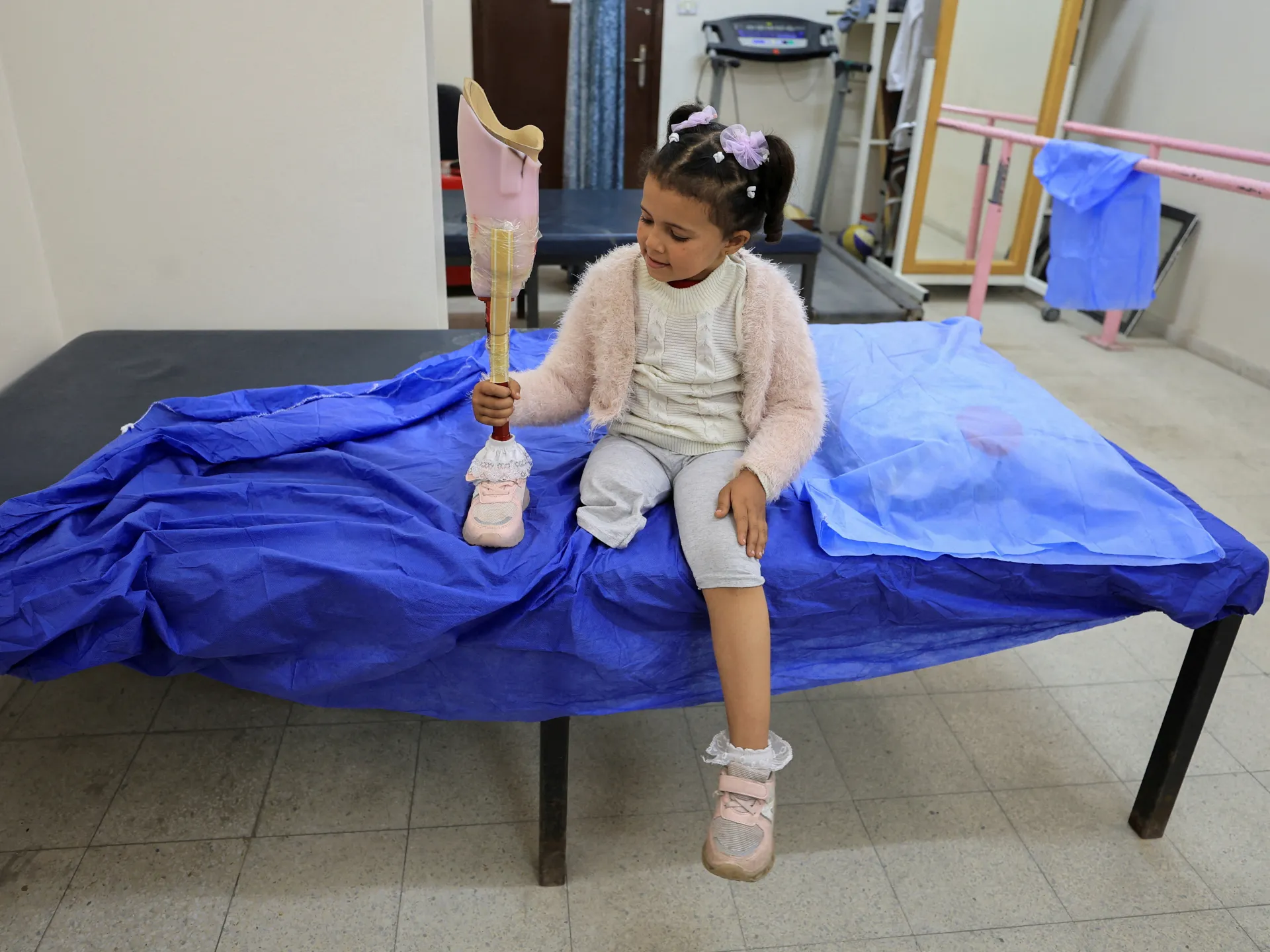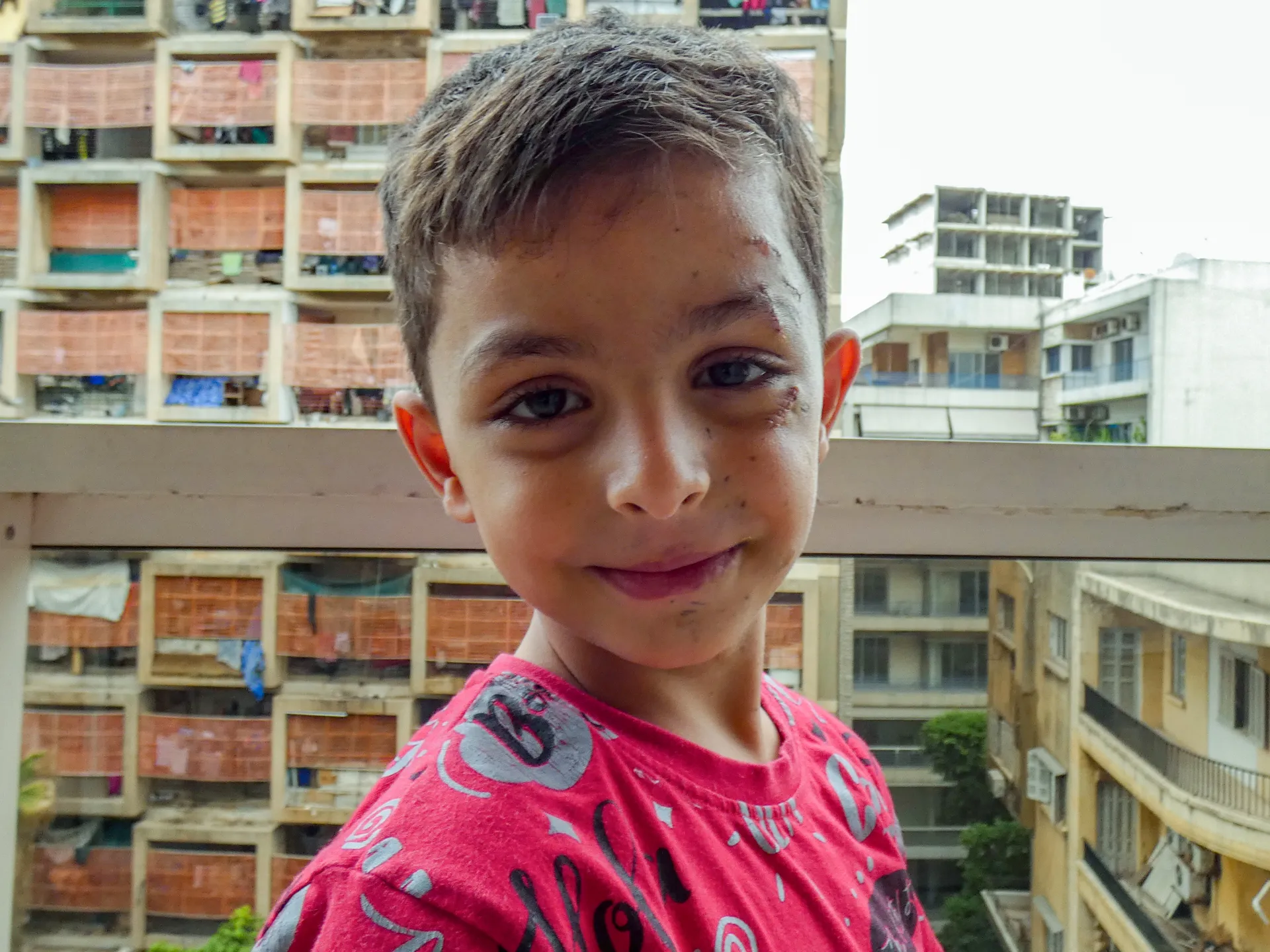
Beirut, Lebanon – They wait, smiling mischievously, their eyes bright at the sight of two wrapped Spider-Man notebooks.Ali, the bolder of the two despite being only three years old, tears his open at once.Recommended Stories list of 3 itemslist 1 of 3‘It is a bloodbath’: Australian medic describes situation at Gaza hospitallist 2 of 3Medicine is being invented in Gazalist 3 of 3I survived the Gaza genocide only to witness firsthand Western complicityend of listSix-year-old Omar fumbles, one-handed, with the plastic, his cheeks reddening with embarrassment. Without hesitation, Ali reaches across, peels it open and sets the notebook back in Omar’s lap.Soon Omar will have a prosthetic arm like Ali, and the small rituals of childhood, like opening a present, will be possible again.The boys are not brothers, although they live as if they were.In Hamra, a bustling district of Beirut where traffic clogs the streets and the Mediterranean glimmers beyond the hotels, they share the same apartment block and the same wounds.Both were pulled from the rubble. Both were the only survivors of their families, and both had their hands torn off by an Israeli bomb.Once separated by hundreds of miles, Omar Abu Kuwaik from Gaza, and Ali Khalife from southern Lebanon, are casualties of Israel’s war on children.They live under the care of their aunts. Maha, who brought Omar out of Gaza, was forced to leave her own teenage children behind.Omar, left, and Ali have become very close in the time they’ve spent together at the Ghassan Abu Sittah Children’s Fund accommodation, in Beirut, Lebanon [Caolán Magee/Al Jazeera]And Sobhiye, who never had children of her own, vowed to raise Ali after the rest of her family was killed.Omar and Ali now call their aunties Mama.“The memories of before are too painful,” Maha said. “They just want to forget.”‘Ali asks if his parents can still see him’The Khalife family home in Sarafand, in southern Lebanon, was a three-storey home that once bustled with children.“We used to go for ice cream and meals, hang out during the day,” Sobhiye recalled.“That morning felt calm,” she said, describing waking up and going out early on October 29, 2024. By 8:15am, an Israeli shell struck suddenly. She was driving close enough to feel it.Rescuers worked through the day, digging through concrete and steel. The truck carrying equipment shuttled back and forth, but no signs of life emerged as darkness fell.Fourteen hours after the shelling, they found two-year-old Ali under two storeys of debris, his small body withered, his hand severed, his breath shallow but still present.
Orphaned by Israel, two child amputees find each other in Lebanon
Pulled from the rubble in Gaza and southern Lebanon, two boys are rebuilding their lives together.
1,873 words~9 min read