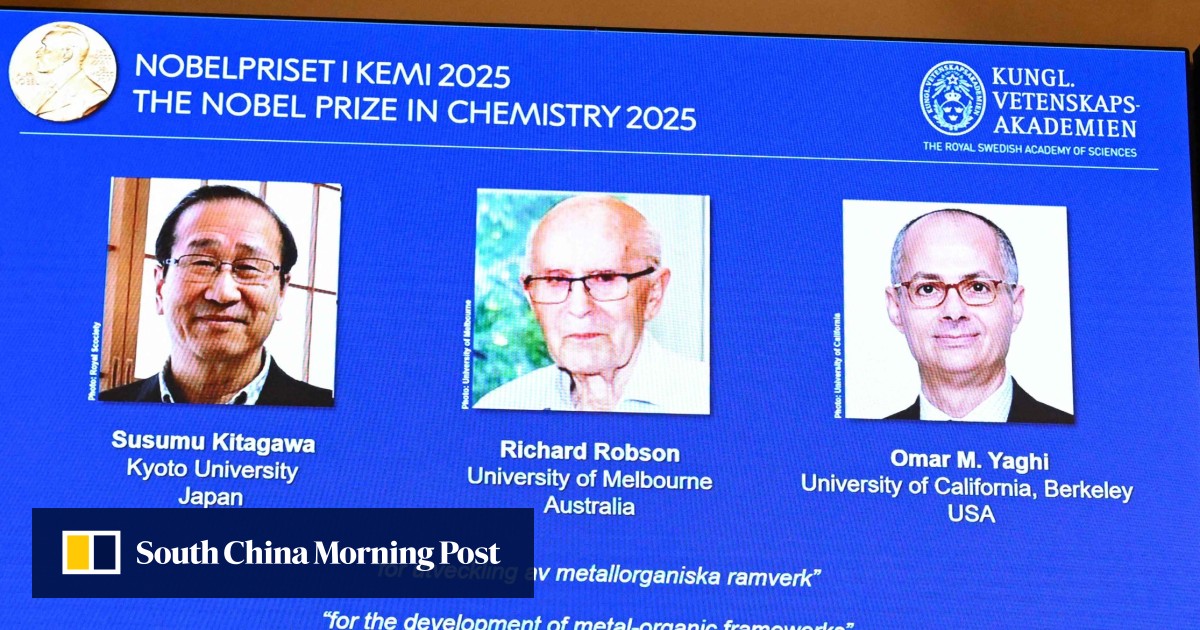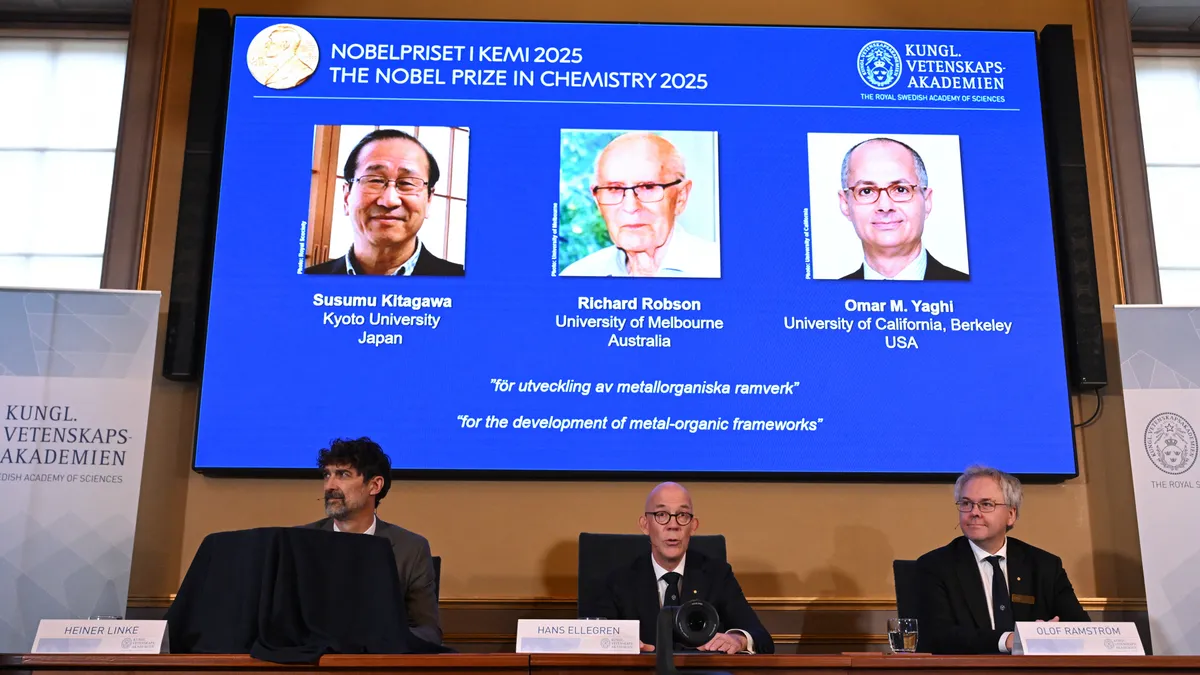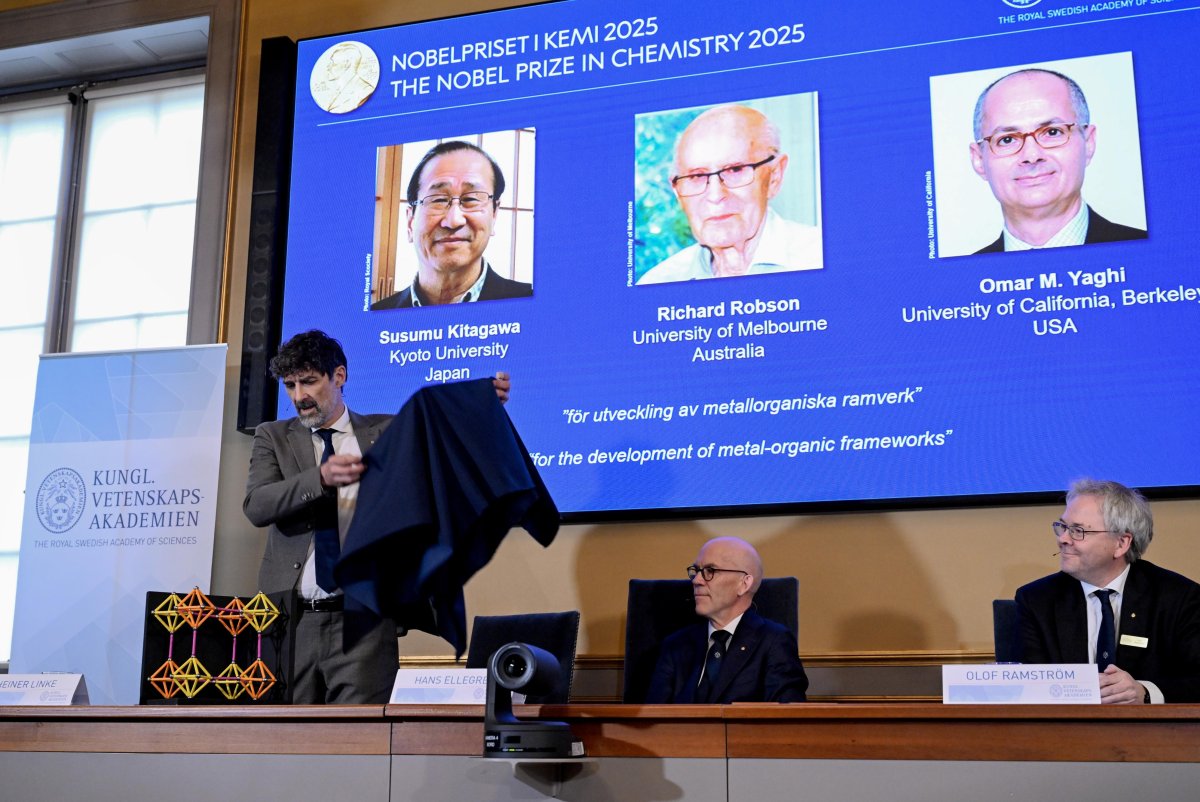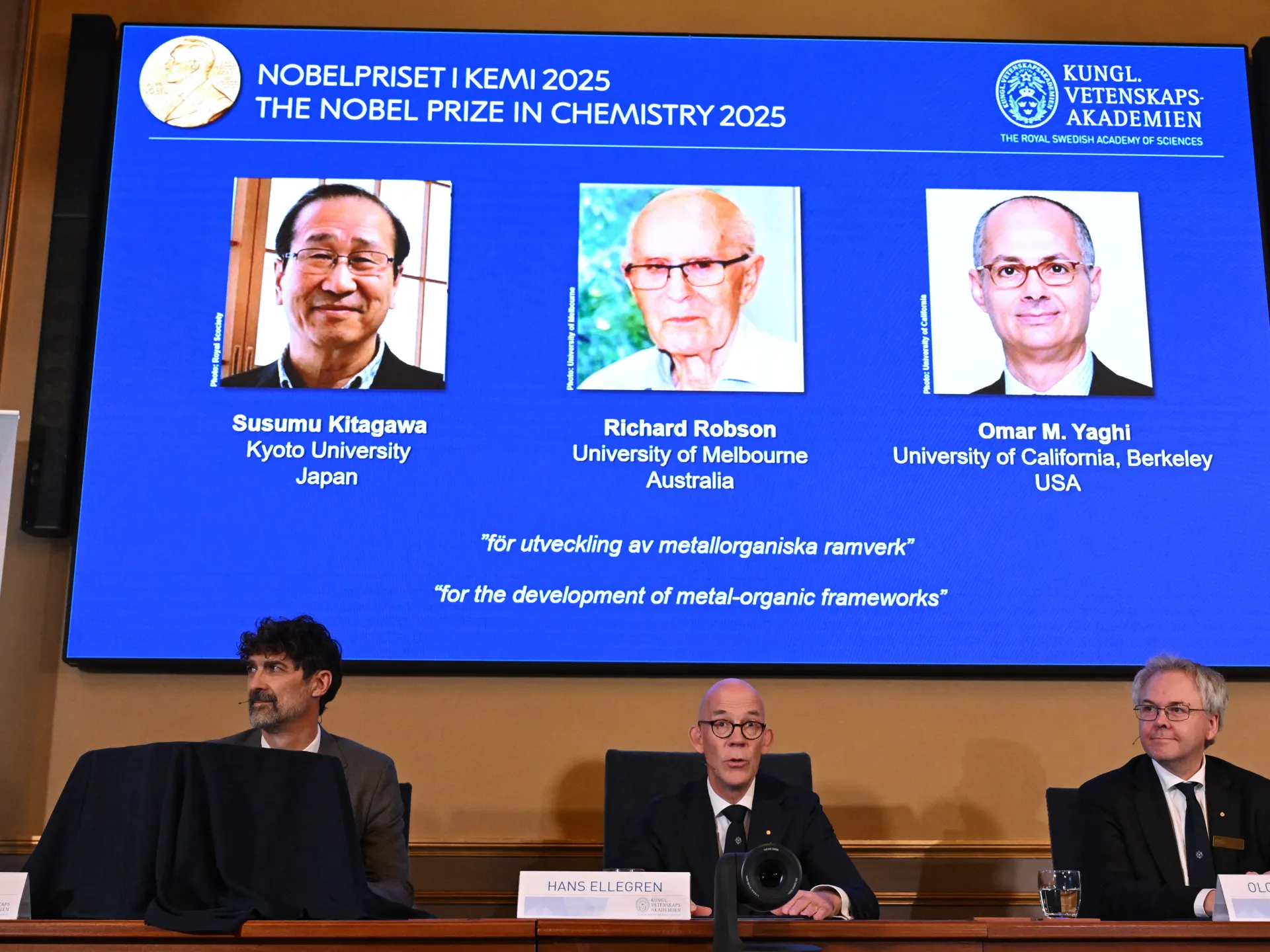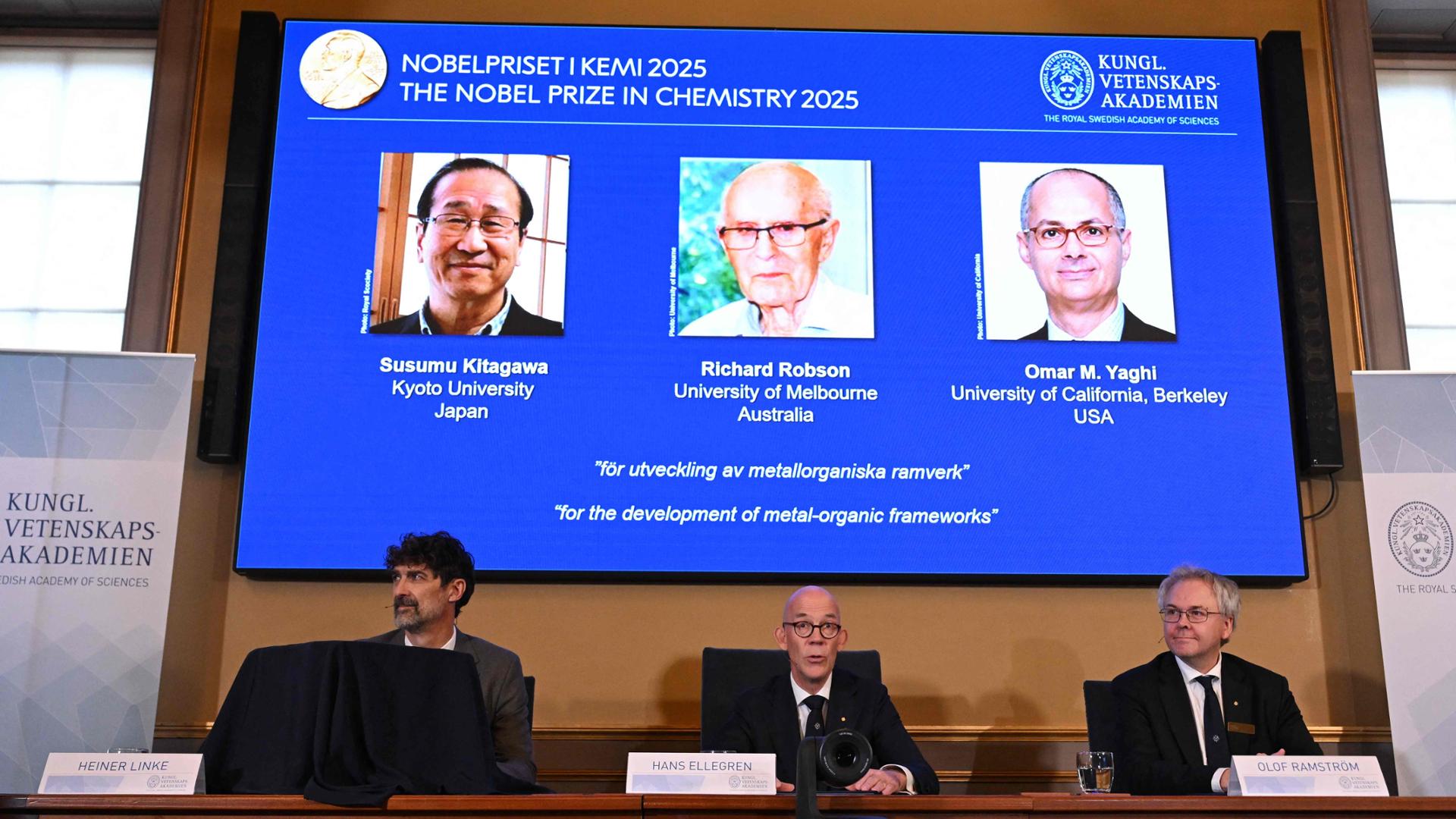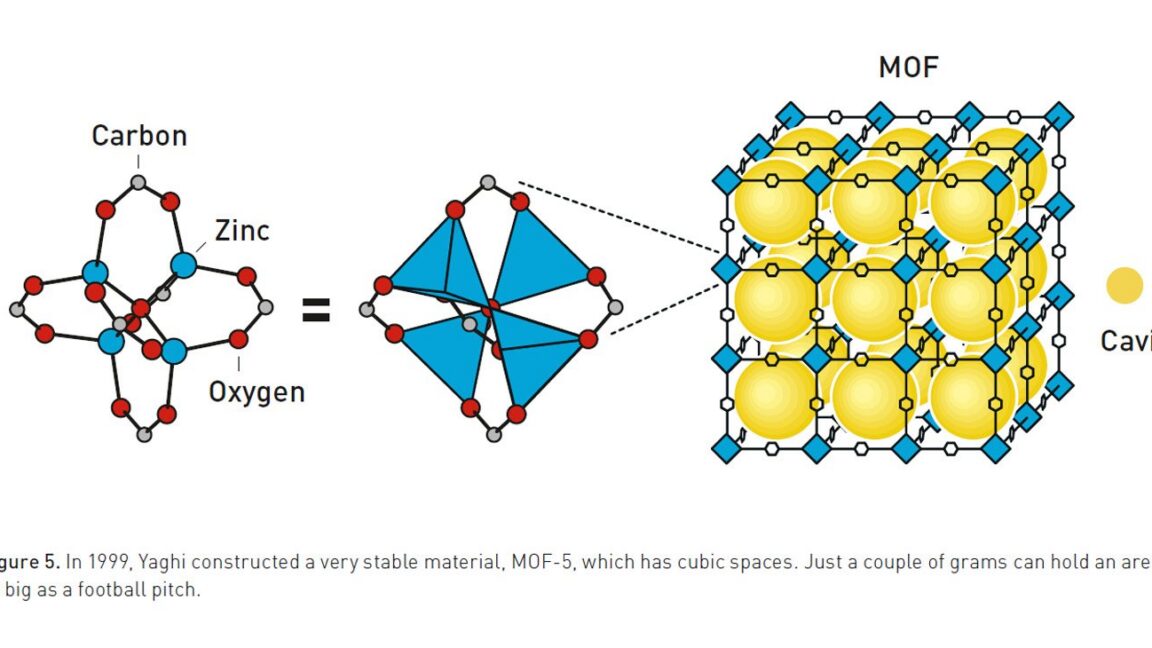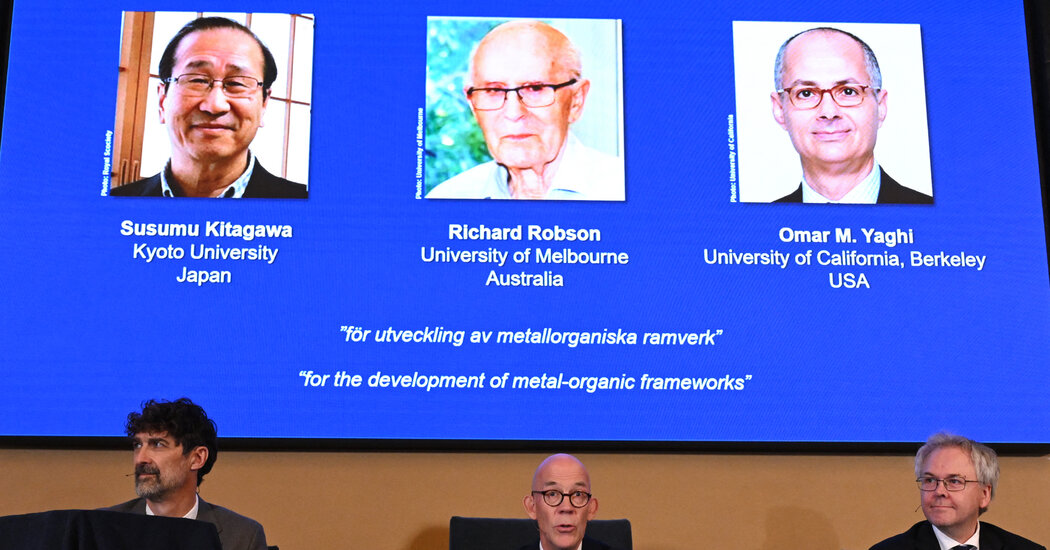
AdvertisementSKIP ADVERTISEMENTYou have a preview view of this article while we are checking your access. When we have confirmed access, the full article content will load.The prize was awarded to Susumu Kitagawa, Richard Robson and Omar Yaghi for the development of an architecture that some chemists compare with a molecular sponge.The Nobel Committee for Chemistry announced that Susumu Kitagawa, Richard Robson and Omar M. Yaghi had won the 2025 Nobel Prize in Chemistry on Wednesday.Credit...Jonathan Nackstrand/Agence France-Presse — Getty ImagesOct. 8, 2025Susumu Kitagawa, Richard Robson and Omar M. Yaghi were awarded the Nobel Prize in Chemistry on Wednesday for the development of molecular building blocks with spaces large enough that gases and other chemicals can flow through them.The cavities on the inside are “almost like rooms in a hotel, so that guest molecules can enter and also exit again from the same material,” Heiner Linke, chair of the Nobel Committee for Chemistry, said during the announcement of the award. The laureates’ discoveries, he added, paved the way for the creation of materials that can separate toxic chemicals from wastewater or harvest water molecules in a desert.The laureates’ work started with experiments by Dr. Robson in the 1980s and gradually developed over a period of about 15 years.“It takes time for science to be recognized, and it takes multiple workers in the field with different approaches,” said Dorothy Phillips, president of the American Chemical Society.The three laureates will share a prize of 11 million Swedish kronor, or around $1.17 million.Why did the Nobel Committee say they received the prize?The scientists are responsible for developing a new kind of molecular structure that combined metals and organic molecules. The metals act as nodes and are linked up by organic molecules containing carbon. Large, empty spaces form inside these structures through which gases and other materials can flow.Dr. Robson first experimented with metal-organic frameworks in 1989, when he combined copper ions with four-armed molecules, the committee said. The result was a sort of crystal with large cavities, indicating that other molecules might be able to move in and out of the framework easily.Thank you for your patience while we verify access. If you are in Reader mode please exit and log into your Times account, or subscribe for all of The Times.Thank you for your patience while we verify access.Already a subscriber? Log in.Want all of The Times? Subscribe.AdvertisementSKIP ADVERTISEMENT
Nobel Prize in Chemistry Awarded to Architects of Metal-Organic Frameworks
The prize was awarded to Susumu Kitagawa, Richard Robson and Omar Yaghi for the development of an architecture that some chemists compare with a molecular sponge.
396 words~2 min read