October 1 and 3 carry historical significance for Tamil Nadu. October 1, 1953 witnessed the inauguration of the Andhra State, consisting of the 11 predominantly Telugu-speaking districts which were till then part of the erstwhile Madras State, now called Tamil Nadu. Later in November 1956, the Hyderabad State, presently known as Telangana, was merged with Andhra, which was renamed as Andhra Pradesh.On the other hand, October 3, 1995 saw the passing of veteran Tamil scholar and former Chairman of the now-defunct Legislative Council M.P. Sivagnanam, one of the key leaders who vigorously campaigned for the retention of Madras (now Chennai) and Tirutanni within Tamil Nadu.Chorus for separate StateThe run-up to the Andhra formation in 1953 was a tale of many unsavoury events, including the death of freedom fighter Potti Sriramulu in Mylapore, Madras, on December 15, 1952 after a 58-day-long fast for the creation of the first State based on linguistic lines.
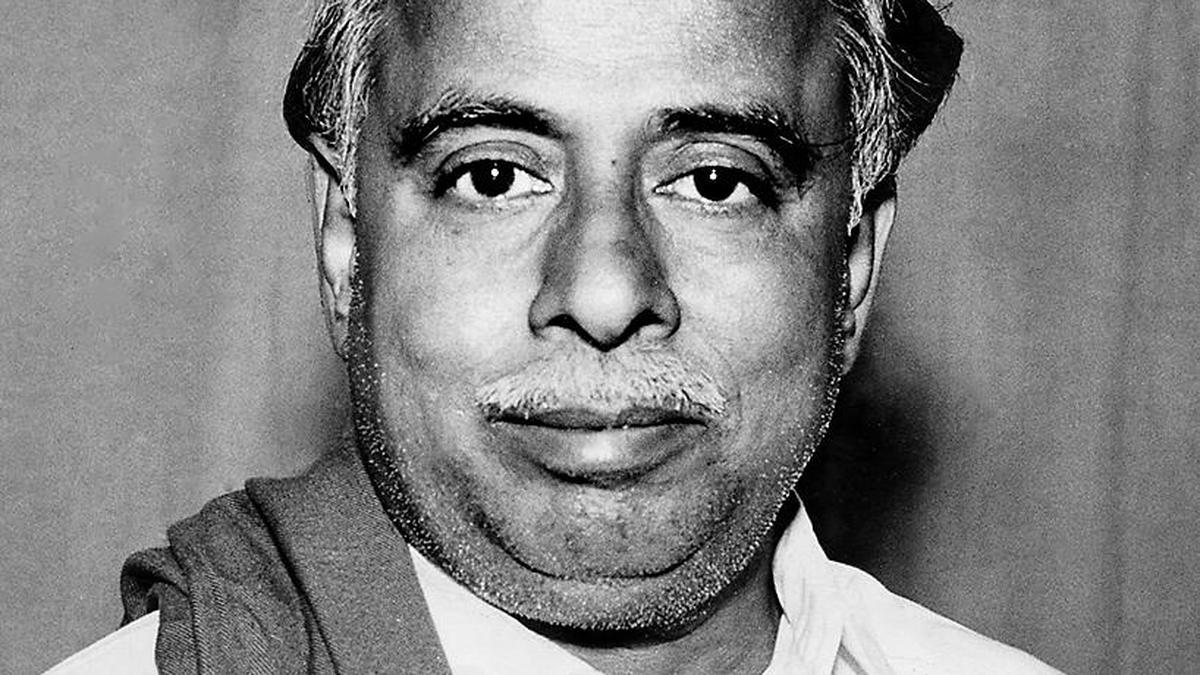
A portrait of Potti Sriramulu
| Photo Credit:
The Hindu Archives
The seeds for such a State were sown at a meet in Bapatla (in Andhra Pradesh) in 1913 and this demand came as a sequel to the constitution of Bihar and Odisha two years earlier, according to a paper by academician S. Sudhakar Reddy in the November-December 2023 issue of the International Journal of Humanities Social Science and Management. The paper also stated that “though the Telugu districts accounted for forty percent of the population and forty-eight percent of the territory of the Madras Presidency, the Telugus had no voice in the politics of the region.”In fact, a similar point was made even in 1949 by Sami Venkatachalam Chetti, a veteran Congress leader and philanthropist, who served as a member of the Central Legislative Assembly (precursor to Parliament) during the British rule and a member of the Madras Legislative Council and Corporation Council.At a meeting at the Mahajana Sabha Hall, Chetti argued that “too much Tamilian preponderance in the administration and the services 30 years ago was one of the reasons for Andhra dissatisfaction and claim” for a separate State, according to The Hindu’s report on September 18, 1949.But, while looking back at the history, one wonders whether the death of Potti Sriramulu and the subsequent unfortunate events including the loss of human lives could have been averted, as in November 1949, the Union government agreed, in principle, to form the separate State.In fact, this position was a reversal of its stand, which was categorically against the creation of States on linguistic lines, especially in the wake of findings of the Linguistic Provinces Commission, headed by S.K. Dar, former judge of the Allahabad High Court, and the JVP [Jawaharlal Nehru, Vallabhai Patel and Pattabhi Sitaramayya] committee.