At technology and manufacturing company Honeywell, generative AI is everywhere.
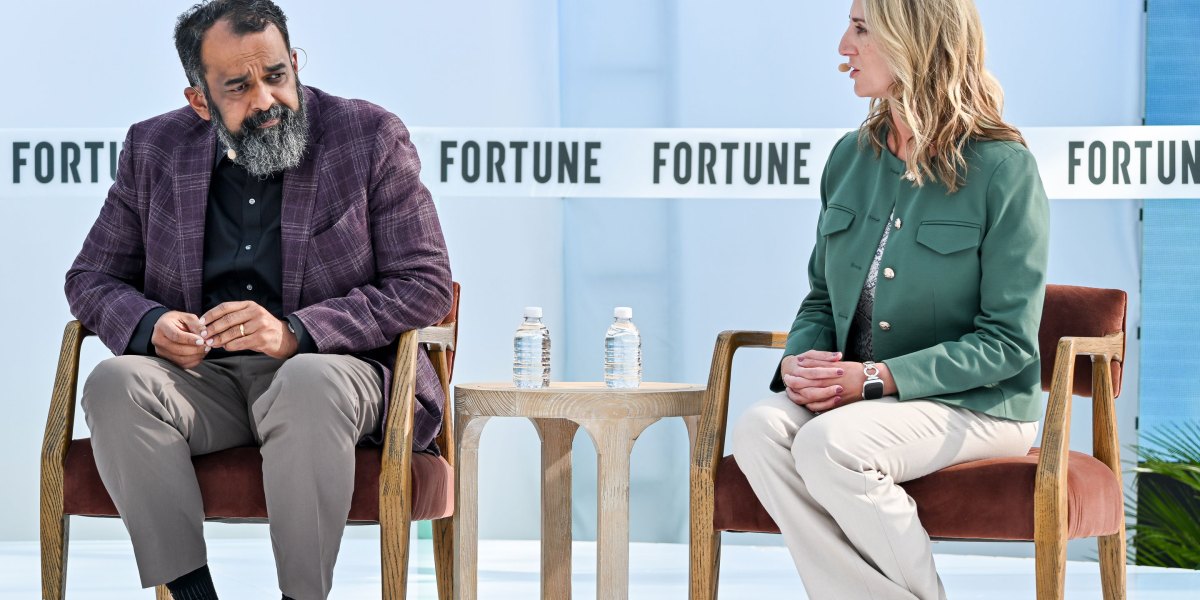
“Every function and every strategic business unit is now using gen AI,” Sheila Jordan, the company’s chief digital technology officer, who oversees AI integration internally within the organization, told Fortune. “And the other thing I’m super proud of is that we have it available to all 100,000 employees,”
The company built its own “Honeywell GPT,” which helps employees draft and edit emails, summarize technical documents, translate content, and brainstorm ideas. Employees also use Red, a virtual assistant that serves as a central resource for accessing company information around IT, finance, HR, and the firm’s policy library. Engineers are coding with AI, and the company is reimagining its varied products and services with new generative AI–powered offerings. Overall, the company has 24 generative AI initiatives in production and 12 more on the way, compared with 16 a year ago.
As companies across different business sectors incorporate AI into their operations, an emerging set of best practices reveals a variety of approaches, from decentralized, experimentation-driven cultures to tightly choreographed strategies that can scale across an organization. Honeywell, which ranked at No. 17 in the Fortune AIQ 50 list of Fortune 500 companies with the most “mature” AI capabilities, is a case study in how to excel by taking the latter approach.