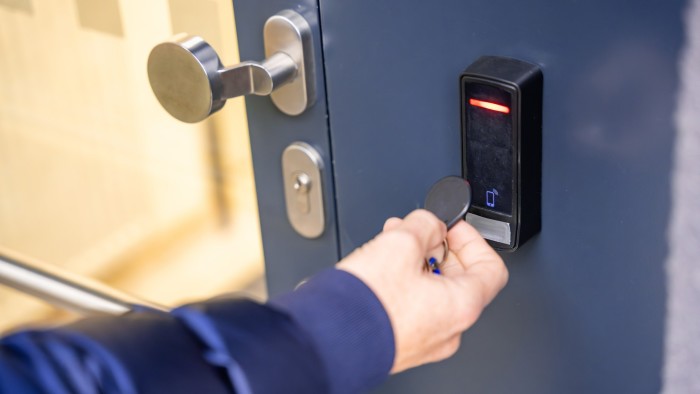
High rollers returning to their suites at the Bellagio on the Las Vegas Strip in late 2023 encountered a peculiar obstacle. Their keyless fobs did not work.
Rather than the consequences of losing a wager, they were in fact dealing with the fallout from a ransomware attack on the resort’s owner, MGM. The company had been attacked by a group known as Scattered Spider, which used fraudulent phone calls to employees and the company’s help desks to “phish” for login credentials.
The fallout from the hack not only locked customers out of their rooms, but also halted slot machines. Crucially, it exposed customer data and drew attention to the far-reaching consequences of IT vulnerabilities, including in physical spaces.
“Most facets of modern life are controlled in some way or another by a digital system,” says Jamie MacColl, a senior research fellow at Royal United Services Institute (Rusi), a defence think-tank. “For every victim there will [probably] be a physical effect . . . it could be as simple as being locked out of the office or as complex as a downed manufacturing line.”
Risk management: Property