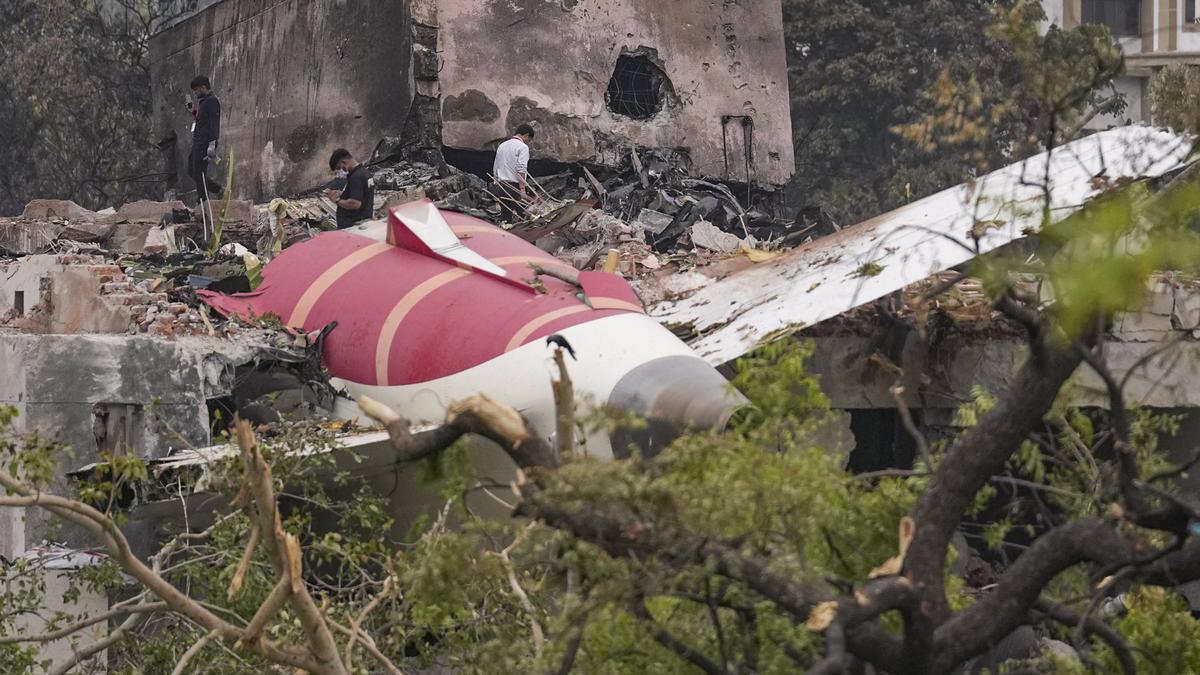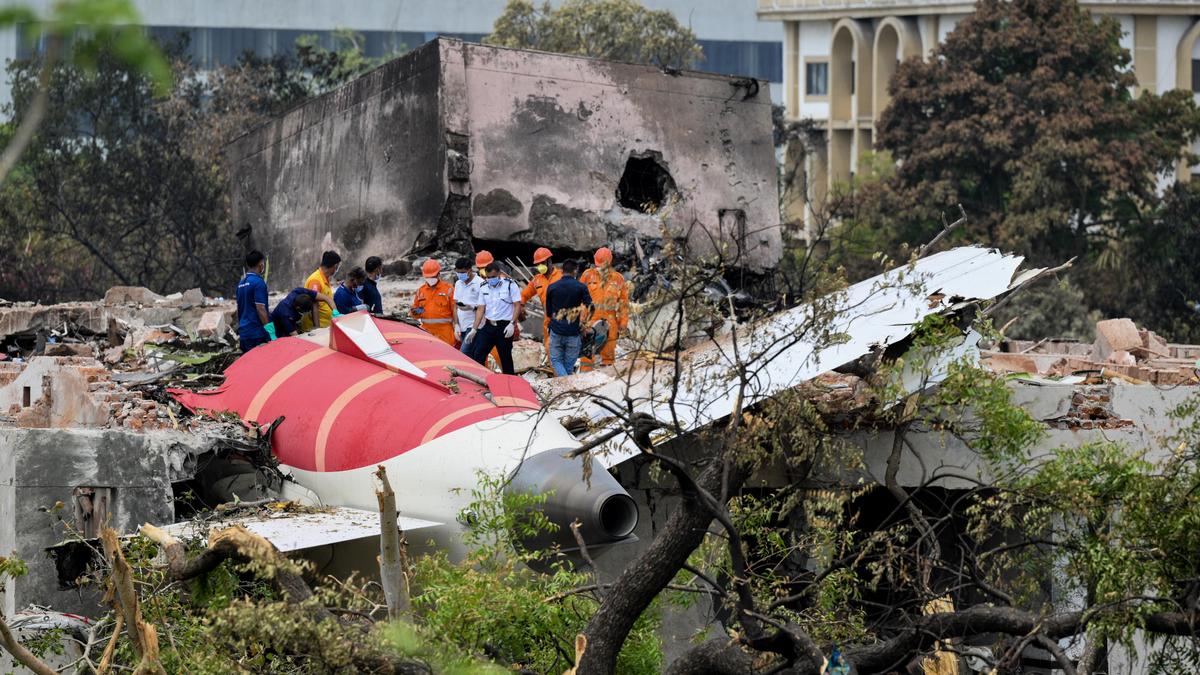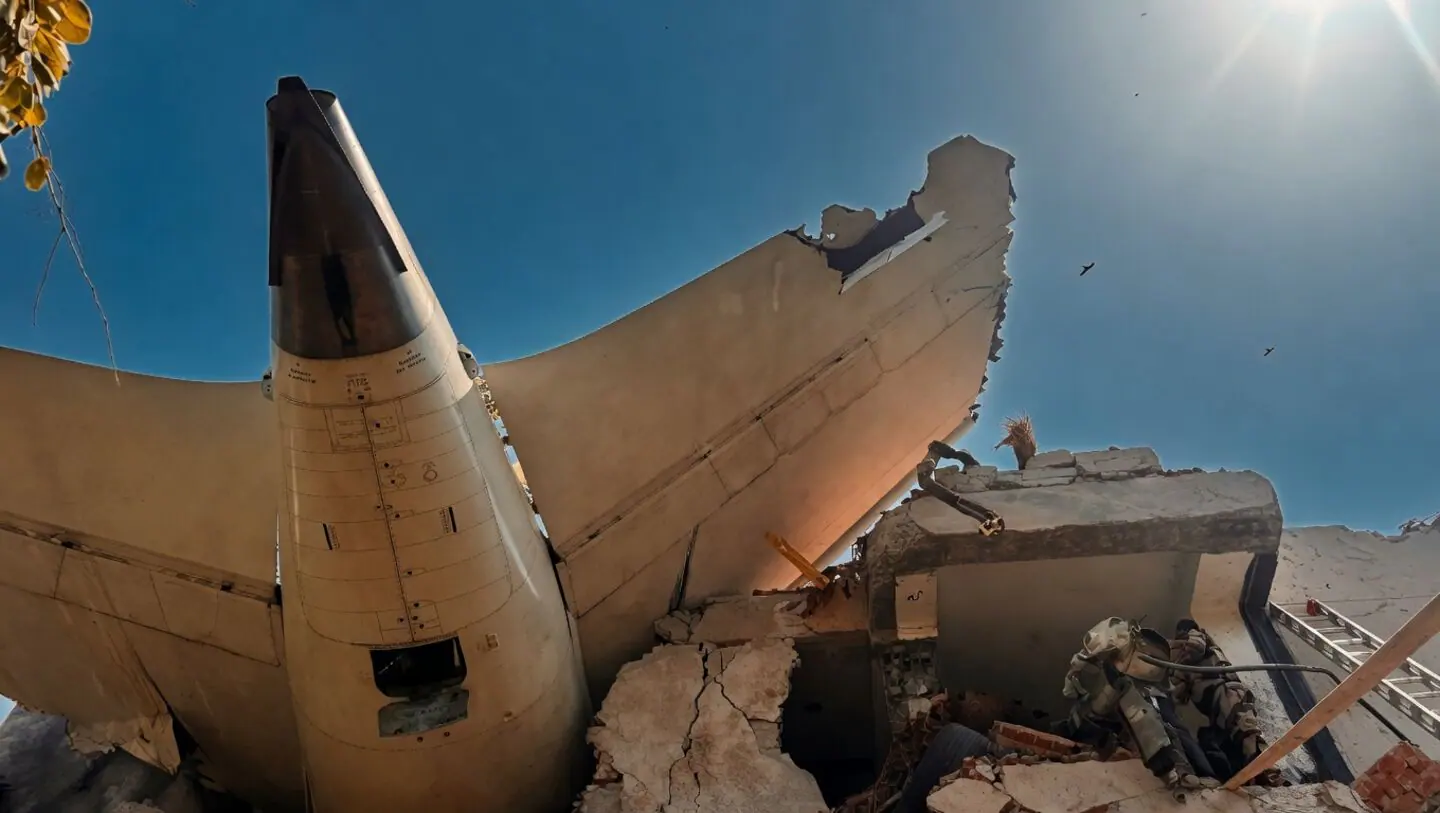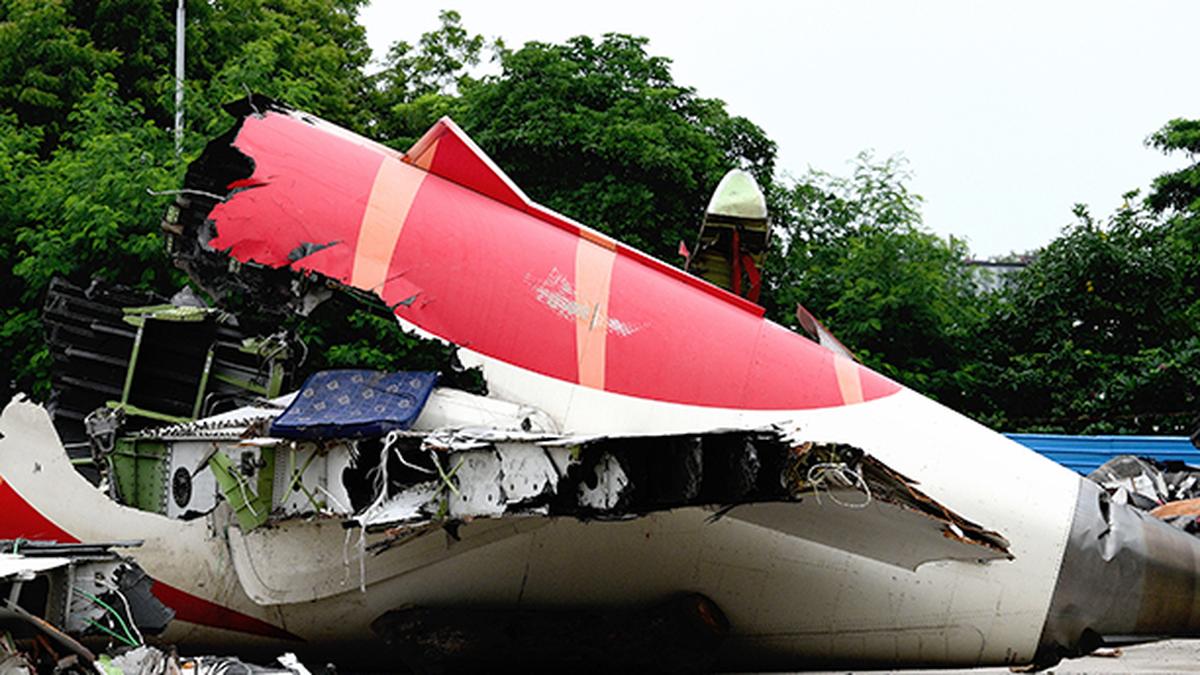
Wreckage of the crashed Air India Plane is lying at Ahmedabad Airport premises in Ahmedabad, Gujarat on July 12, 2025. Image for the purpose of representation only.
| Photo Credit: Vijay Soneji
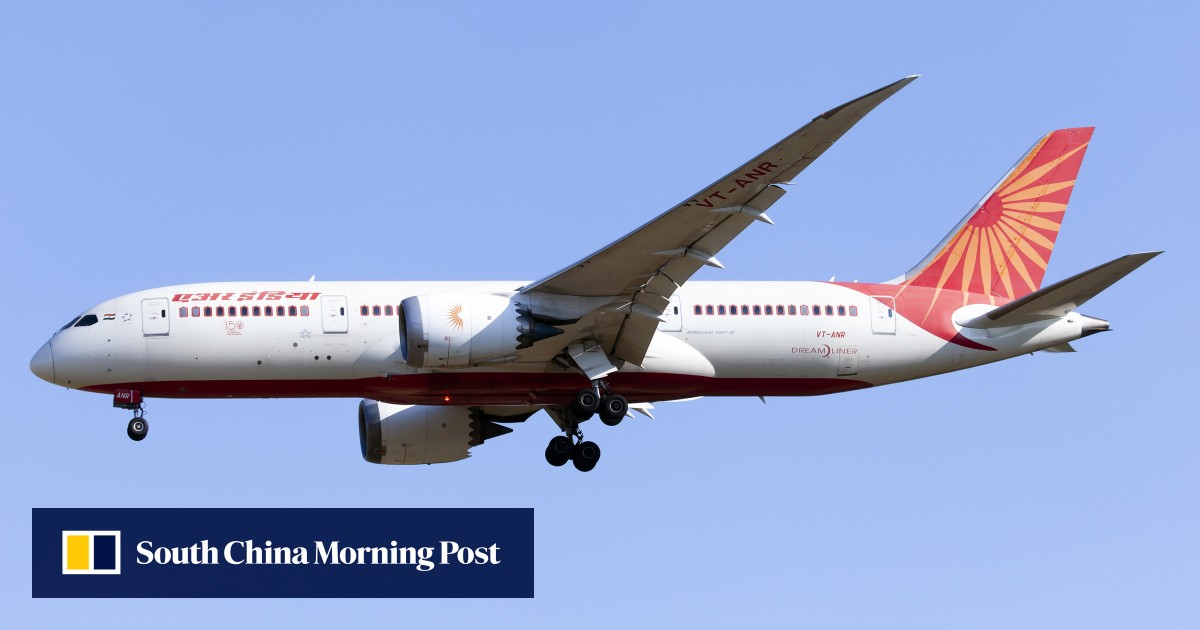
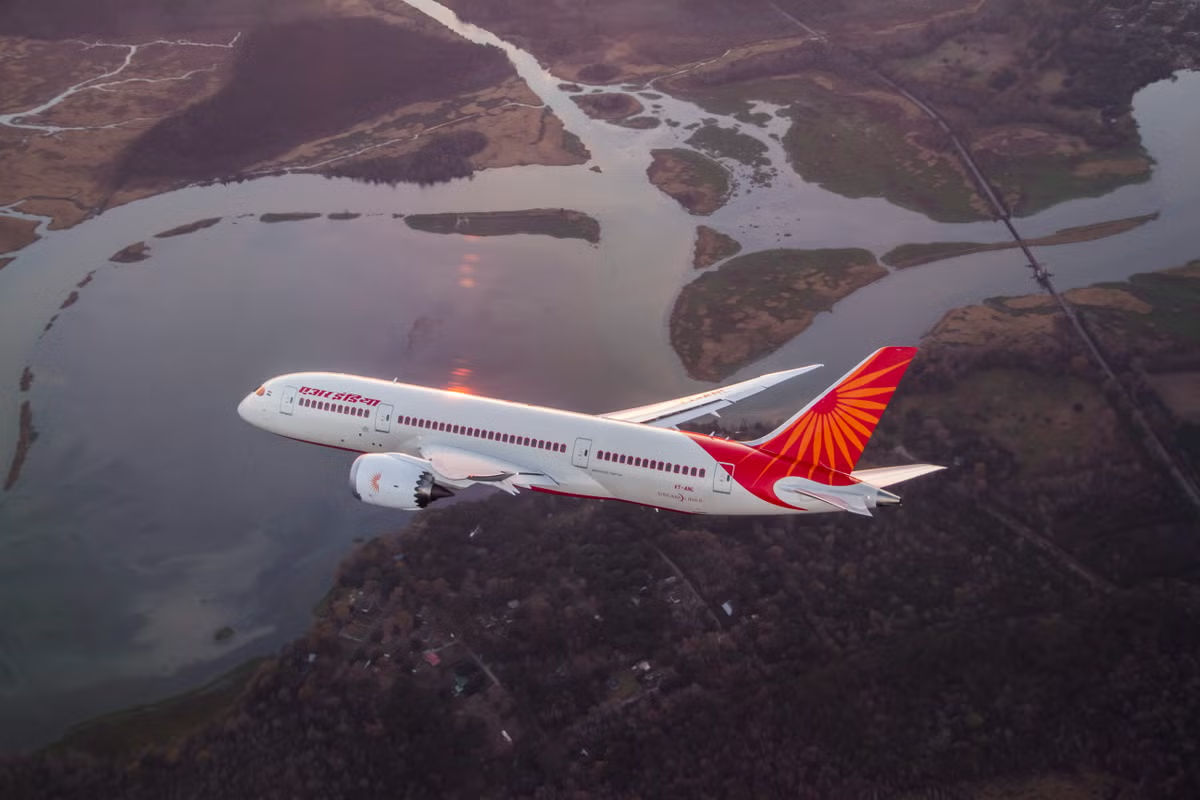
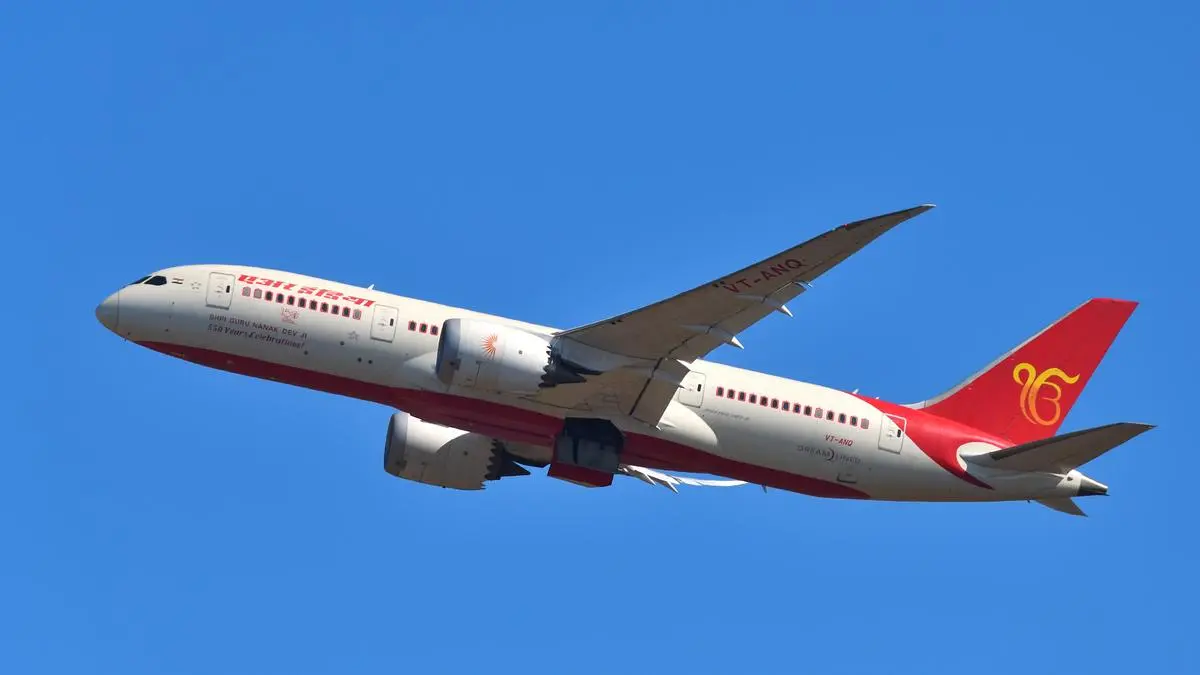
The Directorate General of Civil Aviation (DGCA) on Sunday (October 5, 2025) instituted a detailed investigation into the incident of RAT deployment on Air India B787-8 aircraft during Amritsar- Birmingham flight on Saturday (October 4, 2025).DCGA sources said that during the landing at 400ft RAT unlock message came, and the Ram Air Turbine (RAT) got deployed. They also said that the pilot did not report of any related abnormality and the aircraft landed safely. Boeing recommended maintenance, actions for uncommanded RAT deployment have been carried out, and no discrepancy has been observed, he sources said.They added that the aircraft is being released for service, adding that the boeing has issued a brief of previous such cases.The Federation of Indian Pilots (FIP) on Sunday (October 5, 2025) called on the Directorate General of Civil Aviation (DGCA) to thoroughly inspect and investigate the electrical systems of all Boeing 787 aircraft in India.The request came a day after the Air India Boeing 787 experienced automatic deployment of RAT while approaching the U.K. city. The aircraft landed safely.In its letter to the DGCA, FIP President G.S. Randhawa noted that the Aircraft Health Monitoring (AHM) system detected a fault in the Bus Power Control Unit (BPCU), which may have caused the RAT to deploy automatically.“The [Birmingham flight] incident occurred when the Ram Air Turbine deployed automatically at 500 ft on approach into Birmingham… the Aircraft Health Monitoring has picked up a fault of the Bus Power Control Unit which may have caused the auto deployment of RAT,” the letter said. Representing over 5,000 cockpit crew members, the FIP emphasised that the BPCU manages an aircraft’s electrical power system, while RAT provides emergency power in the event of dual engine failure or total electronic or hydraulic failure.Citing the June crash of Air India flight AI 171, which killed 260 people, the FIP said that engine or hydraulic/electrical failures or software malfunctions are among the potential causes being examined.“There have been numerous incidents on B-787 aircraft. We have strongly taken up with the Civil Aviation Ministry and Aircraft Accident Investigation Bureau (AAIB) to thoroughly check the electrical system of all B-787 aircraft in the country,” the letter added.The FIP noted that, following the AI 171 crash, DGCA had checked only the fuel control switches across Air India’s 787 fleet. The preliminary AAIB report on the June crash indicated that the engine fuel control switches were cut off seconds after lift-off from Ahmedabad, with one pilot questioning the action and the other denying responsibility.“It is pertinent to note that the incident in Birmingham is another pointer towards the Air India crash of B-787 aircraft. Thus, in the interest of air safety, FIP insists that DGCA must thoroughly check and investigate the electrical system of B-787 aircraft in the country,” the letter stated.U.S. manufacturer Boeing has yet to comment on the June crash, one of the deadliest air disasters in India in the past three decades.(With inputs from PTI) Published - October 05, 2025 07:25 pm IST