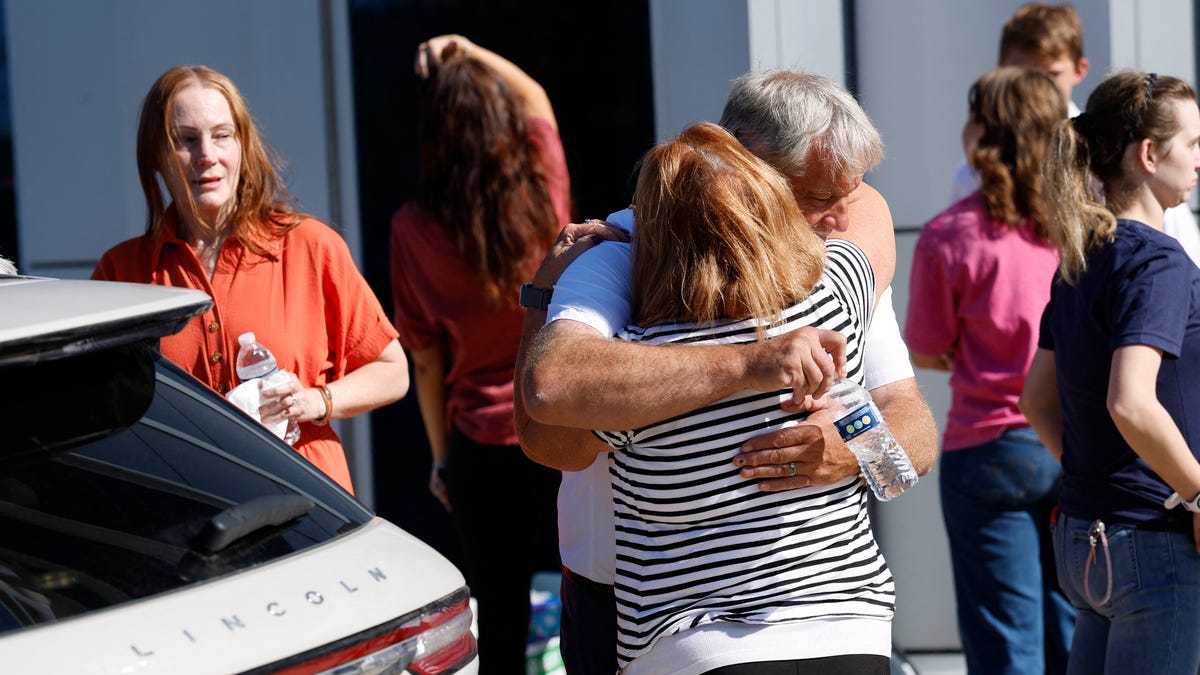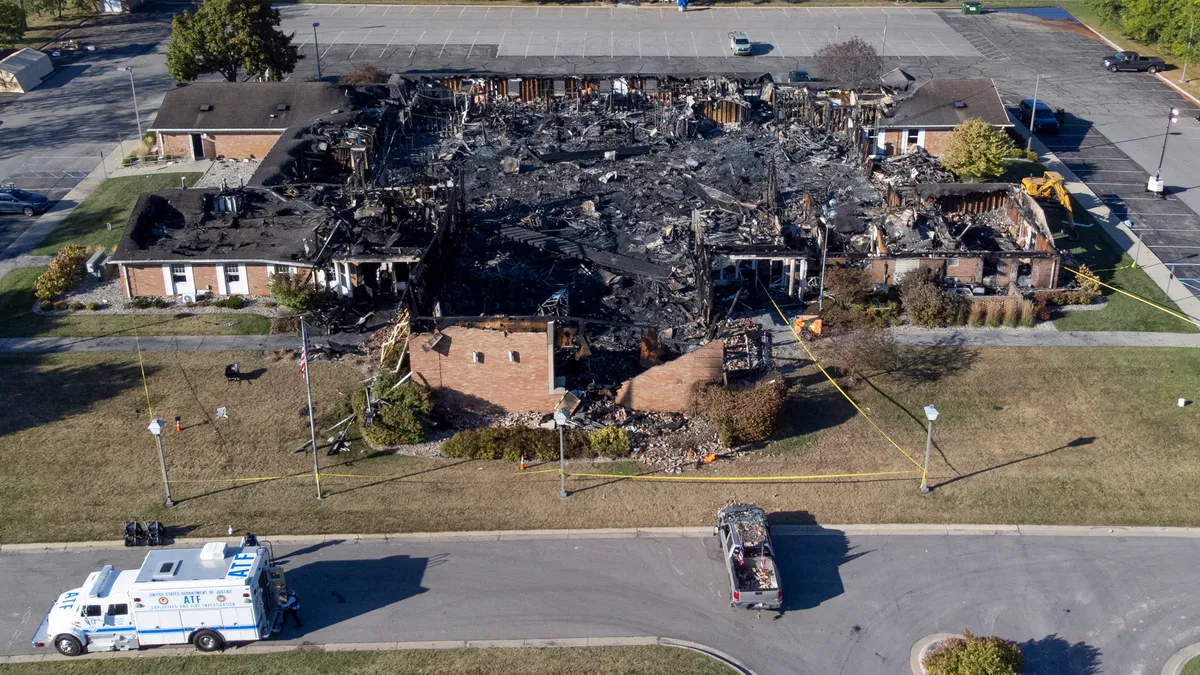
At first, Katie Hamilton thought the fundraiser was a sick joke. But, after reading many loving comments, she's overwhelmed by the support.Show Caption
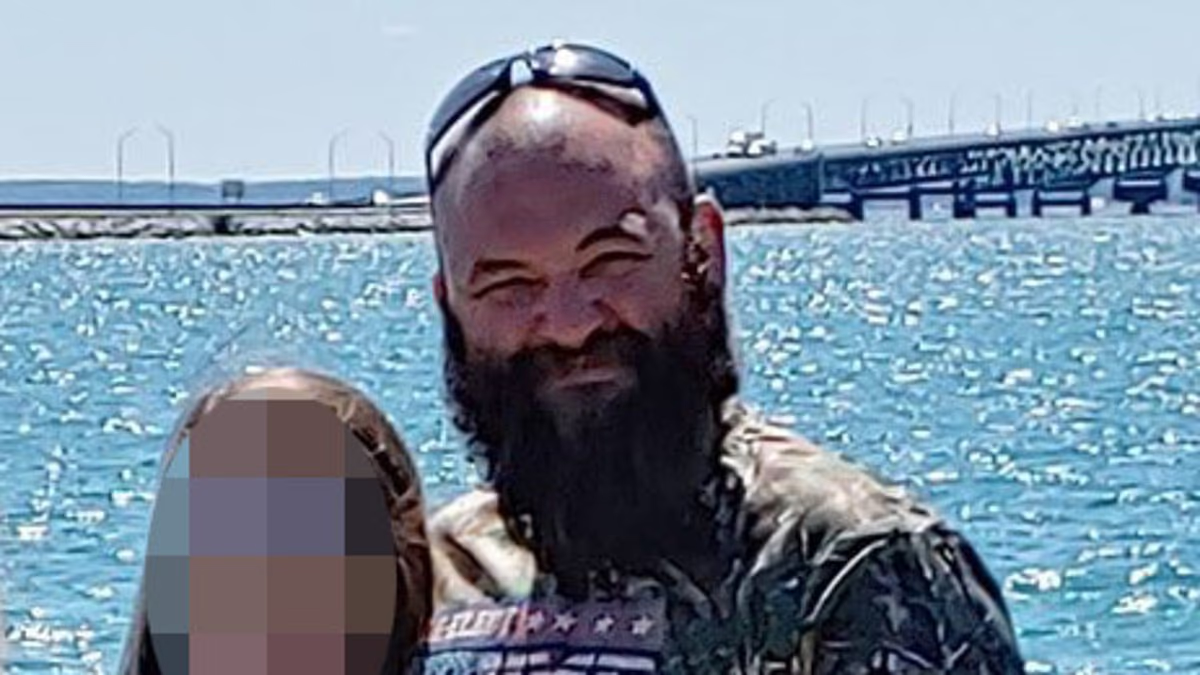
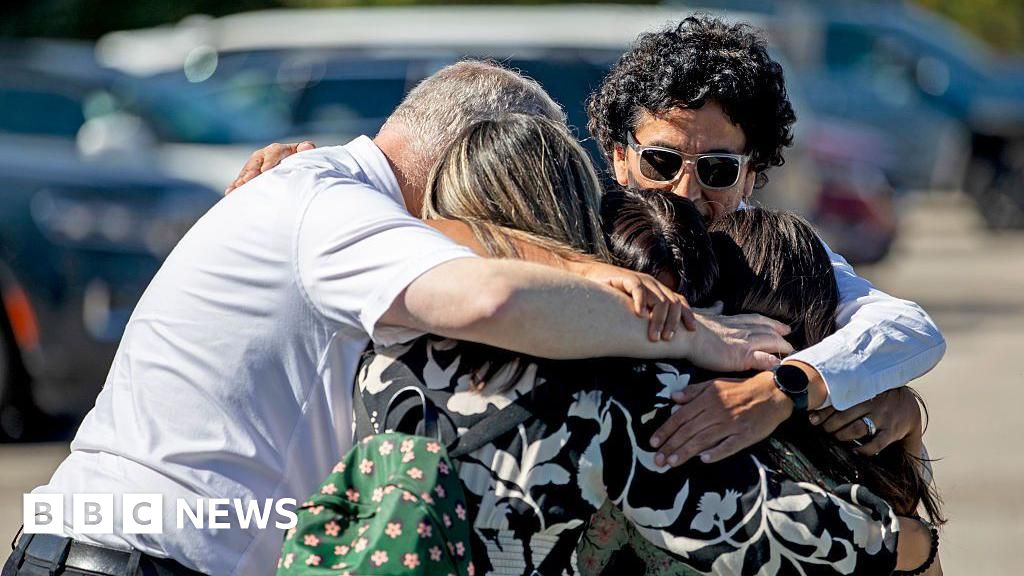
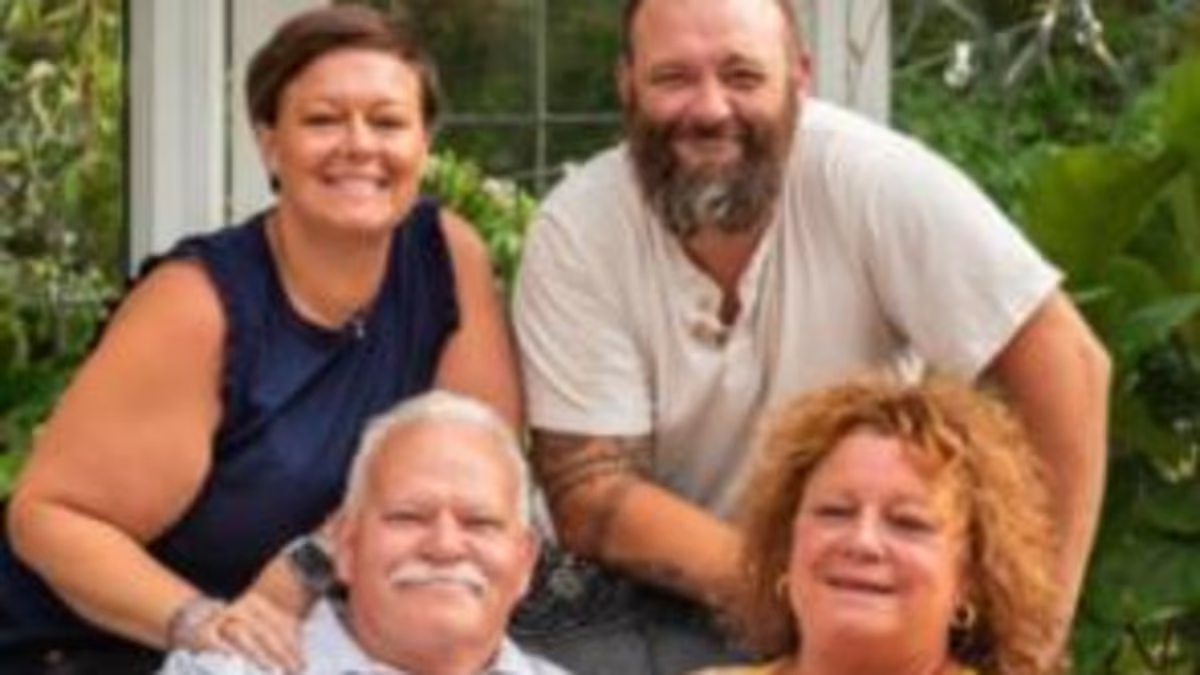
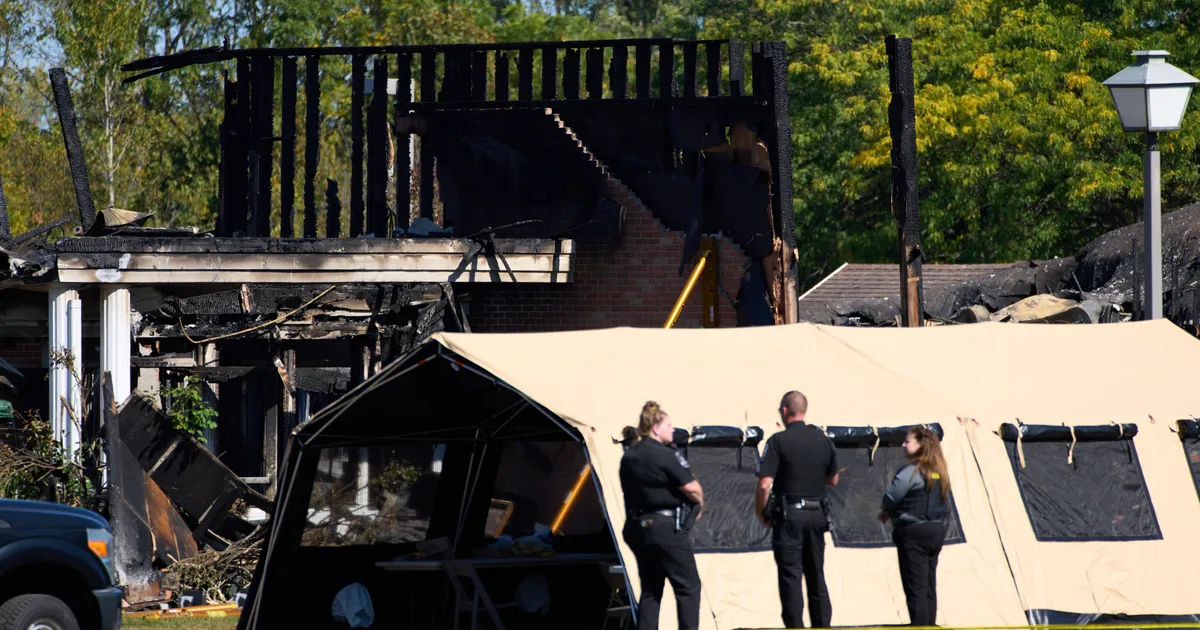
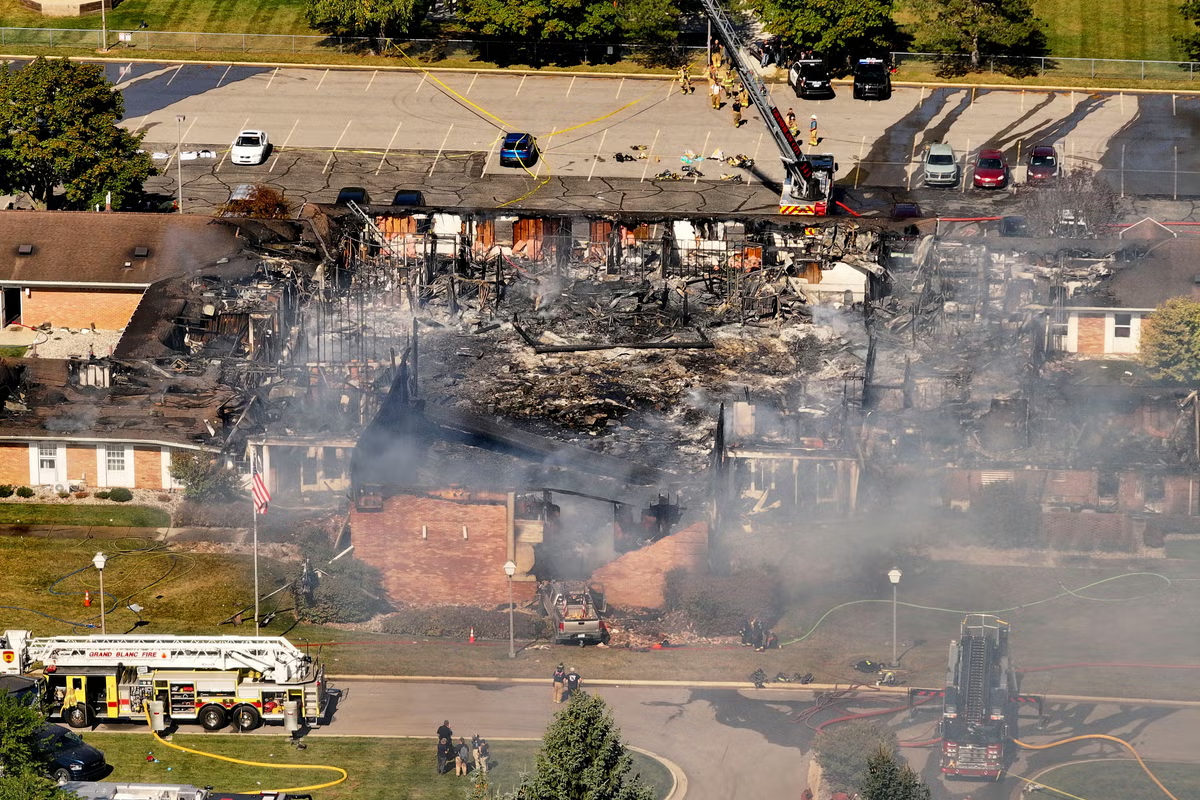
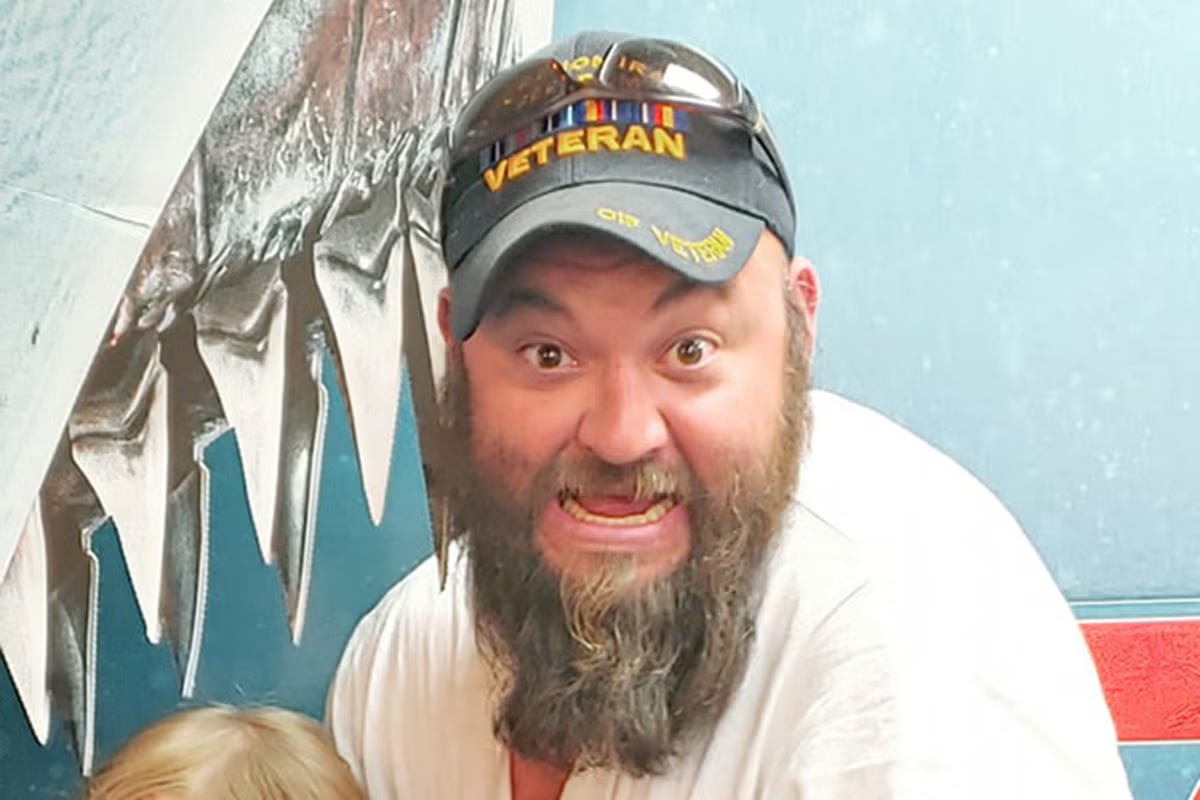
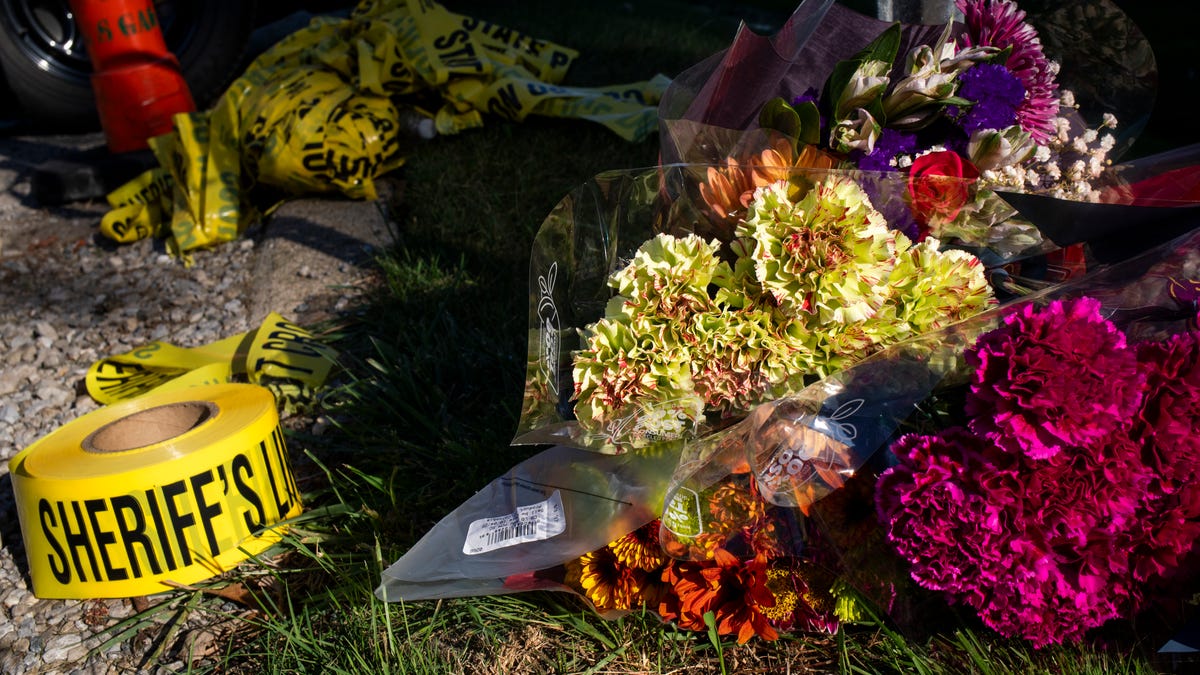
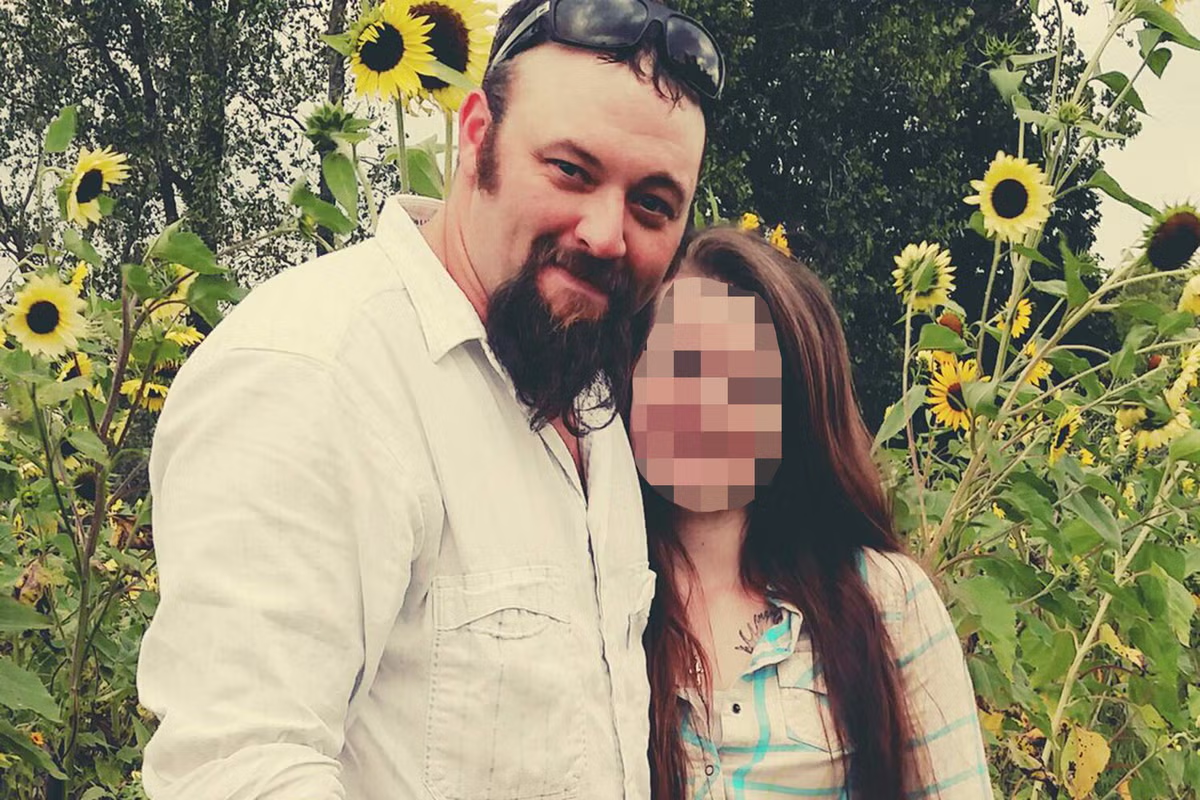
When a man dies after committing a heinous crime, his loved ones can get swept up in the blame. The wife of Thomas Jacob Sanford, the man police say launched a fatal attack on The Church of Jesus Christ of Latter-day Saints in in Grand Blanc Township, Michigan, is scared, said Katie Hamilton, Sanford's sister.Some people harassed her sister-in-law after the attack, Hamilton said. Now, the widow needs to move her child and mother to a new house — they don't feel safe in what was supposed to be their forever home. The Sanfords are grief stricken, overwhelmed with guilt, fear and the deep sadness of a family trying to reckon with the actions of a son, brother and husband they now need to bury. Sanford's father, Thomas, told the Detroit Free Press he apologized for his son's actions but called the aftermath of the attack a "nightmare."So it was with trepidation that Hamilton decided to learn a little more about the fundraiser.There are several online fundraisers established to help victims, the four people killed and eight wounded after police say Sanford, 40, crashed his pickup truck into the church, setting it afire and shooting multiple people before law enforcement officers killed him.But this fundraiser was for her own family.A friend sent her the information: Mormons and many others wanted to give her family money. That can't be right, Hamilton thought. It must be some sick joke. She feared someone was impersonating her family, either in search of a quick buck or in another effort to smear the loved ones of a man who carried out an atrocity.Because it just did not make sense that members of the community her little brother attacked wanted to save his family.Then, three days after the attack, she read some of the hundreds of comments tied to a fundraiser that has since topped a quarter-of-a-million dollars."It took my breath away, that this church is so forgiving, and understanding and caring and their first thing was to worry about the family that was left behind," Hamilton, 43, said through tears."It was the grace of the Lord. I have no words, I can't express to you; it was the forgiveness that they did. It was the forgiveness and the caring and the wrapping their arms around our family too. They didn't forget about us."Help from strangersWhen David Butler, a Utah-based writer and Mormon, learned about the attack on the LDS church, he said he almost immediately thought about Sanford's family.So, without knowing anyone in the family, in the days after the attack he created an online giving page through a website called GiveSendGo. It wasn't a tough call."It's fairly predictable, it's not an exotic answer: you mourn with those who mourn, you turn the other cheek, you take care of the widows and the orphans," Butler said in a phone interview.Given his modest social media following, he figured his fundraiser could garner enough attention to bring in $5,000. He hoped it would defray costs for a month or so.As of the morning of Thursday, Oct. 2, donations topped $275,000. More than 7,000 people contributed, with offerings ranging from $10 to $5,000. The fundraiser drew substantial acclaim, garnering attention from national media to politicians, including U.S. Rep. Marjorie Taylor Greene.An anonymous poster, who gave $200 and identified themselves as an LDS couple in South Korea, noted Mormons are taught, "I promise that as you forgive, the Savior will relieve you of anger, resentment and pain. The Prince of Peace will bring you peace."Another anonymous donor, who contributed $1,000 early Thursday morning, said, "May you likewise be surrounded by both heavenly and earthly angels, especially in your darkest moments."The overwhelming response makes Butler proud."Does that say beautiful things about Mormons? You bet your ass it does. Does it say beautiful things about the many non-Mormons who've contributed? Absolutely," Butler said.It is indicative of Mormons and others living their faith, said Patrick Mason, a professor of Mormon history at Utah State University and a member of the church."This is a beautiful example of a religious community living up to its best ideals and saying, 'How do we respond to something really negative? We try to replace that darkness with light. We try to replace that hate with love,'" Mason said."Those are messages that people hear over the pulpit and they read in scripture, and it's really refreshing when people actually do it in real life."Mason said he anticipates the church will provide financial and additional support to the families of the victims in the attack.Even before the attack, it was a difficult time for the LDS community: Russell M. Nelson, the president of the church and considered a prophet by Mormons, died Sept. 27.Beyond the church losing its leader though, Mason explained Mormons frequently feel a bit like outsiders. Members of the faith fled to Utah decades ago after facing religious persecution and, as Mason put it, Mormons "have a long memory.""If you live in Michigan, if you live anywhere outside of Utah, it's always to know you're on the edge. You're a minority, you're a little bit on the margins," Mason said."The attack on Sunday, it really raises all of those anxieties...this just refreshes those memories of what it's like to sometimes be a persecuted minority."He stressed most Mormons get along with their neighbors, even if misconceptions or a lack of understanding exist. Some people still believe, incorrectly, the church encourages polygamy. Others may only know about the LDS community through "The Book of Mormon" musical, "South Park" or other forms of pop culture.Whatever the experience may be, Mason said people frequently think Mormons, "have some funny ideas, but they're really nice."That image, if a bit basic, is the product of years of guidance from the pulpit. As Mason explained, forgiveness and peacemaking are both foundational to the religion and core tenets of Nelson's leadership."When church members go to church each Sunday, they hear a lot of messages about forgiveness, about outreach, about compassion for others, about non-judgment," Mason said."I think those messages have just sunk into people's hearts."'We, as a family, don't have an answer'Hamilton loved her brother, and saw him provide regular acts of devotion and kindness. Yet she admits not knowing exactly what was in his heart. She hasn't for years."Honestly, I lost my brother when he left for the Marine Corps 21 years ago," Hamilton said. "He came back as a different person."Sanford served in the marines from June 2004 to June 2008, earning the rank of sergeant. He deployed to Iraq in August 2007, returning in March 2008.While he didn't like to talk about his service, Hamilton said it was clear her brother struggled from what appeared to be Post Traumatic Stress Disorder, commonly known as PTSD. While Hamilton said her brother did not have a formal diagnosis, the family sought care. She said nothing seemed to work.Navigating his struggles became a part of their life."When they don't understand that they are sick and they don't know there's a problem, they're not going to get help. So you deal with it, right? You eliminate triggers, you go and distract with information somewhere else, you give them a chore," Hamilton said."That's how we've lived as a family for almost two decades."She knows Sanford lived in Utah for a time when he was young. He moved back to Michigan more than a decade ago, at one point living with her family. A friend and a local political candidate told media outlets Sanford expressed a hatred for Mormons, potentially born of his time living in Utah.But, like his service in the Marines, Hamilton said he did not like to talk to his family about whatever happened before returning to Michigan."We, as a family, don't have an answer. And that's probably the hardest thing about this right now, because we don't know. We don't know what happened. We don't know what experiences that he had up there," Hamilton said."It was his own struggles that we had no clue what we were walking in to. And that's why I say, for the time he's been home from Utah or whatever, was just something, we've morphed as a family. We were fluid. We dealt with it."That included showing grace after Sanford reportedly tried to steal from his parents.Genesee County Sheriff Chris Swanson told the Free Press this week Sanford was arrested in 2011, accused of breaking into his parent's home. Ultimately Sanford's parents decided against pressing charges."It was a family issue, and that's why it never went anywhere," Swanson said.Hamilton said her brother did his best to provide for his family, including a son who suffers from a rare disease called Congenital Hyperinsulinism. Hamilton said it's like the opposite of diabetes — the body creates too much insulin.It meant surgeries as a newborn followed by months in a neonatal intensive care unit. When he came home, Hamilton said the boy couldn't take a typical bath because it might damage the feeding tube inserted near his stomach. To this day, the family follows a strict care regimen.Through it all, Hamilton insists it never appeared too much for her brother. It did not push him over the edge.Hamilton said her sister-in-law, Sanford's widow, is surviving. In addition to getting her house ready to sell, she is dealing with insurance and her own job while juggling bills.Hamilton said her nephew, Sanford's son, is also asking questions. So are Hamilton's own sons. So is she.Hours before the attack, Hamilton said her brother pulled meat out of the family's freezer. She thinks he wanted it thawed in time for dinner.Earlier this year he planted beets and set out food plots to entice deer ahead of the fall hunting season. He promised to take his nephews to deer camp; his nephews and their friends looked up to him, appreciating his desire to include them in one of his favorite past times. He scheduled a cruise for February.Hamilton knows her brother had mental health problems, yet she is certain he had a different plan.For the life of her, Hamilton does not understand what happened that made her little brother change his mind so radically."So when they say, 'didn't you see signs? No. He'd go a little manic, and came right back. And then he was Uncle Jake," Hamilton said in the interview."I don't want to beat ourselves up as a family, because that's not going to do any good for anyone, to sit there and go, 'what if? What if? What if?...if we sit back, and we look at behaviors, and we look at conversations and we look at experiences that we had with him, you go: none of this makes sense. None of this, none of this makes sense."Answers may never come. But Hamilton said she wants others, facing their own impossible questions, to understand they are not alone. She has gone to therapy. She wishes her brother, and any others struggling to cope, would shelve any misplaced pride and accept help they might need.After the attack, as the Sanford family fought off feelings of panic while trying to adjust to a new normal, help seemed unfeasible. To some degree, it still does.This will affect their family for the rest of the lives. But, at a time when every moment borders on unbearable, Hamilton said at least they don't have to worry about finding money to keep the lights on, make the car payment or cover the costs of a funeral."I would never, ever wish this on anyone. But the grace that has been given to our family from this church that has went out and forgiven my brother, and is helping put the pieces back together for my sister-in-law and her son has been absolutely life changing for us," Hamilton said."The forgiveness from the church and the compassion is allowing our family to heal, in a weird way."Reach Dave Boucher at dboucher@freepress.com and on X @Dave_Boucher1.(This story was updated because an earlier version included an inaccuracy)