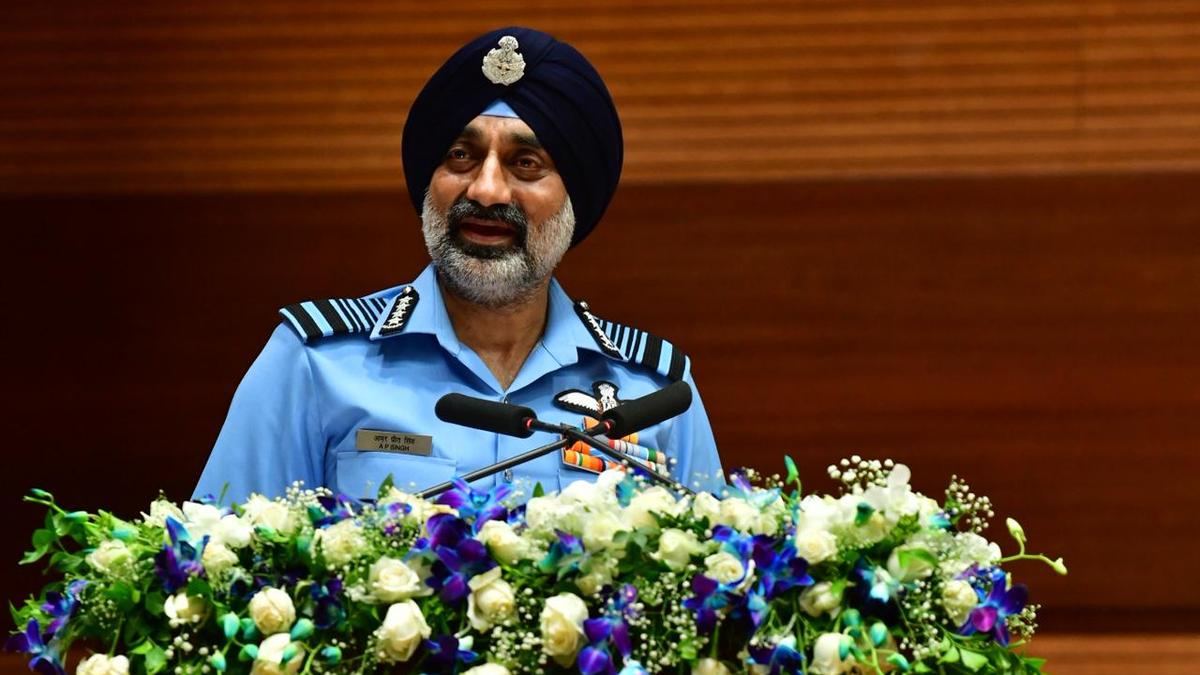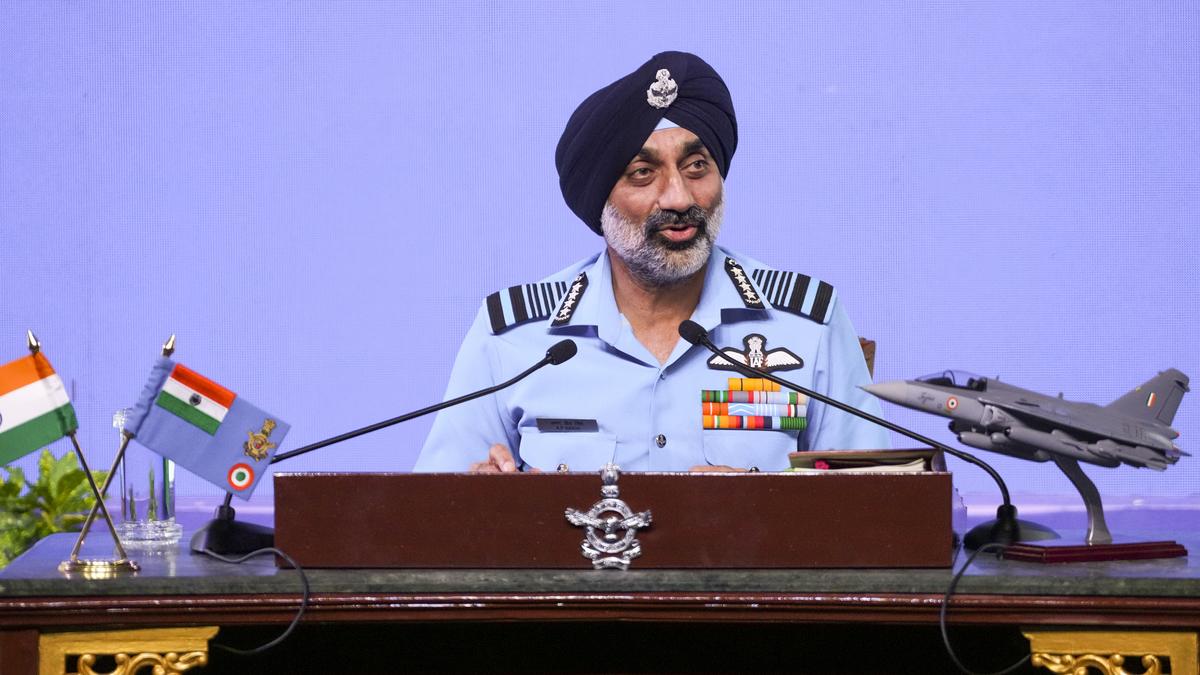
Chief of the Air Staff Air Chief Marshal Amar Preet Singh addresses a press conference, in New Delhi, Friday, Oct. 3, 2025.
| Photo Credit: PTI
Air Chief Marshal Amar Preet Singh on Friday disclosed that India inflicted extensive damage on Pakistan’s air power, including U.S.-made F-16s and Chinese JF-17 fighter jets, during Operation Sindoor.Speaking at the 93rd Air Force Day celebrations at the Air Force Auditorium in Delhi, the IAF chief presented a detailed account of the strikes, while also outlining the Air Force’s future plans under Roadmap 2047 and the proposed indigenous Sudarshan Chakra air defence system.
Watch: IAF Chief clears the air on Operation Sindoor, Army Chief issues a warning to Pakistan
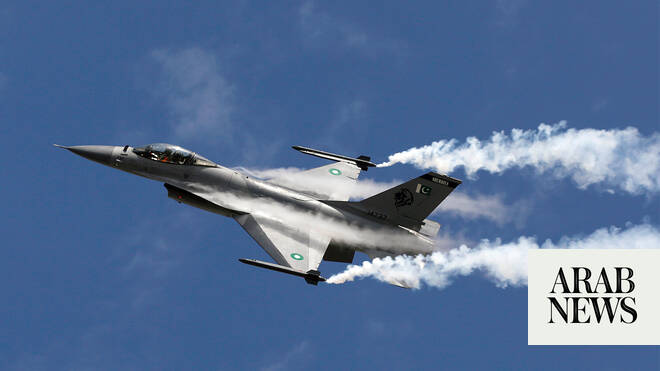
“From various Intelligence reports, we have gathered that radars were damaged at four locations, command-and-control centres destroyed at two, and runways at two airfields were hit. Three hangars were also damaged across different stations. Within these hangars and on the tarmac, we have clear evidence of one C-130 class aircraft destroyed, along with four to five F-16 fighter jets that were based at these stations,” the Air Chief Marshal said.He further revealed that evidence indicated the loss of one long-range platform—likely an AEW&C or SIGINT aircraft — struck at a distance of more than 300 km, along with “five high-tech fighters between the F-16 and JF-17 class”.Dismissing Pakistan’s claims of Indian losses, Mr. Singh called them “manohar kahaniyan (fascinating tales)”. If they think they downed our 15 jets, I hope they are convinced about it and they will cater for 15 less aircraft in my inventory when they come to fight again,” he said.Pakistani Prime Minister Shehbaz Sharif had recently told the United Nations General Assembly that seven Indian jets were downed, a claim the IAF has firmly rejected.Indigenous air shieldOn the future plans, the Air Chief said all three services have begun work on the Sudarshan Chakra air defence system, announced by Prime Minister Narendra Modi on August 15. The system is aimed at shielding critical civilian and military infrastructure while providing decisive responses to enemy threats.Responding to Tesla CEO Elon Musk’s remarks that drones, not manned aircraft, represent the future of warfare, Mr. Singh countered, “Manned platforms will continue to play a crucial role in combat operations. Fighter jets will remain relevant in the years to come. Elon Musk is a businessman.”On the Tejas Mk1A, the IAF chief expressed enthusiasm for its induction, saying, “Hungry mouths are ready, waiting for the food now.” He emphasised that the aircraft is expected to meet all performance parameters outlined in earlier requirements. Published - October 03, 2025 01:43 pm IST