Currently, only residents from certain countries and US states can opt out of certain Tracking Technologies through our Consent Management Platform. Additional options regarding these technologies may be available on your device, browser, or through industry options like AdChoices. Please see our Privacy Policy for more information.
Ion channel at base of plant's sensory hairs amplifies initial signals above critical threshold.
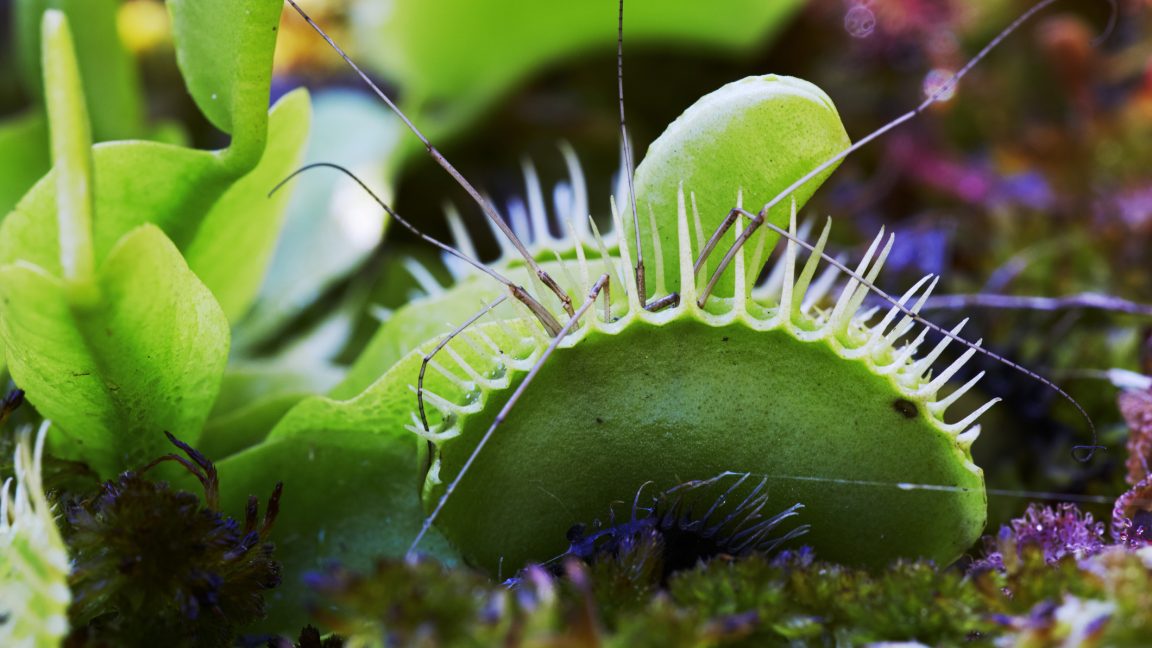
To trap its prey, the Venus flytrap sends rapid electrical impulses, which are generated in response to touch or stress. But the molecular identity of the touch sensor has remained unclear. Japanese scientists have identified the molecular mechanism that triggers that response and have published their work in a new paper in the journal Nature Communications.
As previously reported, the Venus flytrap attracts its prey with a pleasing fruity scent. When an insect lands on a leaf, it stimulates the highly sensitive trigger hairs that line the leaf. When the pressure becomes strong enough to bend those hairs, the plant will snap its leaves shut and trap the insect inside. Long cilia grab and hold the insect in place, much like fingers, as the plant begins to secrete digestive juices. The insect is digested slowly over five to 12 days, after which the trap reopens, releasing the dried-out husk of the insect into the wind.