Currently, only residents from certain countries and US states can opt out of certain Tracking Technologies through our Consent Management Platform. Additional options regarding these technologies may be available on your device, browser, or through industry options like AdChoices. Please see our Privacy Policy for more information.
To revisit this article, visit My Profile, then View saved stories.
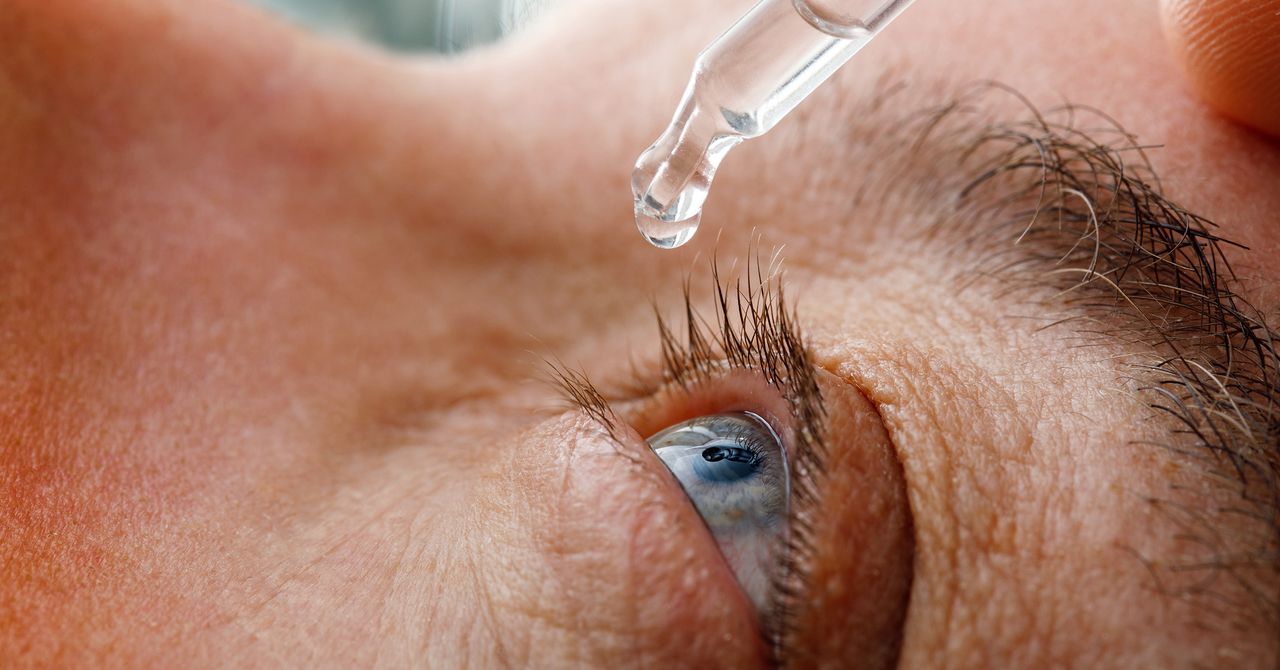
THE STATS DON’T lie: after age 65, most people will struggle to focus visually on close-up objects. You might have seen this among your friends and relatives or even experienced it yourself, holding books, magazines, or your phone farther away from your face to try to bring words and pictures into focus. Many of those affected start using reading glasses. But a new treatment could become available: eye drops.
This deterioration of vision is called presbyopia. It is not a disease but a natural, physiological change caused by aging—specifically by the loss of elasticity and flexibility of the crystalline lens at the front of the eye, which impairs the ability of the eye to change the curvature of the lens to bring objects into focus. This stiffening begins in middle age and tends to stabilize around age 65. For people with shortsightedness, or myopia, who struggle to see faraway objects clearly, the onset of presbyopia may at first lead to improved vision by compensating for their existing condition. For those with farsightedness, or hyperopia, the effects of presbyopia often present earlier than in the rest of the population.