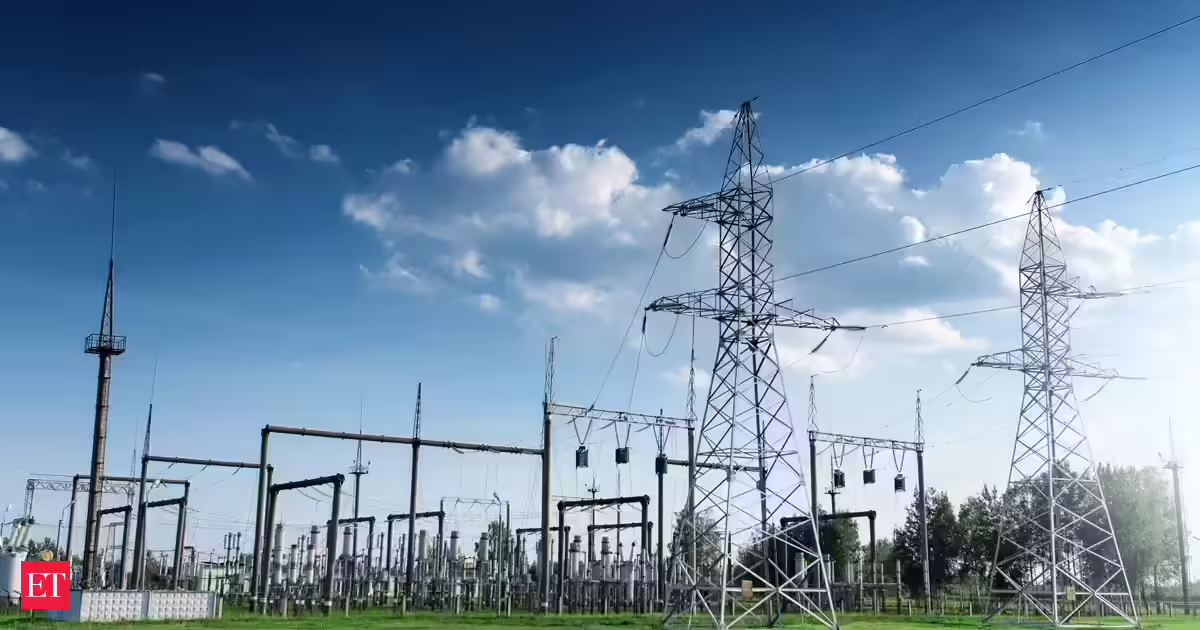
metamorworks/Shutterstock
The UK-India Vision 2035 policy initiative, endorsed by the prime ministers of both countries in July, offers a rare opening into one of the world's fastest-growing clean energy markets in India, but success will depend on how well organizations manage the inevitable disruption that comes with such fundamental change. With a framework that creates new pathways for collaboration between the UK and India in offshore wind, hydrogen, storage and nuclear energy, the opportunity is transformative. It demands new capabilities, new partnerships and new operational approaches.The Urgency ImperativeThere’s a limited window for utilities and energy companies to put clean energy at the forefront of operations, and that window is narrowing rapidly. Leaders who understand this timing will outmaneuver those who don’t.The Vision 2035 framework includes specific timelines for hydrogen certification, compliance with India's Approved List of Models and Manufacturers and offshore wind taskforce deliverables, which create immediate competitive advantages for companies that act sooner rather than later.It is important to communicate this urgency effectively. As India expands its renewable capacity market and the UK develops its hydrogen networks, companies that are on standby will find themselves competing for second-tier opportunities, while early movers capture the premium partnerships and market positions.Coalition Building Across Energy SilosThe most successful entries into the UK-India deal will come from businesses that are able to assemble cross-functional teams. This requires breaking down departmental barriers between regulatory, commercial, engineering and supply chain functions.Traditional energy expertise becomes a competitive advantage when unified with clean energy opportunities, but only if leaders can create structures that support this integration. Companies that keep "traditional" and "renewable" divisions in separate boxes will struggle to capture opportunities that require both sets of capabilities working together under one strategic vision.Vision That Transcends RhetoricThe UK-India partnership stands out because it names specific desired outcomes. Energy leaders should take the same approach.Employees need to see exactly how their current skills translate into competitive advantages in new markets for hydrogen, storage and offshore wind. For example, a supply chain manager with experience in complex international logistics can apply those skills directly to clean energy partnerships.At the same time, your organization’s transformation road map should align with external milestones. If India is expanding its renewable capacity over the next couple of years, your operational capabilities need to be ready first to take advantage of opportunities. These specifics help shift abstract vision statements into actionable transformation plans. Turning high-level statements into dated, concrete plans helps employees connect the dots.Cultural Mapping Before Technical IntegrationThe UK-India deal shows that successful partnerships require cultural mapping before technical integration begins. British design and manufacturing capabilities complement India’s production scale and market access, but only because both sides took the time to understand each other’s operational DNA and how the other works.Energy companies should adopt a similar approach and conduct change readiness assessments that go beyond technical compatibility to examine decision-making styles, risk tolerance and communication patterns. An engineering team that designs excellent offshore wind systems may fail if it doesn't understand how an Indian manufacturing partner approaches quality control, timelines or problem-solving. Mapping these differences early prevents costly friction later.Short-Term Wins That Validate New DirectionsThe UK-India deal has already created thousands of British jobs and billions in new investments. Energy companies and utilities can point to these government-verified outcomes to build internal credibility for their own transformation initiatives. When employees see tangible evidence that this partnership creates real value, resistance to change decreases significantly.Early wins matter. Whether it’s a new supplier proving they can deliver on time and on budget, or a new technology hitting performance targets, these successes reduce resistance and build momentum. But wins must be visible, measurable and tied to performance metrics so that supply chain, operations and finance teams all see the value.Deliberate communication is key: Highlight stories, quantify improvements and connect individual contributions to overall wider success.Cultural Anchoring of New ValuesBoth governments describe the UK-India agreement as a "long-term partnership rather than a short-term boost." Energy companies should also make these new changes and relationships feel permanent rather than experimental.This requires embedding clean energy partnerships into core business processes, performance metrics and strategic planning cycles.Moving from special projects to business as usual requires system changes, not just attitude shifts. Reshape promotion criteria to reward cross-cultural collaboration skills, and amend budget approval processes that favor integrated energy solutions over siloed approaches so teams learn to work together — and are rewarded for doing so.Communication Strategies for Complex TransformationEmployees need more than updates — they need clarity. Departmental action plans should clearly communicate what is changing, how it affects individual roles, daily work, career development and success metrics, as well as the support available to achieve those metrics.Be clear and up-front about job security, training, skill relevance and career opportunities as much as possible. Demonstrate how existing expertise remains valuable in the new model, highlight how new opportunities may emerge and create feedback loops so that lessons and insights from early collaborations feed into future initiatives.Mastering Change to Capture Energy’s FutureThe £25.5 billion ($34.3 billion) UK-India energy deal is a fundamental transformation that will reshape the energy sector. There is a real opportunity for businesses to establish new partnerships, build new capabilities and secure the market positions that will define industry leaders for the next decade and beyond.To accelerate readiness for this shift, there are three steps that stand out:Align the urgency with external milestones to ensure internal transformation happens on time.Map cultural integration before attempting technical rollouts; otherwise, there’s a risk that best efforts will fall short.Use regular short-term wins to earn credibility, reduce resistance and build support for long-term change.The question isn’t whether the transformation will happen, but whether your organization will lead it or be disrupted by it.Nick Petschek is the managing director for Europe, the Middle East and Africa at Kotter, a strategy execution, change management, training and transformation consultancy. The views expressed in this article are those of the author.