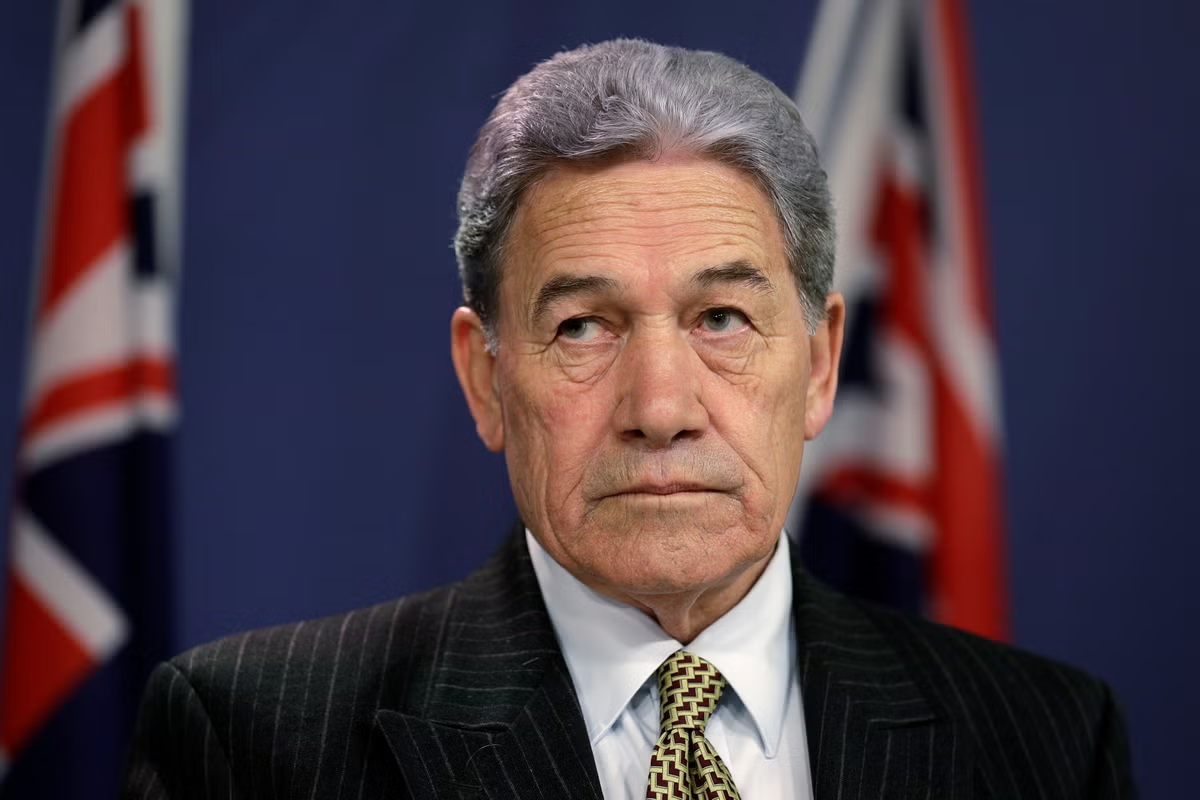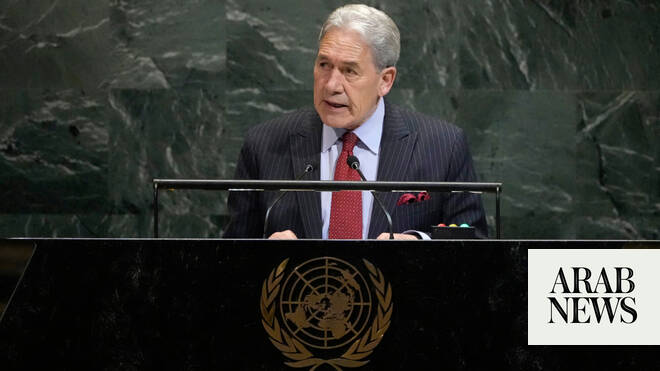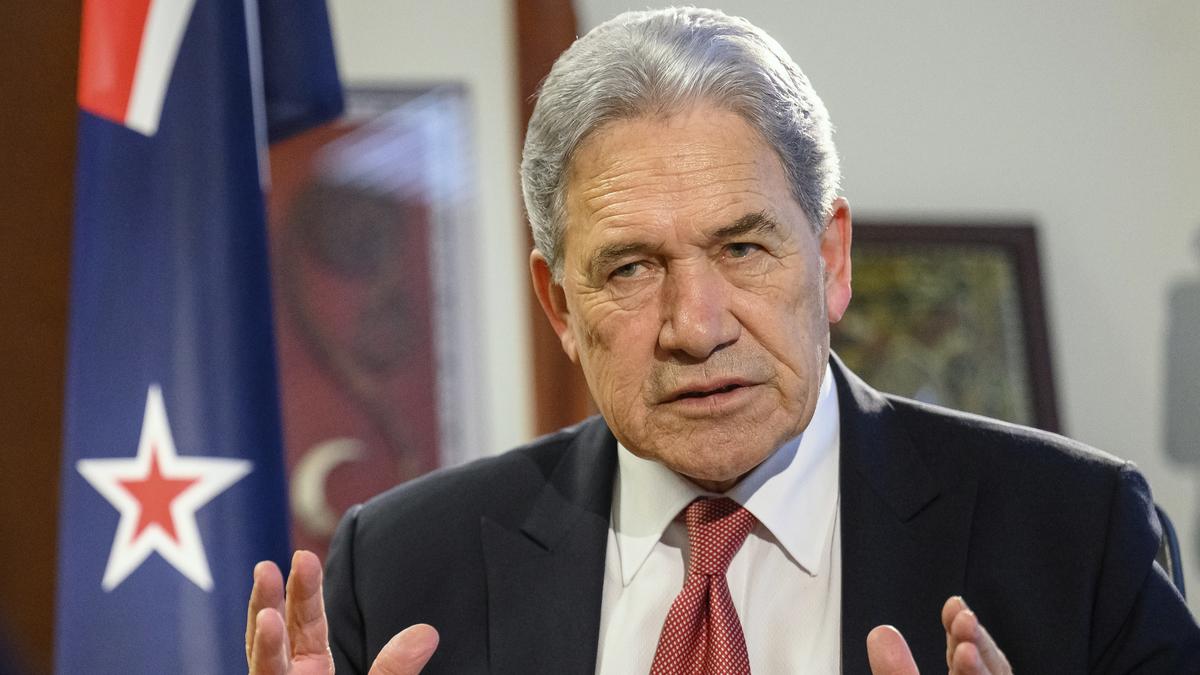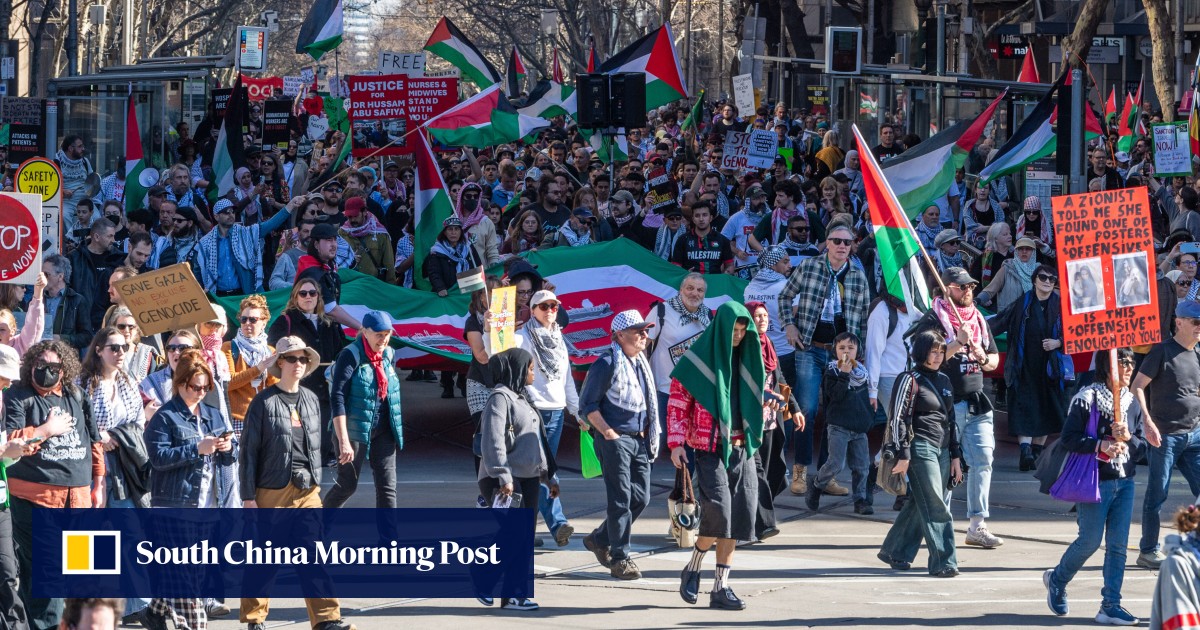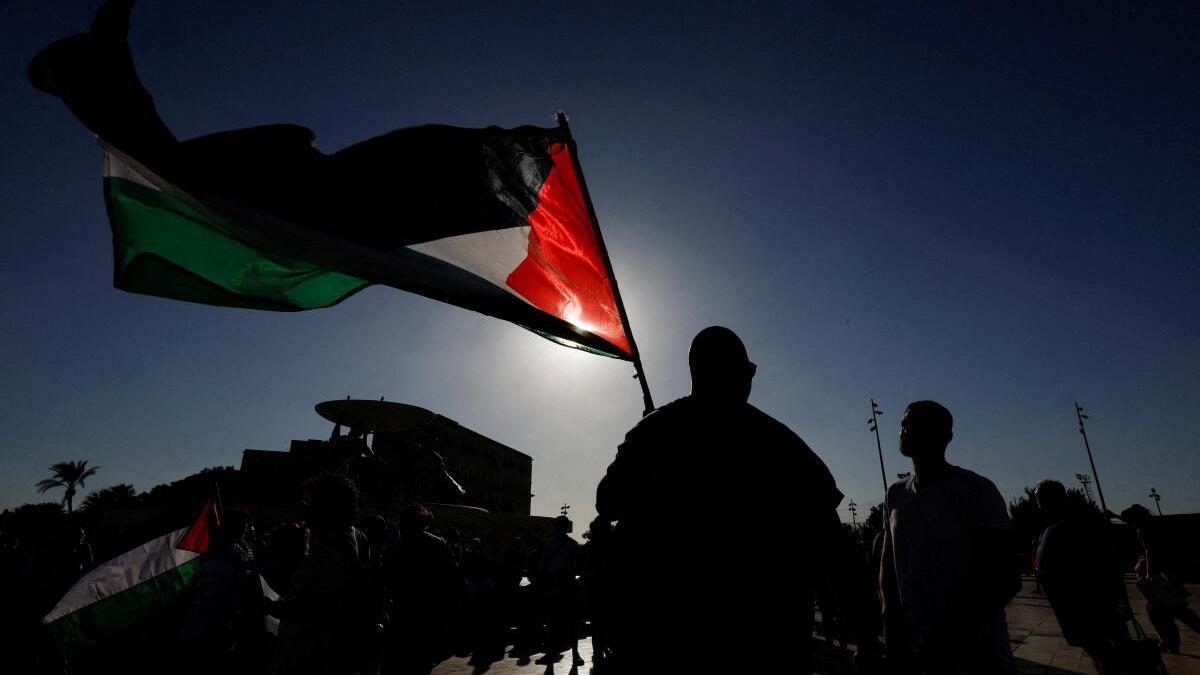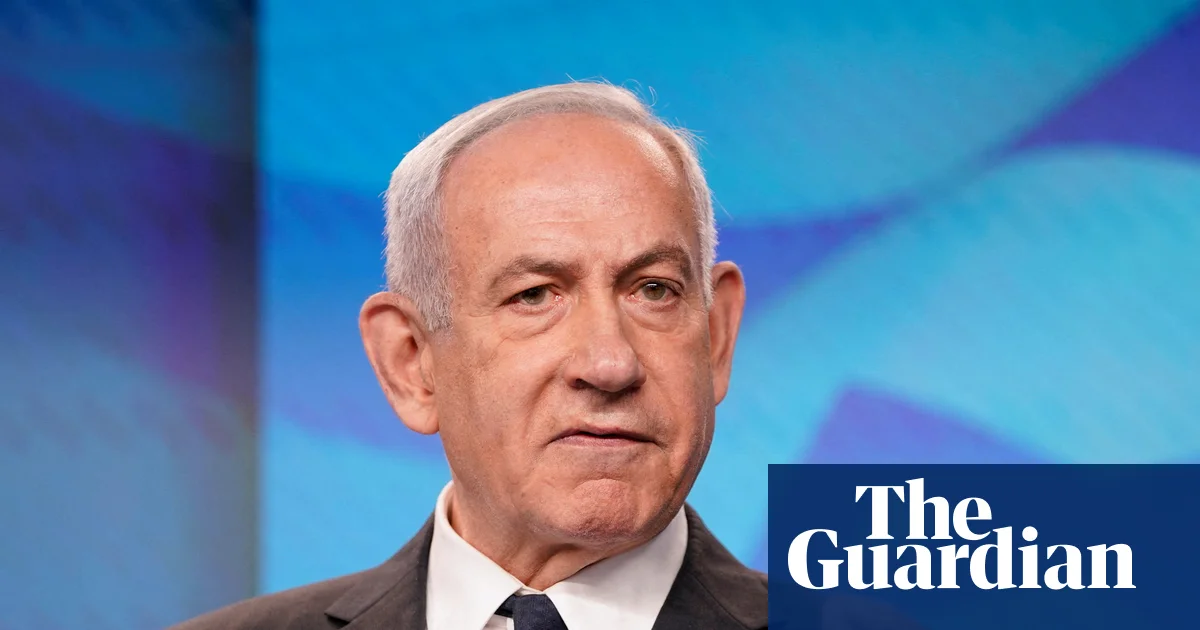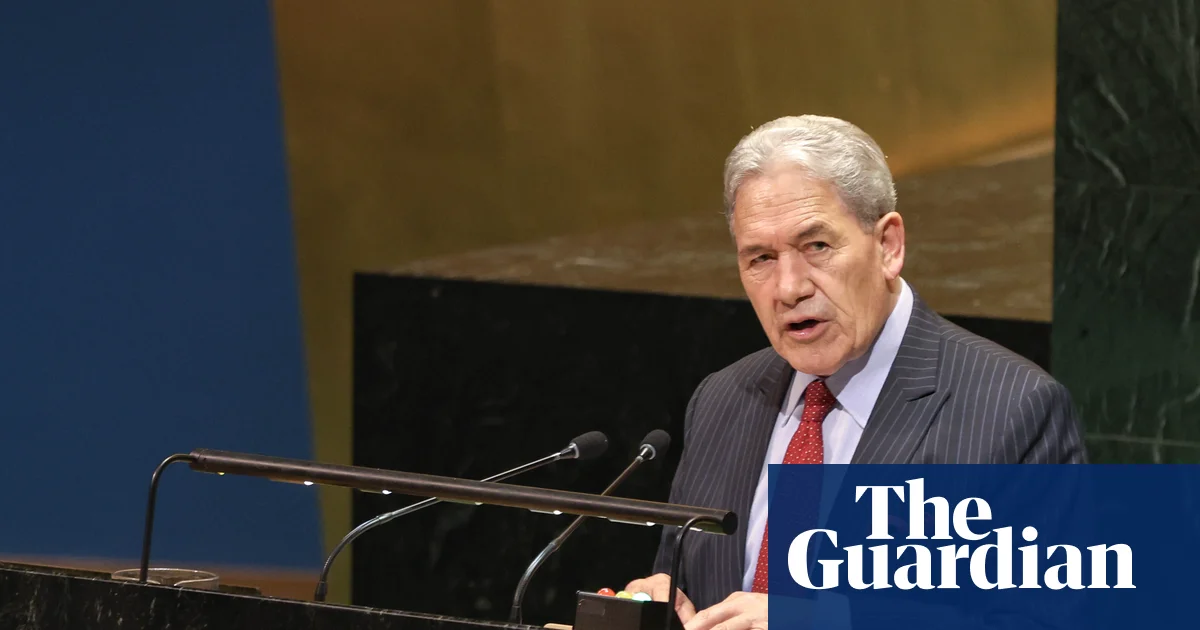
Opposition parties, Palestinian groups and a former prime minister have expressed dismay over New Zealand’s decision not to recognise Palestinian statehood, saying it places the country on the wrong side of history and puts it at odds with its traditional allies.Last week, the UK, Canada, Australia and others formally declared their recognition of statehood ahead of a special UN conference in New York. As of this month, 157 of the 193 UN member countries have recognised a Palestinian state.It had been anticipated that the New Zealand coalition government would follow suit, particularly in light of previous comments from prime minister Christopher Luxon and other senior ministers that recognising statehood would be a matter of “when, not if”.But during his address to the UN general assembly on Saturday, foreign affairs minister Winston Peters said while New Zealand was committed to a two-state solution, it would not yet recognise the state of Palestine.“With a war raging, Hamas remaining the de facto government of Gaza, and no clarity on next steps, too many questions remain about the future state of Palestine for it to be prudent for New Zealand to announce recognition at this time,” Peters said, adding he was concerned recognition could complicate efforts to secure a ceasefire.The failure to recognise statehood has angered many New Zealanders, some of whom took to social media to share their dismay after the announcement. On Monday, members of the Anglican and Catholic clergy chained themselves to the immigration minister’s Auckland office in protest at the decision.Former prime minister Helen Clark said New Zealand had placed itself “very much on the wrong side of history.”“As more and more countries move to see that the recognition of Palestine is part of a process of moving towards a solution, New Zealand is lagging behind for reasons which make very little sense at all,” she told broadcaster RNZ.The growing number of declarations for statehood come as Israel intensifies its assault on Gaza City and amid fears it could annex the West Bank in retaliation for the recognition from the UK, Australia, France and others. Earlier this month a United Nations independent international commission of inquiry found that Israel has committed genocide in Gaza.Israel has killed more than 66,000 people in Gaza, mostly civilians, and injured more than 160,000 since Hamas’s 7 October 2023 incursion into Israel, in which about 1,200 people, also mostly civilians, were killed and 251 taken hostage. Israel’s actions have decimated vast swathes of the territory and blockades on aid have caused widespread famine, according to international experts.Thousands of pro-Palestine protesters march through the Auckland CBD on 13 September. Photograph: Phil Walter/Getty ImagesIsrael’s prime minister Benjamin Netanyahu vowed to “finish the job” in Gaza and said the recognition of a Palestinian state was “insane” as delegations walked out of his address to the United Nations.New Zealand’s coalition government has faced increasing demands from opposition parties to recognise statehood, with pressure mounting after tens of thousands of New Zealanders marched through Auckland’s central city earlier this month.Human rights organisation, Justice for Palestine, said New Zealand has shown a profound lack of leadership on the issue, appearing on the world stage “as a country confused about its position in the world”.The Green party said the government’s refusal to recognise Palestine was “a stain” on New Zealand’s reputation as a voice for peace and justice, while the Labour party labelled it an “embarrassment”.
Dismay in New Zealand after government fails to recognise Palestinian statehood
PM Christopher Luxon had suggested recognition was only a matter of time, prompting disappointment from opposition parties and activists
741 words~3 min read