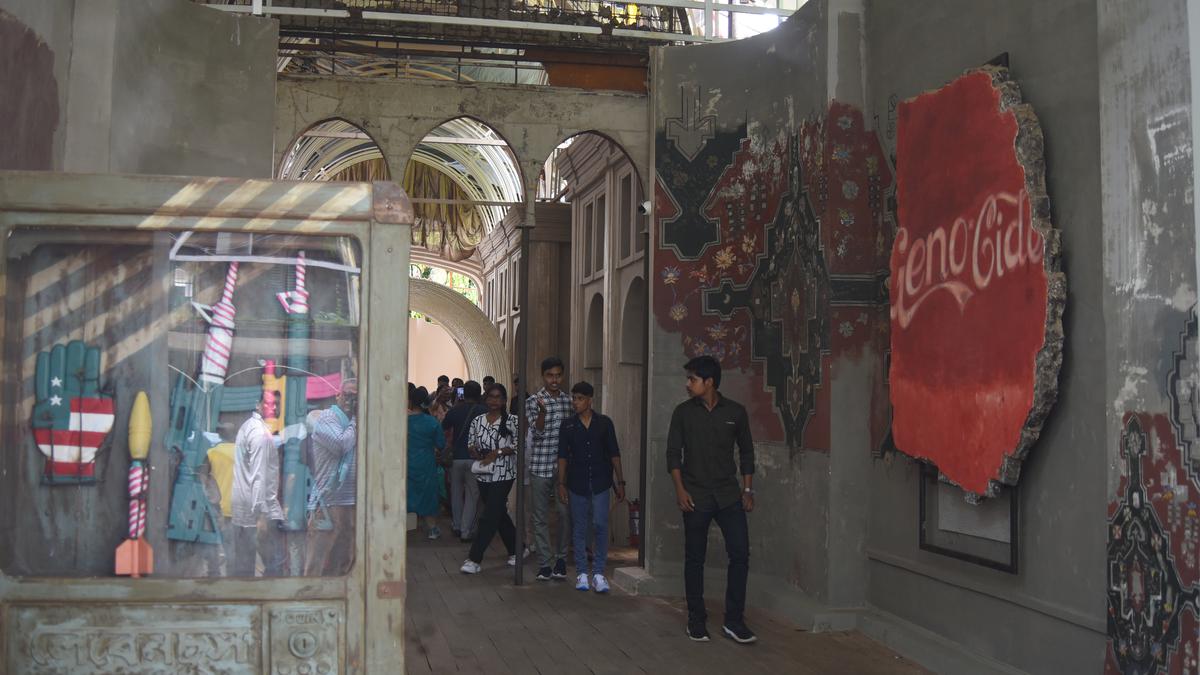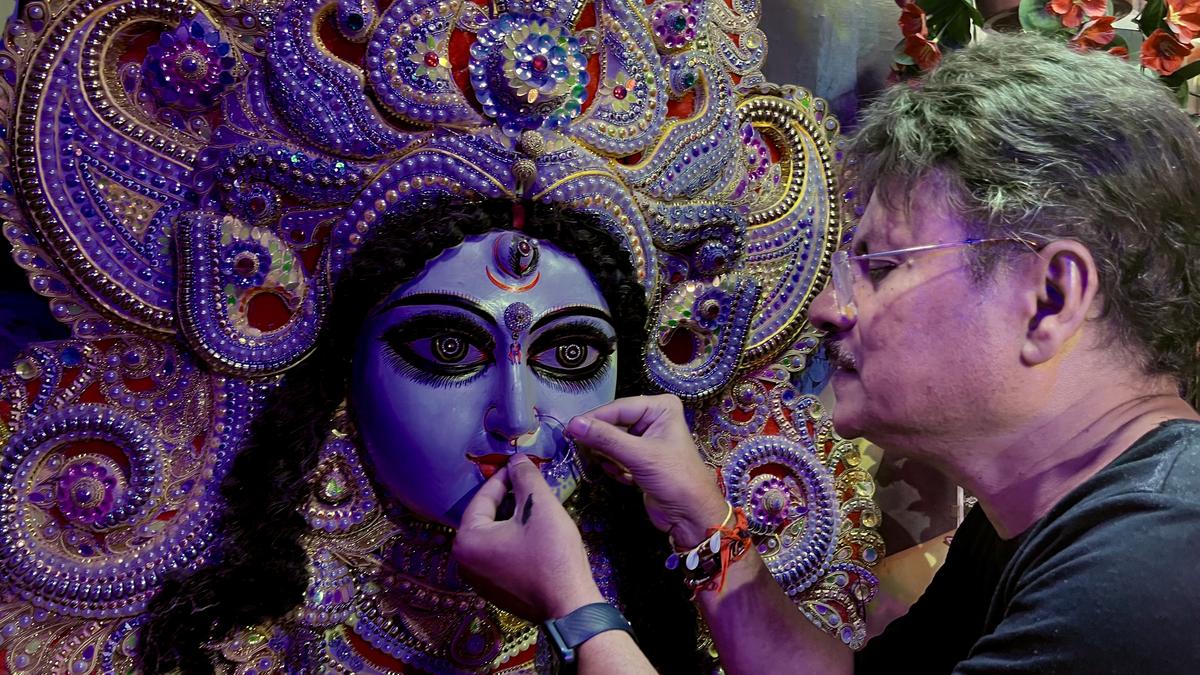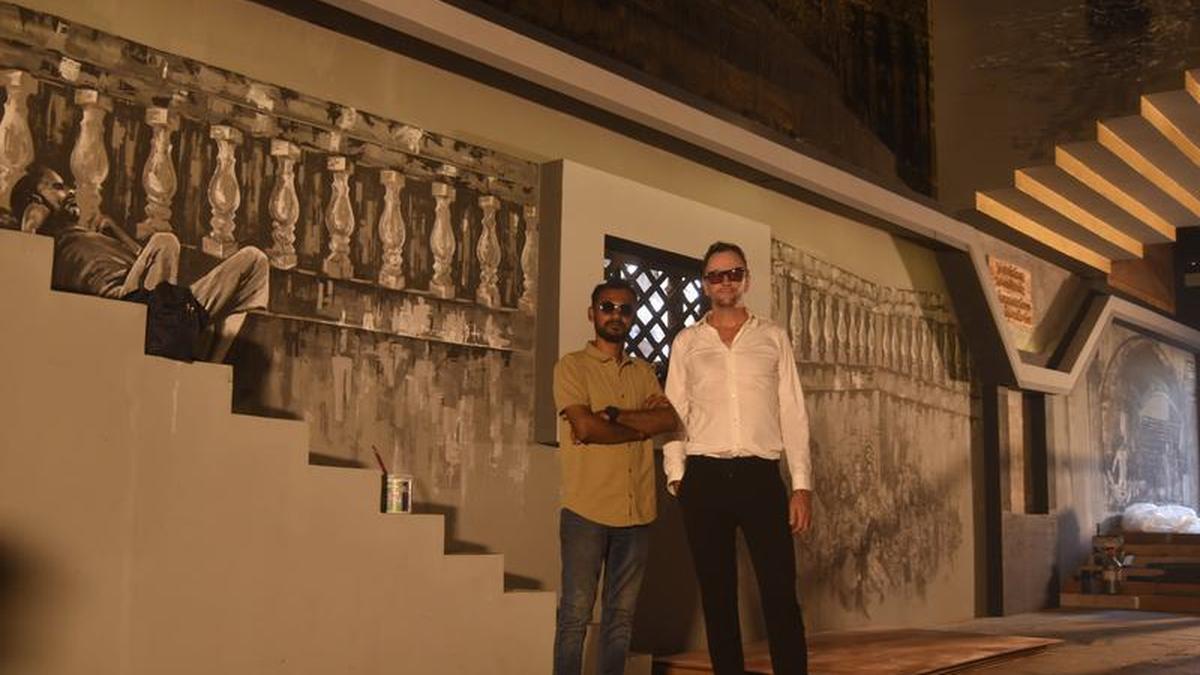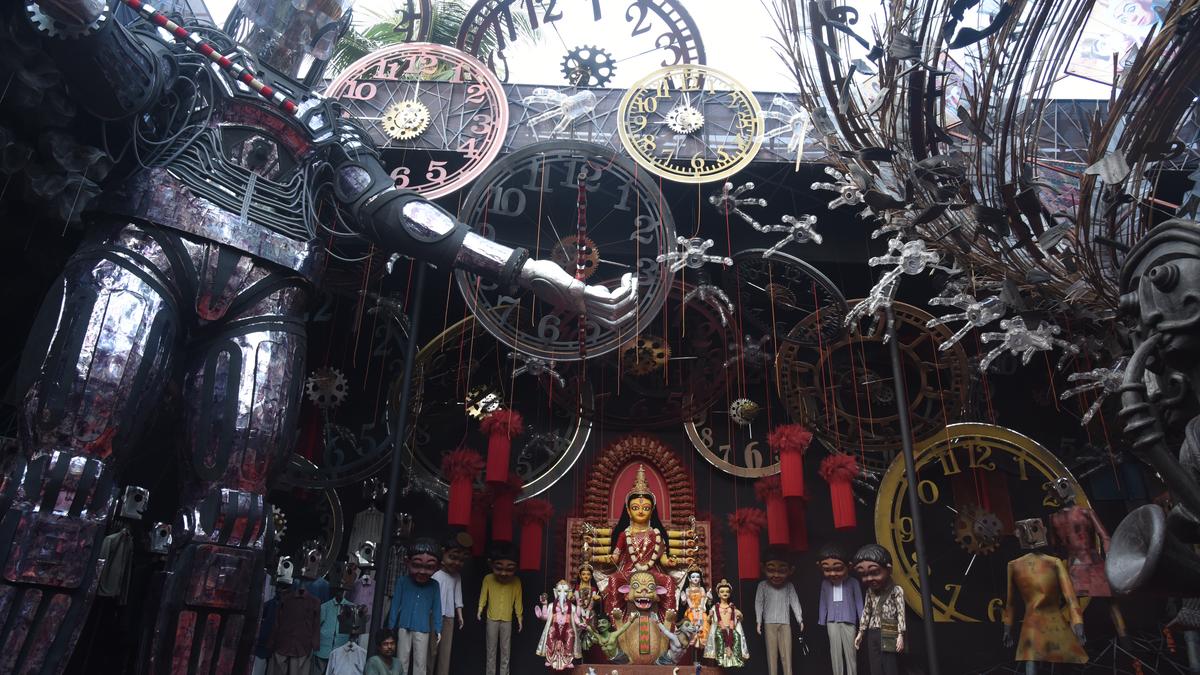
Ayan Saha, 33, has been among the busiest people in Kolkata during the countdown to Durga Puja. This year he has designed two pandals, nearly 20 kilometres apart, one in Behala and another in Kankurgachi. Saha, who graduated in Fine Arts from the Rabindra Bharati University in 2015, has been working on pandals since 2019. His designs carry non-didactic messages that reflect society’s realities.He says, “I have called the one at Behala ‘10 feet by 10 feet’, the idea being to convey that for middle-class people, no matter where they live, the bedroom is invariably that size. That’s where they are confined to almost their entire lives. At Kankurgachi, I recreated Shakher Bazaar, a popular marketplace, the idea being to show that we are always selling something or the other, particularly in the age of social media.”Saha believes he is a “struggler” in the field, earning anywhere between ₹2–3 lakh per pandal. He adds that this year’s highest pandal payment is to an artist making ₹55 lakh, though he is unsure who the artist is.From a five-day autumn festival that once meant a long holiday for children and adults alike, bringing people in a neighbourhood together to show off their sartorial taste and exchange notes on life, Durga Puja, is today an industry that functions like a Bollywood production.Here, artists build their reputations and careers; artisans bank their savings for the year; and the powerful use money to draw attention to themselves or their brands.The economies of Durga Puja, a Hindu festival to commemorate the defeat of the demon-king Mahishasura, got a shot in the arm in 2018. That year the Trinamool Congress (TMC) government announced a grant of ₹10,000 to every puja committee in the State. The amount, going up each year since then, stands at ₹1.10 lakh in 2025.Today, there are 45,000 Durga Puja committees in the State.Despite criticism from the Opposition at the almost-₹500 crore bill, the TMC leadership, particularly Chief Minister Mamata Banerjee, claims that the fund allocated for Durga Puja has a multiplier effect and boosts the economy of the State in several ways.A survey by the British Council in 2019 placed the economic value of the creative industries around Durga Puja — such as idol-making, pandal-making, lighting, literature, food, and retail, among others — at ₹32,377 crore, accounting for 2.58% of West Bengal’s GDP at the time.In tandem with politics and pujas being intertwined, many pandals have chosen Bengali Asmita as their message, an issue that has dominated politics in West Bengal for the past several months.In addition, with theme songs being a trend, this year Mamata Banerjee has herself composed a theme song for a pandal and also an album of songs.On September 26, Union Home Minister Amit Shah was in the city to inaugurate a Durga Puja pandal designed to showcase Operation Sindoor. From the food crisis in Gaza to food adulteration to acid-attack victims to Bengal Renaissance — numerous themes will keep the people of city hooked for almost a couple of weeks.Each, bigger and better than the previous year.People and money powerEngineer-entrepreneur Indranil Aich, a resident of the well-planned, upmarket Salt Lake City in Kolkata’s north-east, says, “Durga Puja is now an economic symphony where faith meets enterprise and tradition fuels transformation. As an organiser, I have seen how the financial dynamics have evolved: in large-scale pujas, the lion’s share of funding no longer rests on resident subscriptions but flows from corporate sponsorships,” he says, adding that every type of brand advertises, from FMCG to fintech.This shift, he says, began around 2000, gaining traction post-2012 as digital platforms and community-led initiatives matured. This evolution was driven by brands recognising the influence and spending power of demographics that were using social media.
Culture meets commerce at Kolkata’s Durga Puja
Ayan Saha, a busy Kolkata artist, designs pandals with societal messages, reflecting the economic impact of Durga Puja.
1,658 words~8 min read