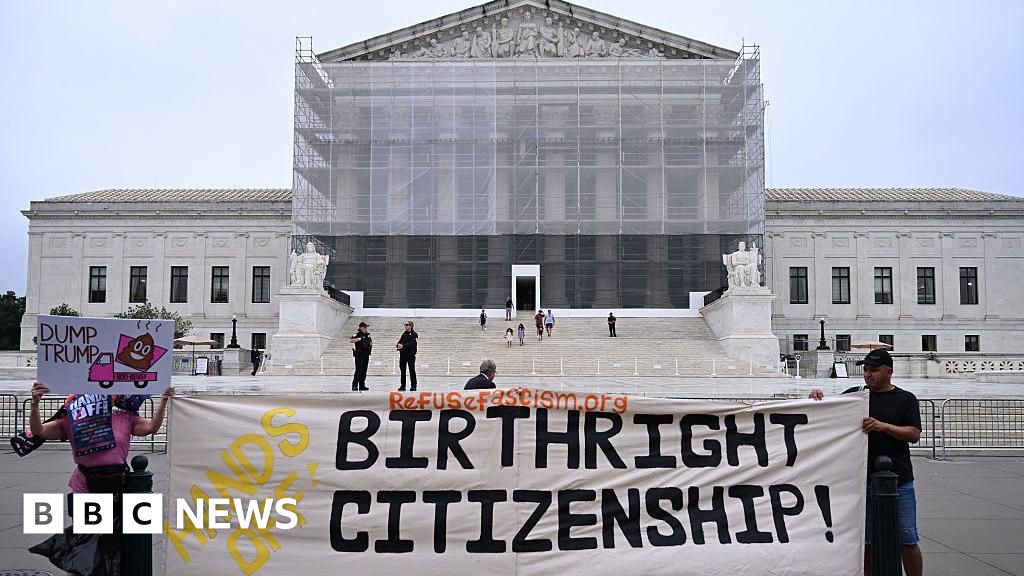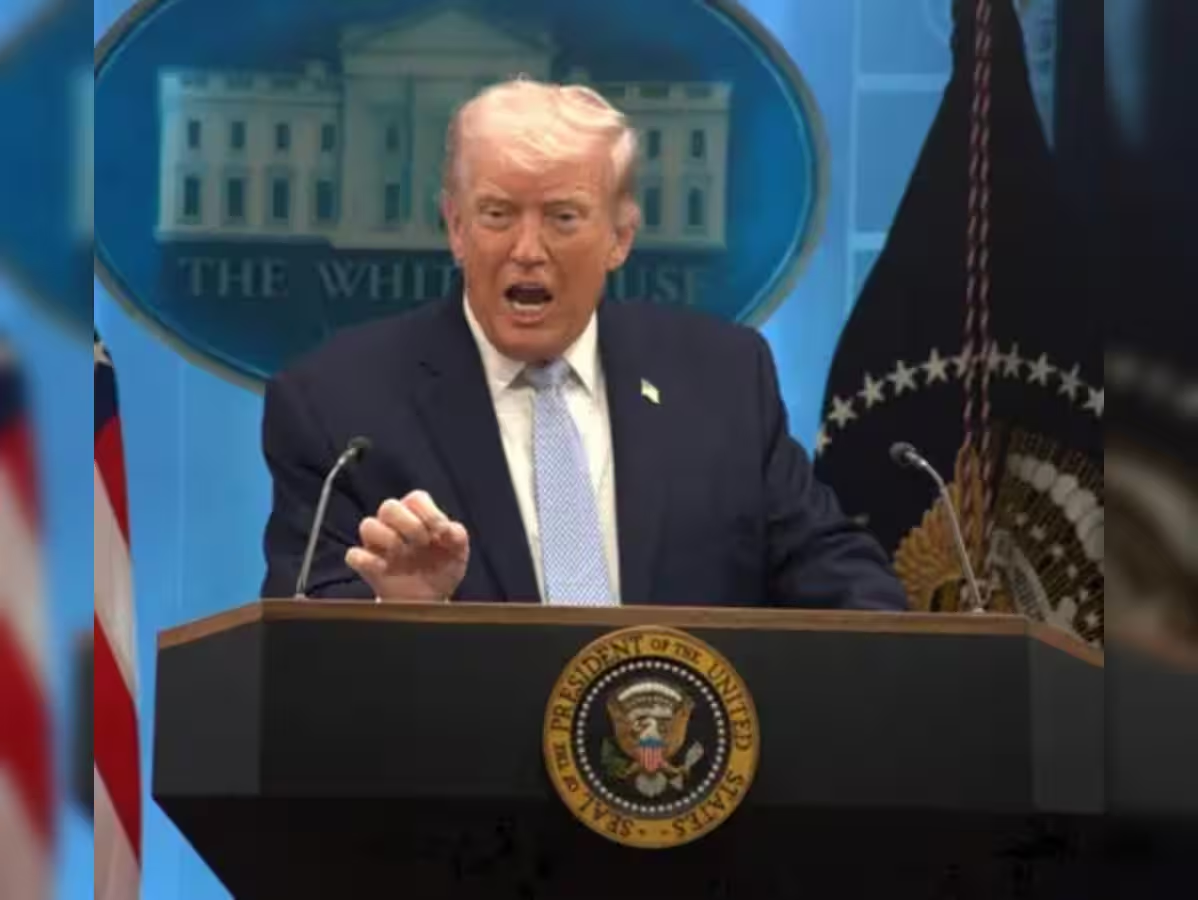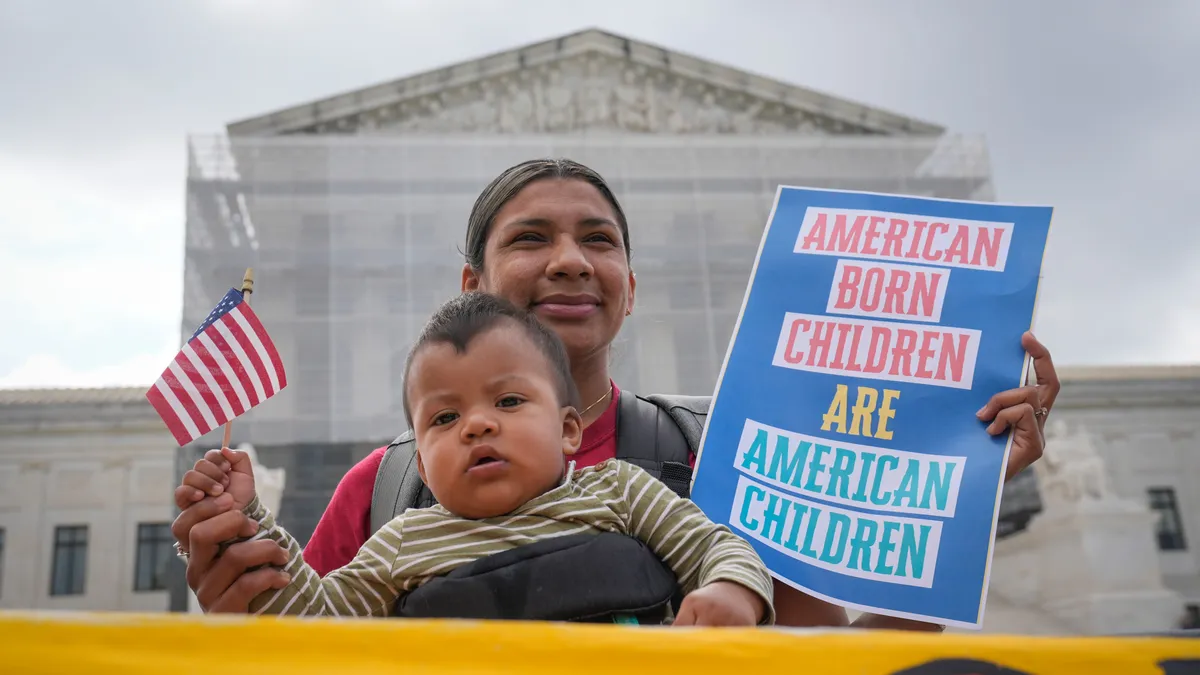
The Justice Department wants the justices to decide whether Trump's proposal seeking to reinterpret the Constitution's 14th Amendment is lawful.Show Caption
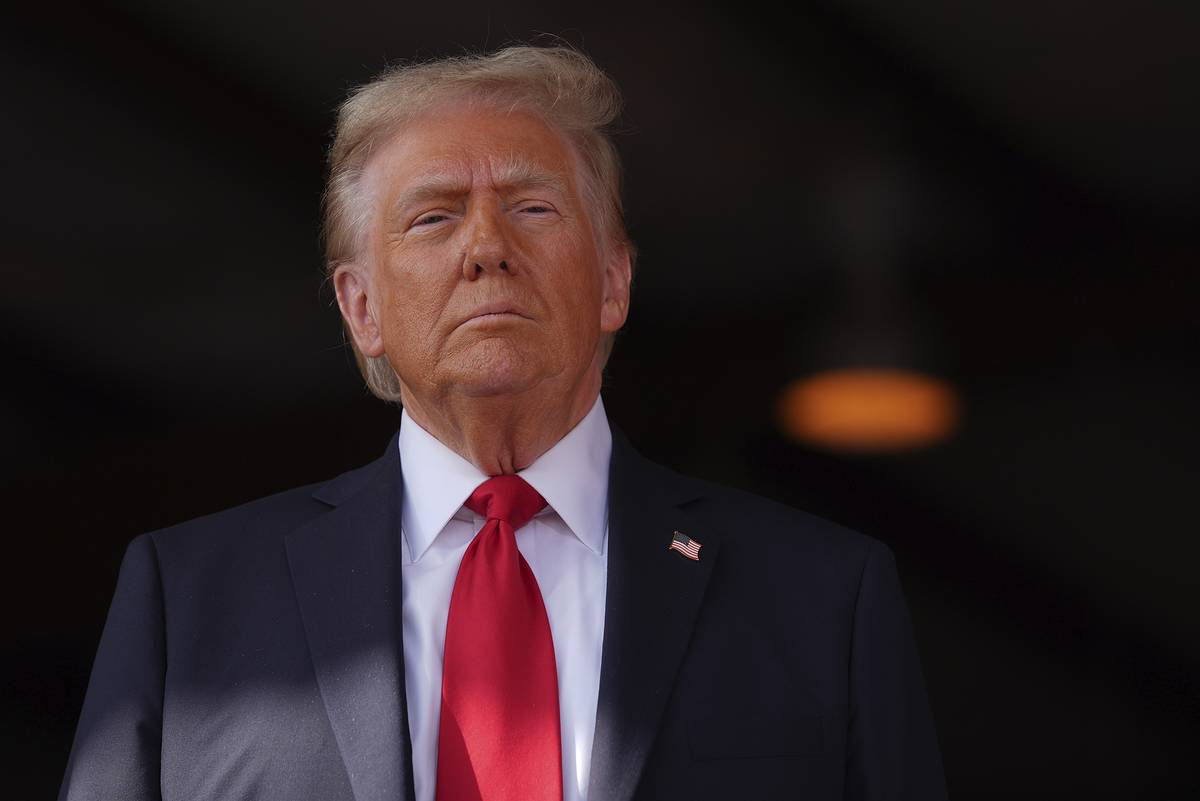
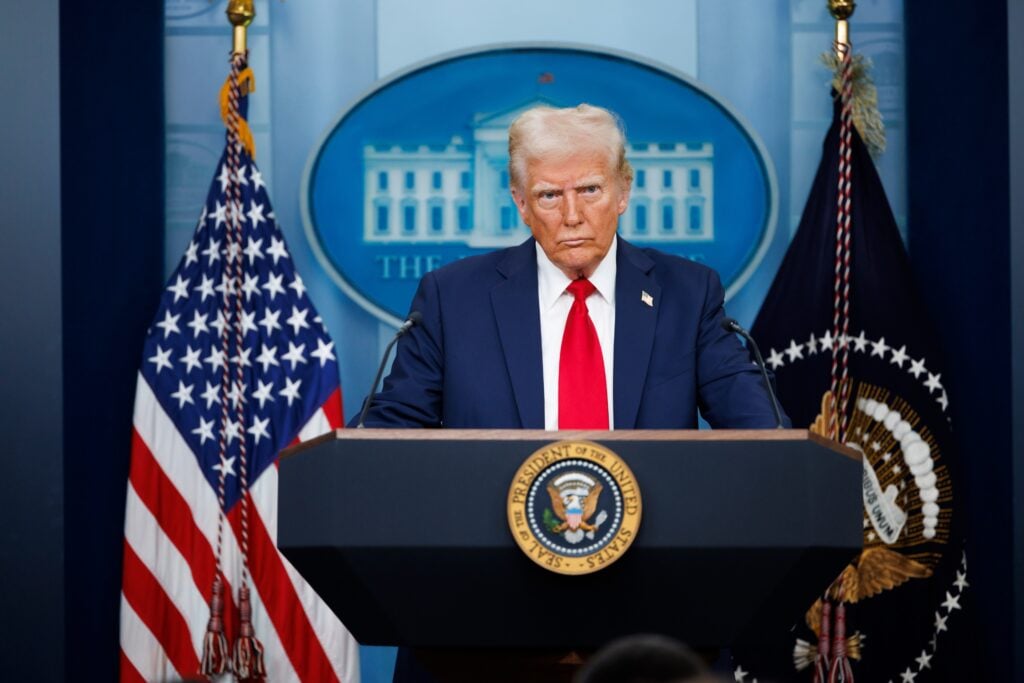
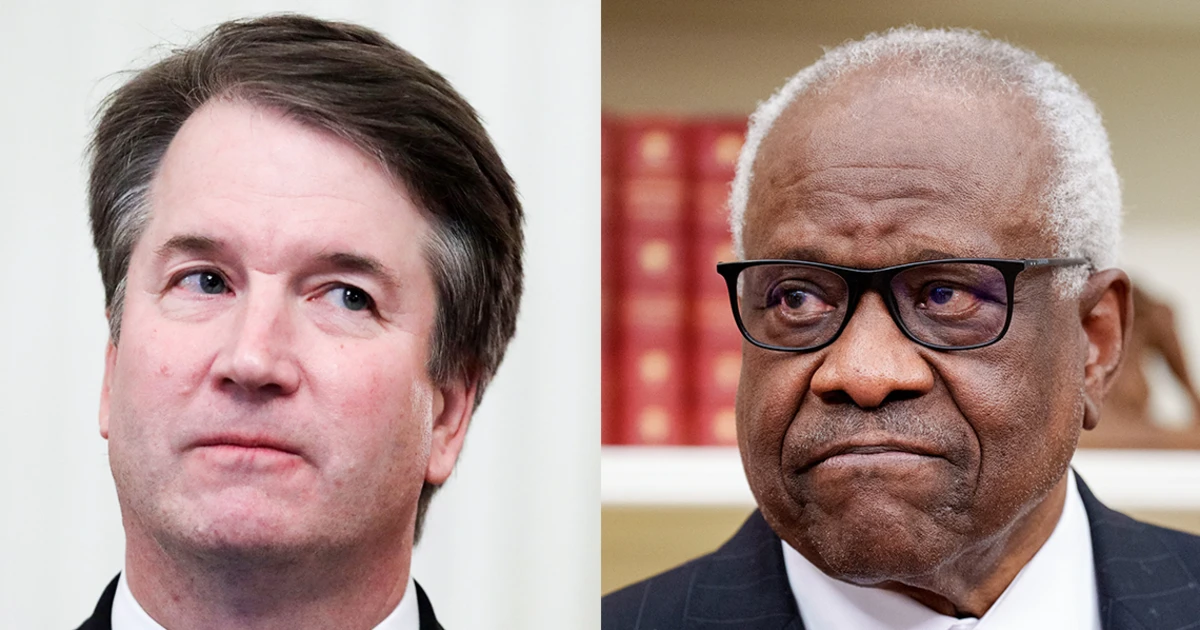
Correction: An earlier version of this story incorrectly stated the timing of Justice Clarence Thomas' Sept. 25 speech with respect to the Justice Department's appeal. The appeal was the next day.The Department of Justice has asked the Supreme Court to review whether President Donald Trump's attempt to limit birthright citizenship in the United States is legal, a move that could alter the longstanding interpretation of the U.S. Constitution on the subject.On Sept. 26, the DOJ appealed lower court rulings that blocked an executive order Trump signed on his first day back in office in January.Trump's hardline approach toward immigration was a campaign pledge and has resulted in the arrest and deportation of thousands of people."The lower court's decisions invalidated a policy of prime importance to the President and his Administration in a manner that undermines our border security. Those decisions confer, without lawful justification, the privilege of American citizenship on hundreds of thousands of unqualified people," the DOJ wrote in the appeals.The Supreme Court's new term begins on Oct. 6.Following his inauguration, the president directed federal agencies to refuse to recognize the citizenship of children born in the United States without at least one parent who is an American citizen or a lawful permanent resident.His action drew a series of lawsuits arguing, among other things, that the order violates a right enshrined in the Constitution's 14th Amendment that provides that anyone born in the United States is a citizen.After multiple lower courts halted the order as unconstitutional, the administration took the disputes to the Supreme Court in an effort to challenge the power of federal judges to issue so-called "universal" injunctions preventing presidential policies from applying against anyone, anywhere.That action led the court, which has a 6-3 conservative majority, to issue a landmark ruling in June, blunting the power of judges. But that ruling left open the possibility for courts to grant broad relief to states or to individual plaintiffs through class action lawsuits.Two challenges to Trump's order are at issue in the Sept. 26 appeals. One was filed by the state of Washington and three other states, and the other by a group of individuals who sued in federal court in New Hampshire.In July, the San Francisco-based 9th U.S. Circuit Court of Appeals sided with the states, while U.S. District Judge Joseph Laplante in Concord, New Hampshire, let the plaintiffs in that case proceed as a class, allowing Trump's order to be blocked nationally."This executive order is illegal ‒ full stop ‒ and no amount of maneuvering from the administration is going to change that. We will continue to ensure that no baby's citizenship is ever stripped away by this cruel and senseless order," Cody Wofsy, an attorney for the New Hampshire plaintiffs, told Reuters on Friday.The administration is asking the justices to hear the New Hampshire dispute even before a Boston-based federal appeals court has ruled in the case.'A powerful incentive'The 14th Amendment's citizenship clause states that all "persons born or naturalized in the United States, and subject to the jurisdiction thereof, are citizens of the United States and of the state wherein they reside." The 14th Amendment was ratified in 1868 in the aftermath of the Civil War and granted citizenship and freedoms outlined in the Bill of Rights to formerly enslaved people.The administration contends that the 14th Amendment, long understood to confer citizenship to virtually anyone born in the United States, does not extend to immigrants who are in the country illegally or even to immigrants whose presence is lawful but temporary, such as university students or those on work visas.The U.S. Supreme Court's 1898 ruling in United States v. Wong Kim Ark is considered the historical standard that children born in the United States to noncitizen parents are entitled to American citizenship. Wong Kim Ark, born in San Francisco to Chinese immigrant parents, was denied reentry to the United States after a trip to China, despite being born within U.S. territory.In a 6-2 decision, the court held that Wong Kim Ark was a U.S. citizen because of his birth in the United States, regardless of his parents' Chinese citizenship.The DOJ argues that the court's ruling in that case was narrower, applying to children whose parents had a "permanent domicile and residence in the United States."The DOJ's request came a day after Justice Clarence Thomas said the Supreme Court should take a more critical approach to settled precedent, saying decided cases are not "the gospel" and suggesting some may have been based on "something somebody dreamt up and others went along with." Thomas, one of the most conservative justices on the bench, made the comments during a rare public appearance on Sept. 25 at Catholic University's Columbus School of Law in Washington, DC.In Sept. 26's filings, the DOJ said that a policy of universal birthright citizenship "operates as a powerful incentive for illegal migration" and has "spawned an industry of modern 'birth tourism,' by which foreigners travel to the United States solely for the purpose of giving birth here."Since Trump returned to office, his administration has repeatedly asked the Supreme Court to intervene on an emergency basis to implement his policies, even as their legality is tested in court, after judges blocked them.The Supreme Court has sided with the administration in nearly every case it has been asked to review ‒ including several related to Trump's efforts to restrict migration and accelerate deportations.The latest decision favoring Trump came on Sept. 26, when the court allowed him to withhold about $4 billion in foreign aid authorized by Congress for the current fiscal year.Contributing: Reuters