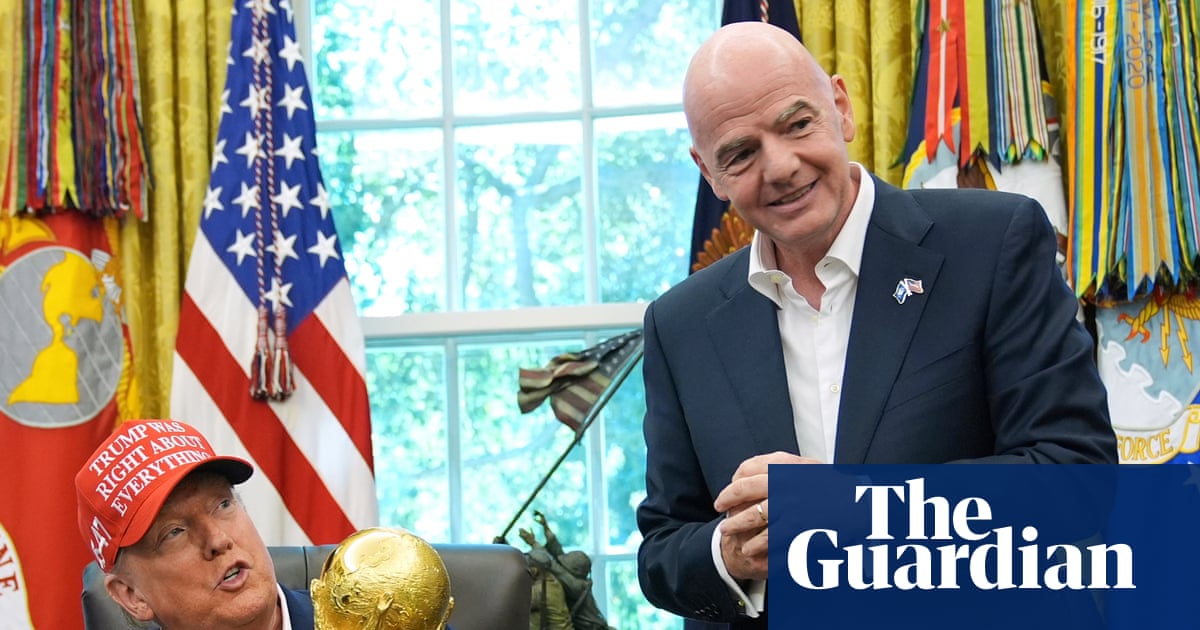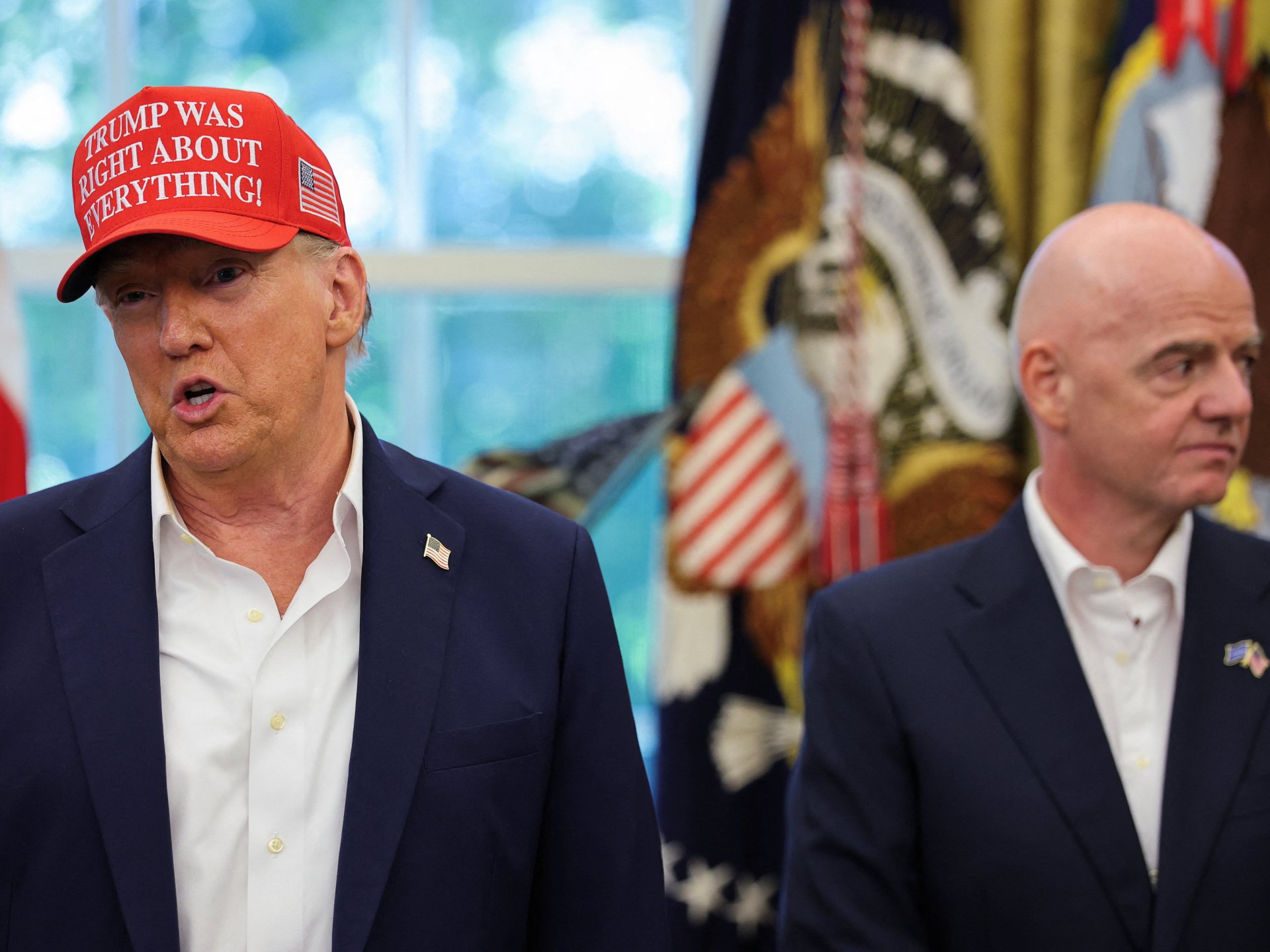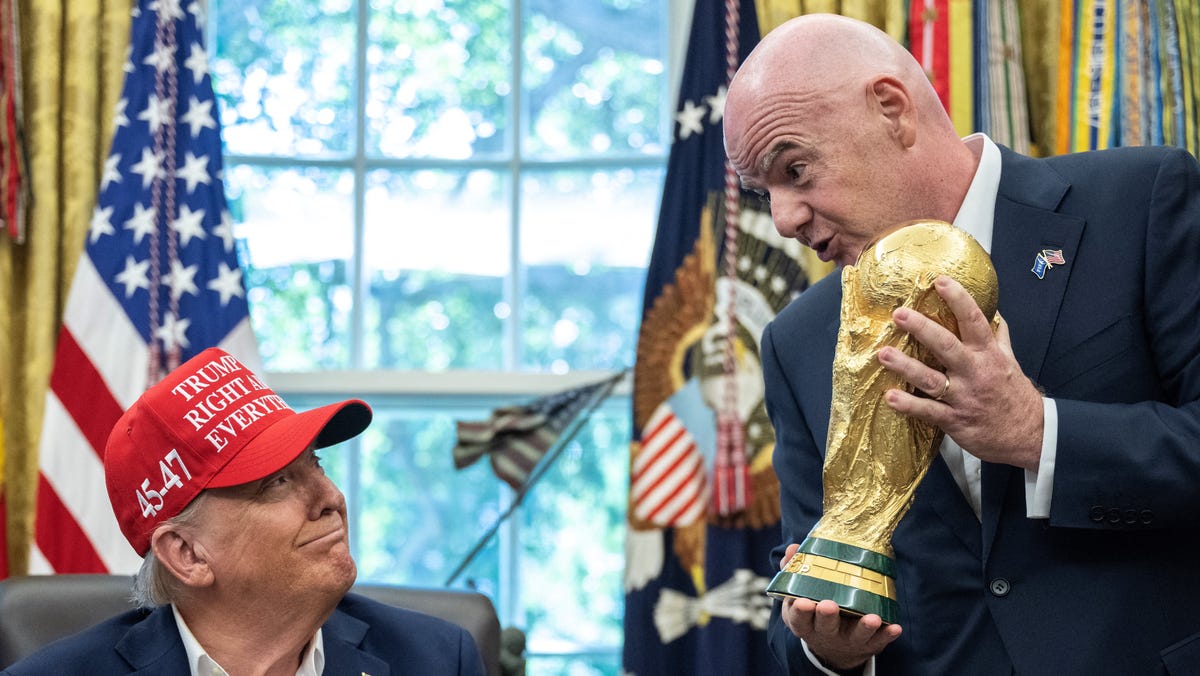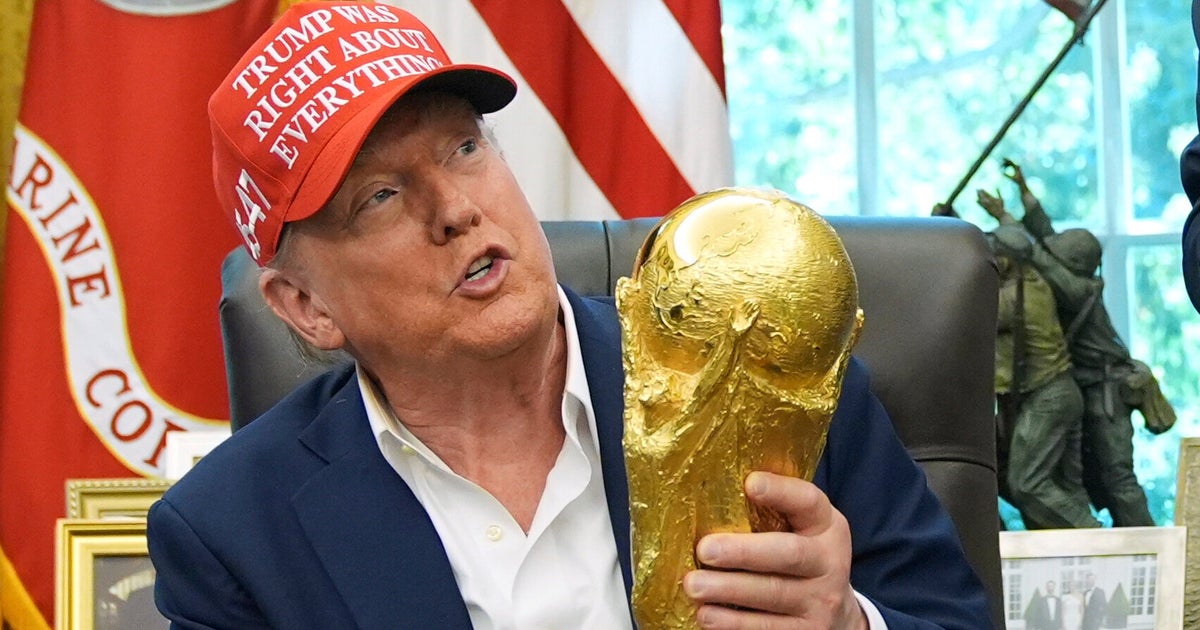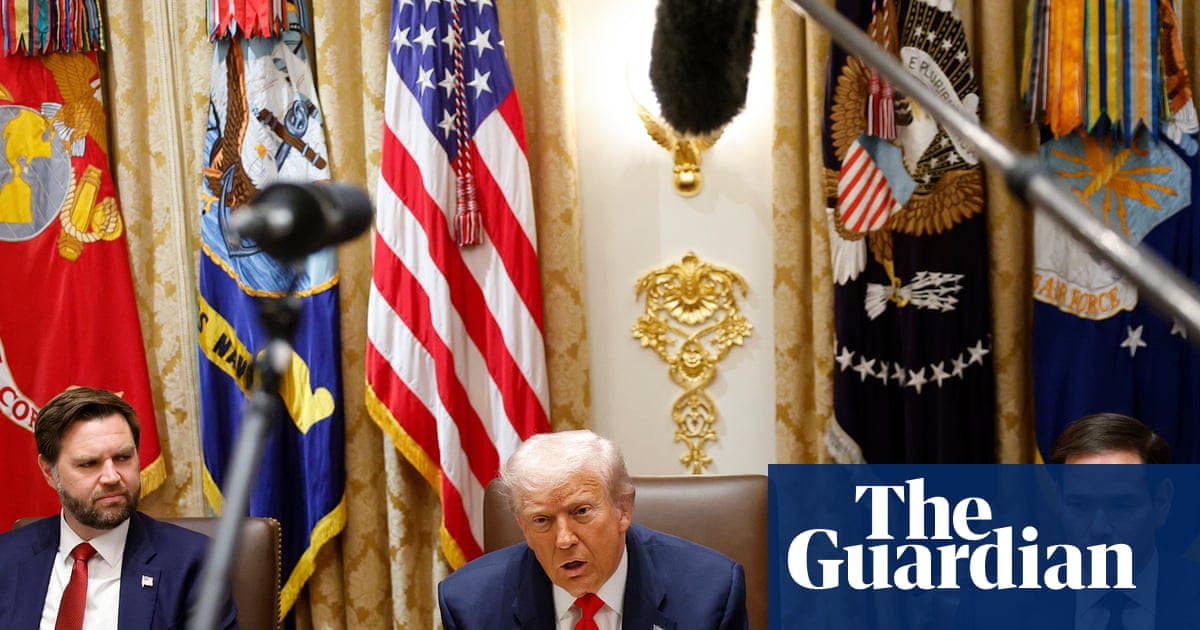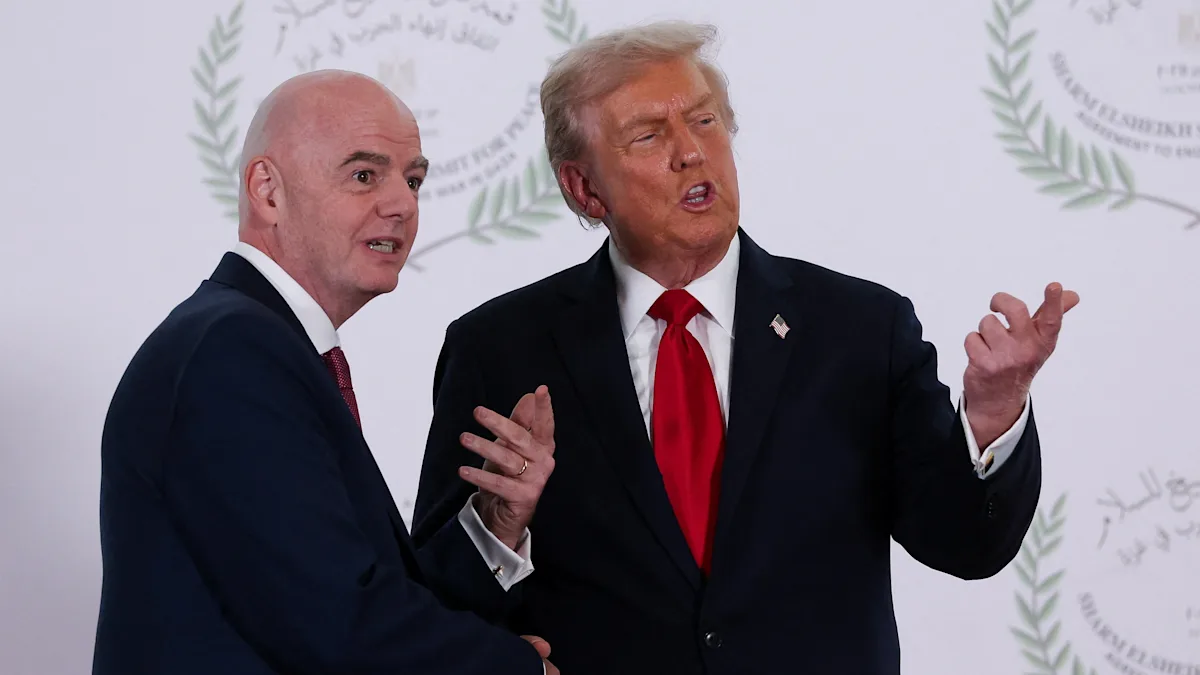
President Donald Trump’s suggestion that he could move 2026 World Cup games out of U.S. cities he deems unsafe rippled through soccer and political circles in late September. Then he doubled down in mid-October, repeating his assertions.The idea, previously unexplored, was first raised by a reporter at the White House and entertained by Trump. It sparked a wide range of reactions, many tinged with confusion, because the U.S. government had no official role in choosing World Cup host cities; and it does not have any explicit authority to relocate World Cup games.Nonetheless, Trump’s comments elicited responses from host city mayors and World Cup organizers. Seattle Mayor Bruce Harrell ripped Trump’s “ignorance,” and said in a statement: “We’re working every day to make the World Cup a safe, welcoming, and fun experience.”The following is a rundown of what else has been said and whether games could actually be moved.What did Trump say?Trump did not proactively make the suggestion. In fact, he initially seemed to resist it. During a press session in the Oval Office, when the reporter prefaced his question with “immigration, crime and the World Cup,” Trump interjected with a hint of humor: “That’s a lot — that’s a lot of questions.”The reporter continued: “You have a number of cities that are pushing back against your immigration and deportation, as well as your crime initiatives.”Trump interjected again: “I don’t think they’re very much pushing back at all.”The reporter went on: “But some of those cities have World Cup games. Seattle, San Francisco.”Trump cut him off yet again: “They’re gonna be very secure.”But the reporter continued: “Could those games move if they don’t cooperate with your crime initiatives and your immigration initiatives?”Trump then spoke for two minutes and 45 seconds. He began: “Well, that’s an interesting suggestion. I guess. But we’re gonna make sure they’re safe.”He continued on a tangent about cities who, he said, are “run by radical left lunatics that don’t know what they’re doing.” He spoke about Washington, D.C., which is not hosting World Cup games. He spoke about Memphis and Chicago. “It will be safe for the World Cup,” he said, despite both Memphis and Chicago also being uninvolved. (Chicago pulled out of the running for World Cup games during the bid phase, citing “FIFA’s inflexibility” and taxpayer risk.)“If I think it isn’t safe, we’ll move it into a different city, absolutely,” Trump said. “It’s actually a very fair question. If I think it’s not safe, we’re going to move it out of that city.”He then went on another tangent about JB Pritzker, the governor of Illinois, who has accused Trump of deploying National Guard troops to Democrat-controlled cities in an effort to exert “authoritarian” control ahead of next year’s midterm elections.Trump concluded: “If any city we think is gonna be even a little bit dangerous for the World Cup … we won’t allow it to go to [those cities], we’ll move it around a little bit. But I hope that’s not going to happen.”When repeating his remarks in another Oval Office media session, Trump said he would call in a personal favor with FIFA president Gianni Infantino.“If I feel there’s unsafe conditions, I would call Gianni — the head of FIFA, who’s phenomenal — and I would say, ‘let’s move it to another location,’ and he would do that.” Trump said. “He wouldn’t love to do it, but he’d do it very easily.”Can Trump do that?The World Cup is owned and operated by FIFA, soccer’s global governing body. FIFA, years ago, signed “host city agreements” and “stadium agreements” with entities in various U.S. markets, and chose 11 of them — plus three in Mexico and two in Canada — to host games.The federal government, meanwhile, signed various declarations and guarantees when the three North American countries were bidding to host the World Cup back in 2018, during the first Trump administration. But it had no role in selecting the cities or negotiating their contracts, which were originally signed in 2017 and updated with addendums in 2022.“The federal government is not a direct party to these agreements,” Nathan O’Malley, an attorney at Musick, Peeler & Garrett and co-leader of the firm’s Olympics & World Cup practice group, told The Athletic.Trump, therefore, cannot unilaterally cancel those contracts and move games to other cities.The contracts, some of which have been obtained via public records requests, do require cities to implement robust security and public safety measures. If FIFA deems a city unsafe, it could, potentially, terminate the agreements and relocate matches. Trump, in theory, could pressure FIFA to do so.
President Trump’s threatening to relocate 2026 World Cup games. Can he actually do that?
World Cup cities have entered President Trump's crosshairs. Here's the likeliest outcome following his unexpected and targeted remarks
2,248 words~10 min read