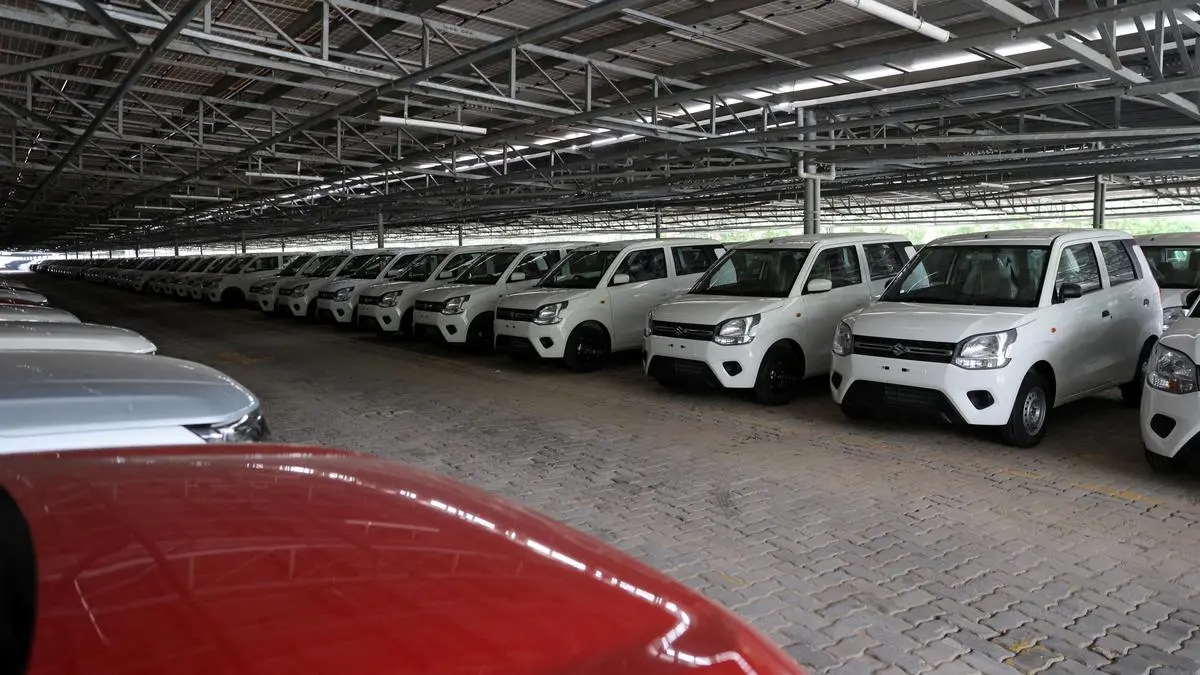
Driven by a debate sparked by small-car heavyweight Maruti Suzuki, the revised draft of fuel-efficiency norms released late on Thursday proposes special concessions for small cars for the first time, while also extending incentives to flex-fuel and strong hybrid vehicles.The draft norms also offer incentives to flex-fuel and hybrid vehicles, and permit automakers that find it difficult to meet Corporate Average Fuel Economy (CAFE) targets to band together in a pool with up to two other companies. CAFE norms set fuel economy targets for automakers with the twin goals of lowering fuel consumption and cutting CO2 output. Introduced in 2017, the third phase of CAFE, for which the latest draft has been issued, will come into effect from 2027-2028 till 2031-2032.he revised draft issued on Thursday marked the first time the CAFE standards created a distinct category for “small cars.” To qualify, a petrol vehicle must weigh no more than 909 kg, have an engine capacity of 1,200 cc or below, and be under 4,000 mm in length — a criteria that cover most entry-level hatchbacks and compact sedans. Maruti Suzuki, India’s leading small-car manufacturer, is expected to reap the biggest advantage. These cars also receive preferential treatment as in addition to the carbon-dioxide reductions credited from certified technologies, they are allowed to knock off a further 3 gm/km from their official emission levels.The latest draft updates the June 2024 version, which auto major Maruti Suzuki had criticised for “penalising” lightweight vehicles while favouring larger, higher-emission models. Mahindra, however, pushed back in a July 9 letter to the Ministry, urging that the norms not be diluted. It argued that small cars, though comprising nearly 60% of domestic passenger vehicle sales, accounted for 53% of the sector’s CO₂ emissions. Published - September 26, 2025 08:28 pm IST
Revised fuel-efficiency norms offer relief for small cars
Revised draft of fuel-efficiency norms proposes concessions for small cars, flex-fuel, and hybrid vehicles, impacting automakers significantly.
296 words~1 min read