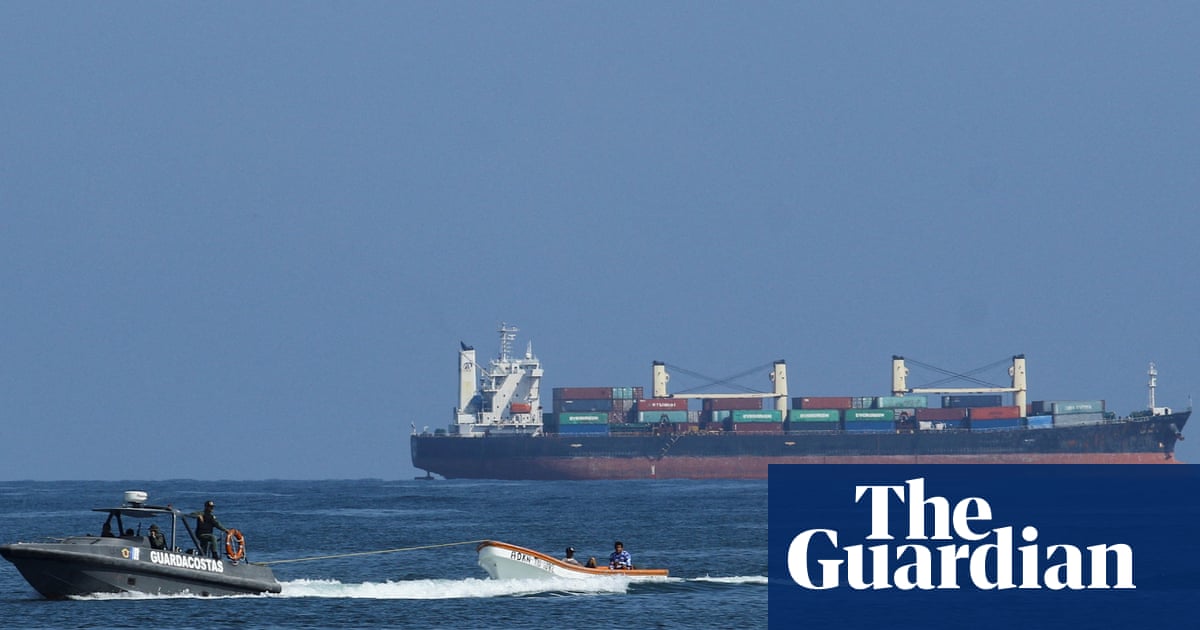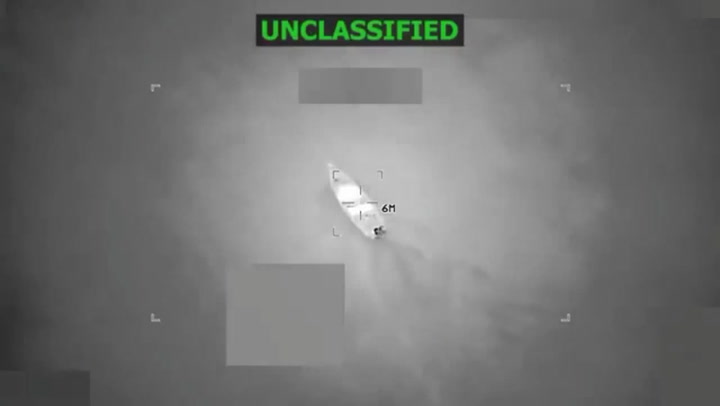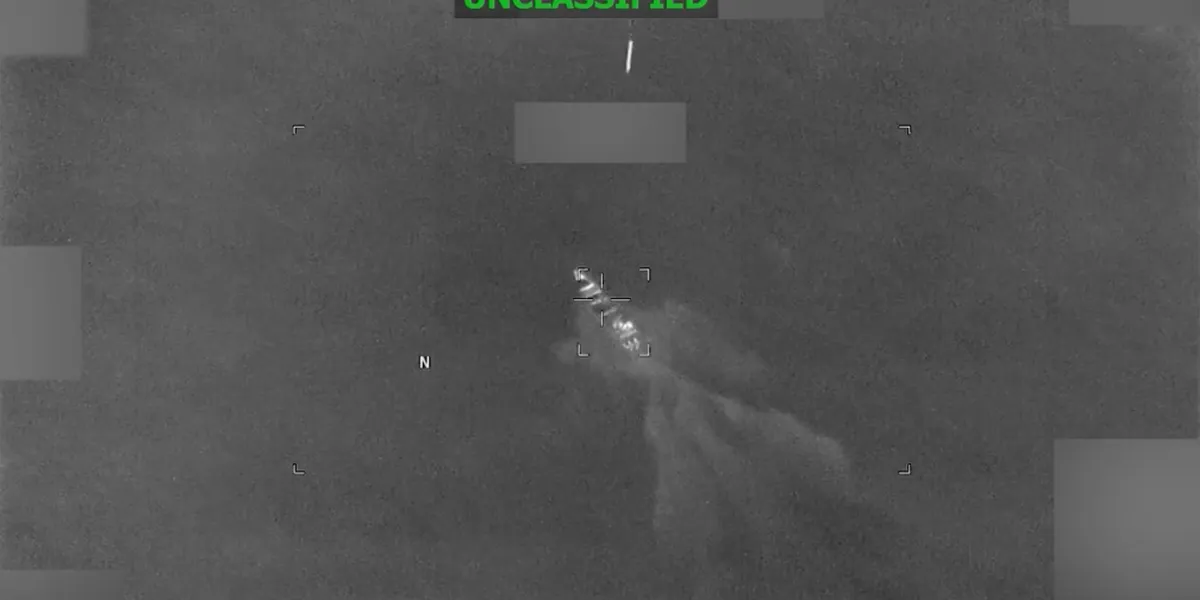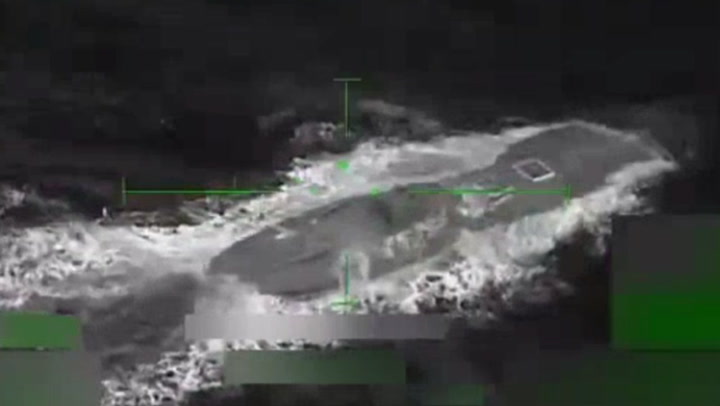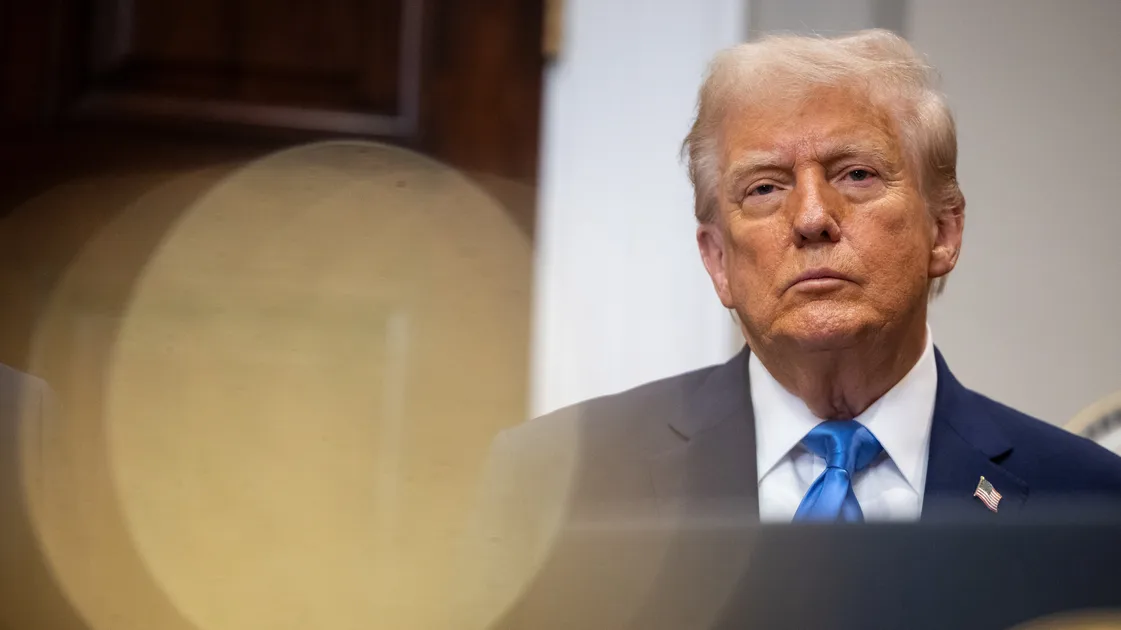
WASHINGTON — President Donald Trump has set himself up as judge, jury and executioner of people he calls drug smugglers, thus far providing zero evidence of his claims, while potentially putting U.S. service members who followed his orders to kill 17 of them to date liable under criminal and military law.“The strike occurred while the terrorists were at sea in international waters transporting illegal narcotics, heading to the United States,” Trump said in a social media post announcing the Sept. 2 missile strike that he said killed 11.Neither in that post nor in subsequent posts or remarks has Trump offered a legal justification for killing suspected drug traffickers, rather than arresting them and confiscating contraband, as the U.S. has done for decades.So far, the U.S. military has destroyed three boats that, notwithstanding Trump’s claim, were far too small and ill-equipped to have traveled thousands of miles across open ocean to the United States and would have required multiple refueling stops to do so.What’s more, killing the crew and passengers of those vessels even though they were neither enemy combatants nor posing a threat to U.S. forces may have violated both civil and military prohibitions against murder, legal experts said, even as Trump himself is likely immune thanks to a Supreme Court ruling last year that gives presidents broad protections. U.S. service members, on the other hand, are not supposed to carry out illegal orders.Trump’s directives to destroy the boats have put “the military officers involved in a horrible position,” said Ty Cobb, a White House lawyer in Trump’s first term.“My Lai territory,” he said, referring to the prosecution of U.S. Army Lt. William Calley for the slaughter of hundreds of villagers in 1968 during the Vietnam War.President Donald Trump speaks to the United Nations General Assembly on Sept. 23, in New York.via Associated PressHuffPost asked the Defense Department public affairs office a series of specific questions about the vessels, including the departure and likely destination ports of the attacked boats, the names and nationalities of those aboard, what specifically was being smuggled and whether the vessels were allowed to surrender before they were fired upon.The Pentagon referred all the questions to the White House, and White House aides did not respond.HuffPost then asked Trump’s political appointees at the department about concerns that the extrajudicial killings open up service members who carried them out to potential prosecution.A staffer responded with a statement from chief Pentagon spokesman Sean Parnell claiming that the strikes had been fully vetted by department lawyers.“Lawyers up and down the chain of command have been thoroughly involved in reviewing these operations prior to execution, none questioning their legality and instead advising subordinate commanders and Secretary [Pete] Hegseth that the proposed actions were permissible before they commenced,” the statement said.Other lawyers with expertise in the field said it is not at all clear that Trump has the legal authority to kill people on the high seas, particularly since he and his administration have not shared any details.“We don’t have enough information to conclude definitively whether the strikes were lawful or not, as the White House has not been sufficiently transparent about the precise circumstance,” said Charles Dunlap, a former Air Force judge advocate general officer and now a law professor at Duke University.Brian Finucane, who spent a decade in the State Department’s legal office, worried that with no articulated “limiting principle” behind the Caribbean strikes, Trump could assert the right to kill people he has labeled terrorists anywhere, even in the United States, where he this week declared “antifa” a terrorist organization.“The president is essentially asserting a prerogative to do unjustified premeditated killings,” he said. “There are prohibitions against murder. It is not clear how the administration is getting around those.”Because We CanFinucane and other experts in military and international law called Trump’s decision to summarily kill everyone aboard the three vessels to date a dramatic expansion of claimed authority.Domestic criminal law generally permits the use of lethal force only when a suspected criminal is endangering law enforcement or innocent third parties. International law recognizes a nation’s right to respond with lethal force to imminent threats from foreign or non-state actors operating beyond a nation’s territorial waters.Neither case appears to clearly apply in the three attacks by the U.S. military in the Caribbean this month. Trump, nevertheless, claims that his authority as president allows him to kill anyone he has deemed a “terrorist.”“The Strike occurred while these confirmed narcoterrorists from Venezuela were in International Waters transporting illegal narcotics (A DEADLY WEAPON POISONING AMERICANS!) headed to the U.S,” he wrote in a Sept. 15 social media post about the second attack that he said killed three.“The strike killed 3 male narcoterrorists aboard the vessel, which was in international waters,” he wrote on Sept. 19, describing the destruction of the third boat.In a Sept. 4 letter to the Senate regarding the Sept. 2 attack, required by the 1973 Wars Power Act, Trump wrote: “We must meet this threat to our citizens and our most vital national interests with United States military force in self-defense.”Thus far, however, Trump’s White House and administration have offered no evidence about those on the boats or what they were transporting. Indeed, that the first vessel destroyed was carrying 11 people calls into question whether there were any drugs aboard at all. An open boat in the 30-foot range does not need a crew that large, and each extra person takes the place of 150 to 250 pounds of drugs that cannot be transported — raising the possibility that the cargo on that trip were the passengers themselves, perhaps trying to escape dictator Nicolas Maduro.But even if all three boats were smuggling drugs, open boats of that size powered by multiple, large outboard engines as can be seen in the videos Trump posted online cannot possibly travel the 2,000 miles from Venezuela to Florida, or even the 500 miles to Puerto Rico, without stopping to refuel.Secretary of State Marco Rubio admitted as much in a Sept. 3 news conference in Mexico City about the previous day: “A boat was headed towards, eventually, the United States.”Rubio then proceeded to provide what critics say is a key admission regarding the new scheme: that killing everyone on that boat was not done in self-defense or as a last resort, but rather a deliberate choice.“Instead of interdicting it, on the president’s orders, he blew it up,” Rubio said. Extrajudicial Killing As ComedyDuring his first term and in the four years before he returned, Trump praised the killing of drug dealers after either perfunctory trials, as is the case in China, or with no trial at all, as had taken place in the Philippines under former President Rodrigo Duterte.“I just wanted to congratulate you because I am hearing of the unbelievable job on the drug problem,” he told Duterte in a 2017 phone call. “Many countries have the problem, we have a problem, but what a great job you are doing and I just wanted to call and tell you that.”“If you look at countries all throughout the world… the only ones that don’t have a drug problem are those that institute the death penalty for drug dealers,” Trump said in a 2022 campaign speech. “They’re the only ones, you understand that? China has no drug problem.”Now, Trump has adopted that style of extrajudicial killing using the U.S. military and, at least so far, has been unwilling to provide any details about them or their legal justification.Roger Wicker, the Republican chairman of the Senate Armed Services Committee from Mississippi, at a Sept. 18 hearing scolded Pentagon nominees when they were unable to provide any answers about the missile strikes. “The questions about what happened in the Caribbean are ― are going to have to be answered,” he said. “Members are entitled to ask the questions that they’ve asked and answers will be given.”At that hearing, Michigan Democratic Sen. Elissa Slotkin wondered what would happen if other countries started asserting the right to kill first and ask questions later. “If the Mexican Navy saw a group of American fishermen that they thought were suspicious of potentially moving drugs and they moved in to kill the 15 American citizens without contacting you, without going through any normal procedures, would you be OK with that?” she asked.Twenty-five Democratic senators sent Trump a letter on Sept. 10 asking for information for what was then only one attack. “What assessment, if any, was conducted regarding whether the use of lethal force in this context and against the individuals killed would violate any U.S. laws or place U.S. personnel in jeopardy of violating domestic or international law?” they wrote.To date, however, Trump’s response to the various requests for basic information and a more detailed legal justification for the use of force has been to make light of the killings.“There were hundreds of boats. Now there are no boats. I wonder why?” he told reporters in the Oval Office after the second boat was destroyed. “To be honest, if I were a fisherman, I wouldn’t want to go fishing.”“Hell, I wouldn’t go fishing right now in that area of the world,” Vice President JD Vance quipped two days later.And Trump returned to the joke in his United Nations speech on Tuesday: “There aren’t too many boats that are traveling on the seas by Venezuela.”Critics of Trump’s use of the military against nonmilitary targets in this manner are not laughing.Finucane, who now works at the International Crisis Group, pointed out that the legal justification for the strikes offered so far essentially boils down to Trump claiming he killed those 17 suspected drug smugglers because he can.“The president is asserting a license to kill,” he said.And, Finucane added, if Trump is allowed to kill those he claims are “narcoterrorists” on the Caribbean sea, why not those he claims are “antifa” terrorists here in the United States? “Given the absence of any articulated limits for this asserted prerogative to kill outside the law, not clear why it couldn’t be used domestically,” he said.Trump, for his part, is already talking about killing other suspected drug dealers without the benefit of any courts or judges.“We’re telling the cartels right now. We’re going to be stopping them, too,” he told reporters on Sept. 15. “When they come by land, we’re going to be stopping them the same way we stopped the boats.”
Trump Anoints Himself Judge, Jury And Executioner Of Alleged Drug Smugglers
While the president jokes about the killings, legal experts worry he could use the same logic to target others, even those in the U.S.
1,727 words~8 min read