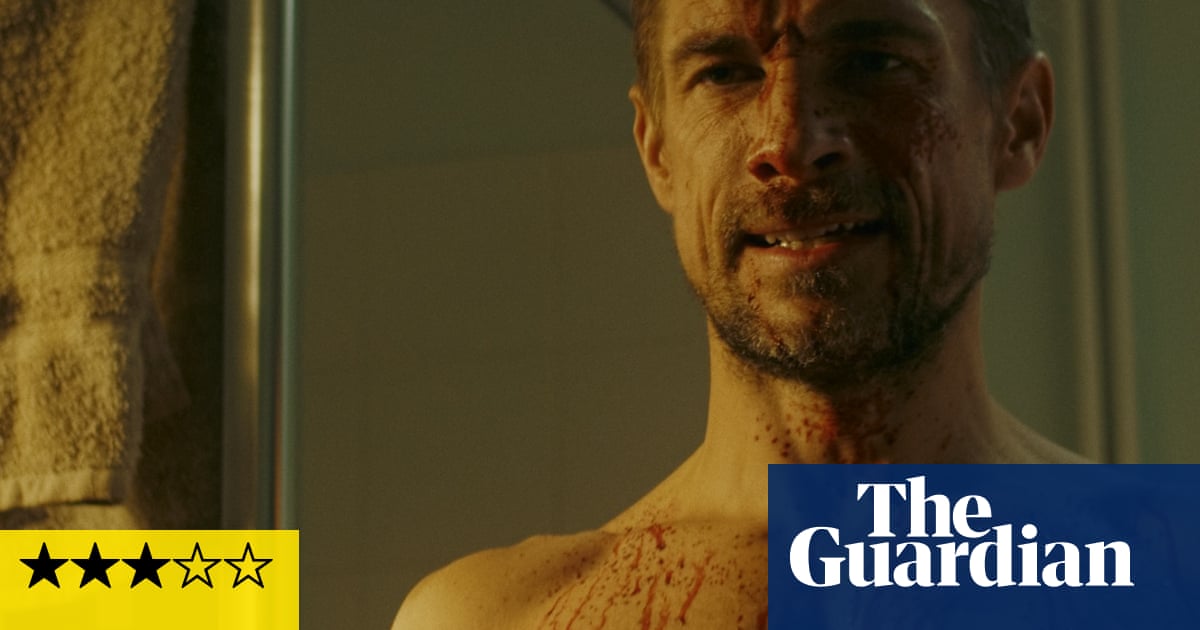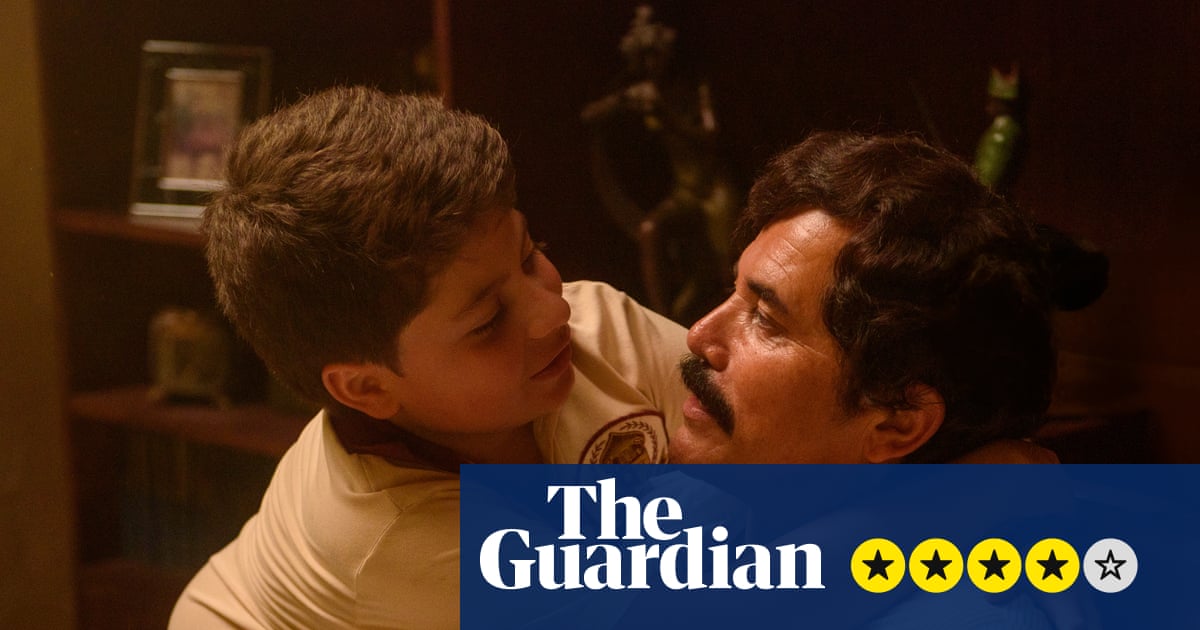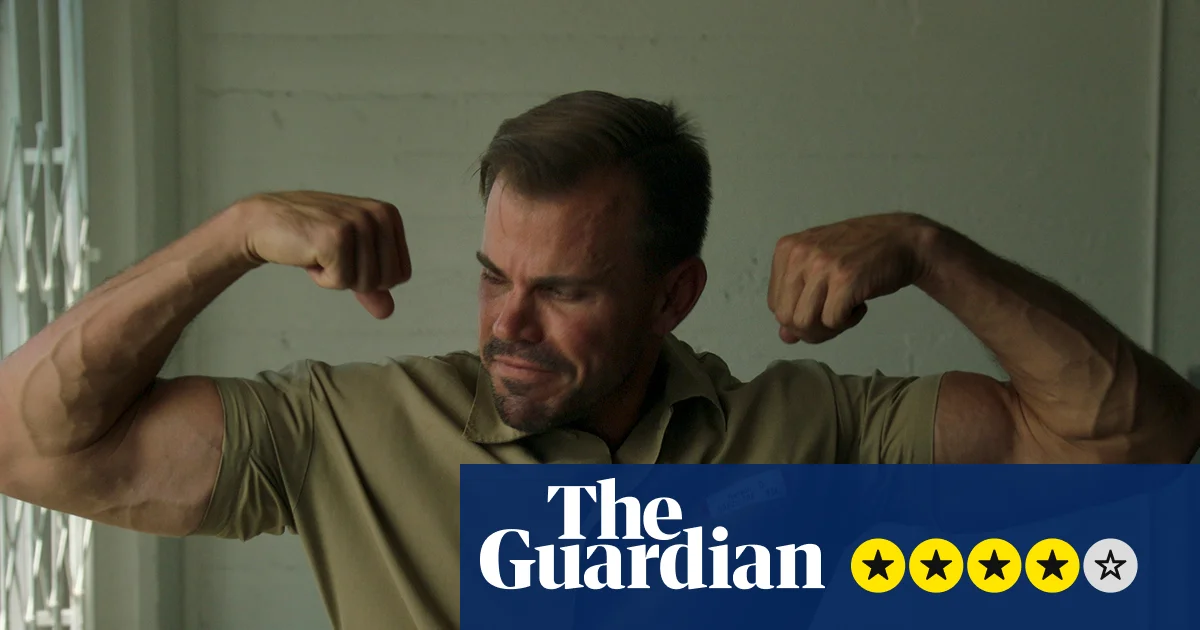
Dressed in a khaki jumpsuit, his face red in a way that suggests recent tears, Owen Hanson describes his life behind bars. On his first day in prison, another inmate gave him a weapon – a “bonecrusher” – and told him to keep it on him at all times. “I’m some fucking surfer kid from Redondo Beach and you’re telling me I have to go to war?!” Hanson says, shakily.This is one of many moments in the first episode of Cocaine Quarterback that makes me deeply sceptical. The three-part docuseries – released under the Prime Video Sports umbrella – tells the story of a college footballer from California turned drug kingpin, but part one feels more like The Owen Hanson Story, as presented by Owen Hanson. Central to the tale is his father’s alcoholism, his parents’ divorce, and his first, faltering forays into pill-smuggling, when he rolled up a bag of steroids in Tijuana and stuffed it down the back of his underwear (“not inside the hole,” he elucidates, “[but] in the crack”). The steroids were for his own use. But soon he would be hawking them to his fellow footballers at the University of Southern California, a place conjured up here via exuberant archive footage of players flinging themselves through the air and marching bands. Before long, Hanson was dealing harder drugs – and working with one of the world’s most dangerous organised crime groups, Mexico’s Sinaloa Cartel. He had, says Alex Cody Foster – the co-author of his memoir – “the hustle mindset”. More than once it is said that he could have been the CEO of a Fortune 500 company had he put his mind to it.‘No more Uggs, mijo’ … Cocaine Quarterback. Photograph: Courtesy of PrimeGladly, Cocaine Quarterback turns out to be more than just an elegy to Hanson’s business acumen. It shares much of its tonal DNA with McMillions, the wry documentary about the McDonald’s Monopoly fraud, also produced by Mark Wahlberg’s Unrealistic Ideas (director Jody McVeigh-Schultz was an editor on that series). As McMillions leaned on larger-than-life characters to tell its tale, so too does Cocaine Quarterback, and the result often feels more mockumentary than documentary. The visuals, too, are frequently droll: reconstructions show dishwashers loaded with cash rather than plates, and phone screens feature pithy messages from the cartel to Hanson. When he gets himself into a pickle in Australia and attempts to send gold bullion back to the US inside furry boots, a text pops up from his bosses: “No more Uggs, mijo.” Elsewhere, MTV Cribs-style images flash up when we learn about the time Hanson gutted his family home (it was, he says, “a dump”), transforming it into a greige mansion complete with $2,000 bottles of tequila on every surface.The main narrative driver here is Hanson’s enduring beef with a professional gambler named Robin Hood 702, who loses the money Hanson says he was supposed to be laundering for him on behalf of the cartel. Robin Hood, AKA Robert Cipriani, denies that this was ever the deal. In any case, he did take $2.5m to a casino, and left with nothing – inadvertently tipping off police and kickstarting a feud with Hanson, who describes him, charmingly, as a “cockroach”, a “maggot” and a “degenerate”. To say that Cipriani comes across as smug and flippant would be an understatement, but Hanson knew how to rile him up. Cue an eccentric private investigator who not only desecrated Cipriani’s mother’s grave, but also Photoshopped a mask-wearing, shovel-holding Hanson into a picture of said grave for extra menace.
Cocaine Quarterback review – true crime shouldn’t be this entertaining
It’s right to be sceptical of college footballer turned drug kingpin Owen Hanson sharing his own story from prison. But huge characters join in to tell a wild, droll tale with the ultimate ending
800 words~4 min read