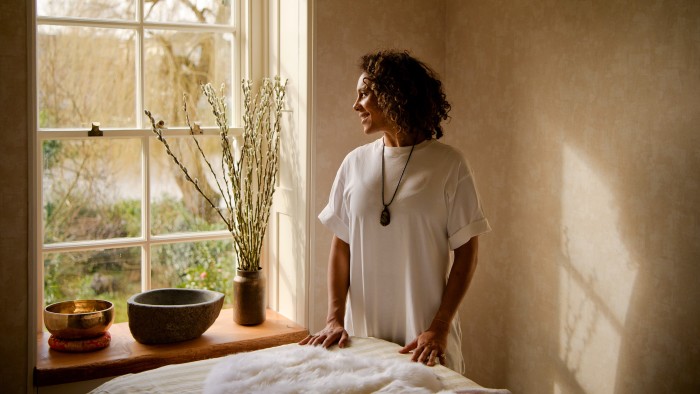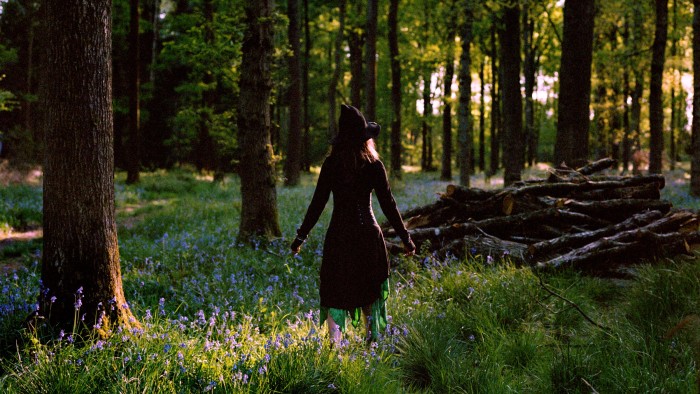
It is just after 9pm on the first Saturday after Beltane and I am in a marquee five miles outside Coventry, dancing with a teenage goth and a 64-year-old warlock while a blue-haired woman with a half-shaved head belts out the refrain “Casting my spelllll!” from a podium in front of us. This year’s Witches Ball – an annual highlight here at the Festival for Pagans & Witches – is in full swing.
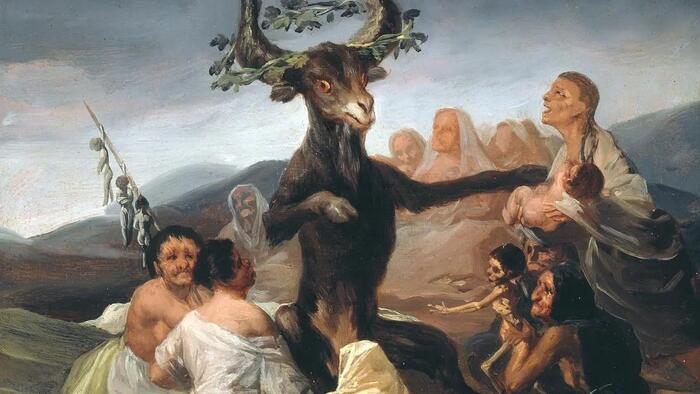
It is an auspicious, though slightly paradoxical, moment to find oneself at such a gathering. While a whole string of regions and states across the world – Scotland, Catalonia, Connecticut and Maryland, among others – have taken steps to exonerate or formally apologise to those accused of, and often executed for, witchcraft several hundred years ago, self-identifying as a witch has never been so popular.
An owl-keeper at the festival © Ellie Ramsden
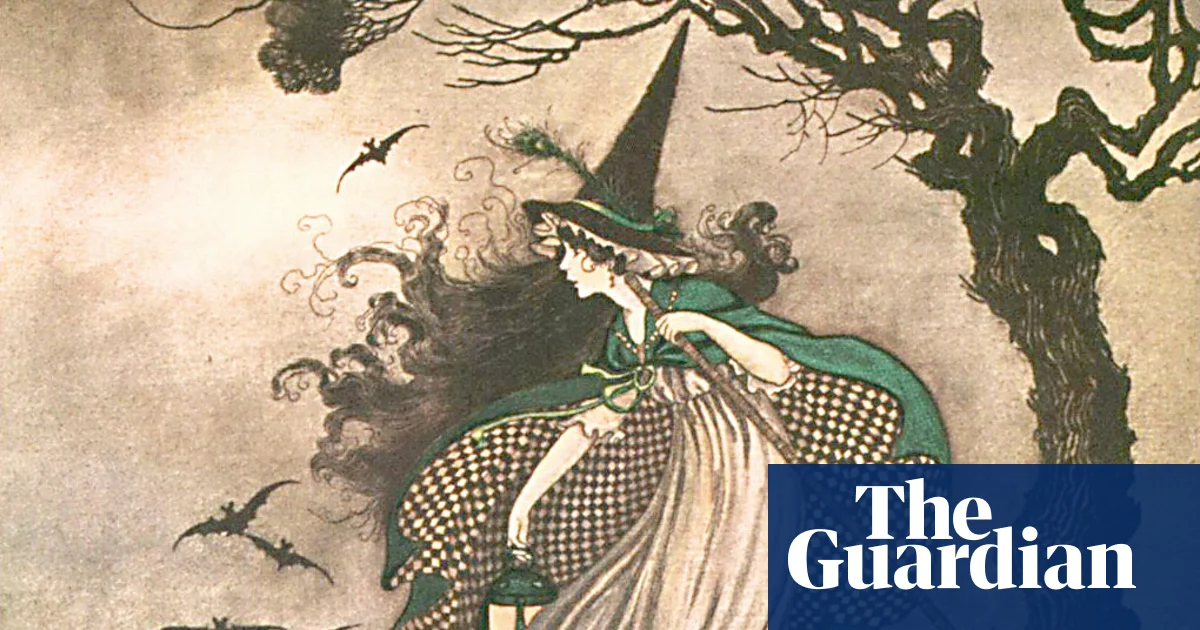
On TikTok, some 9mn #WitchTok posts are available for your scrolling pleasure, where influencers/self-declared witches offer spells, potion recipes, life advice and tips on “deepening your [witch] practice”. And the “witchcore” aesthetic has been taking over not just social media feeds but runways, trendy queer bars and Taylor Swift’s wardrobe. Next year will see Sandra Bullock and Nicole Kidman reunited for Practical Magic 2, reprising their roles from the ’90s, a decade that turned witches into cultural and aesthetic icons via films like The Craft and series such as Charmed. Another ’90s spinoff, Wednesday, about the supernaturally gifted soft-goth Addams daughter, is the highest-streaming show on Netflix.