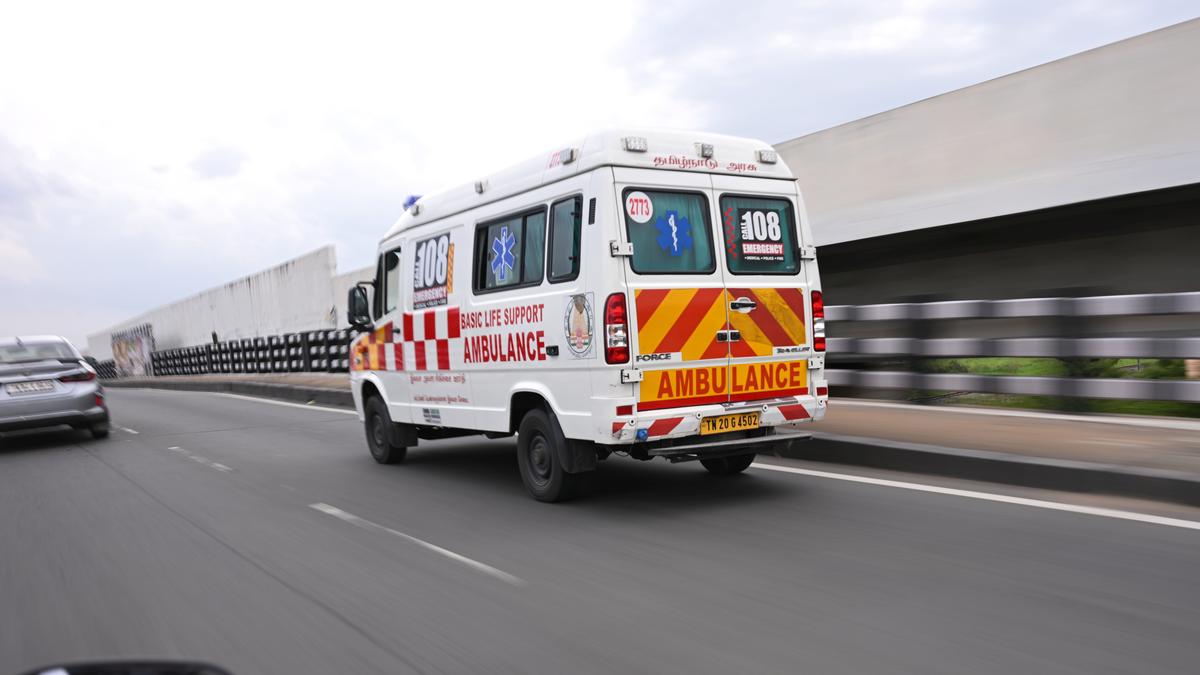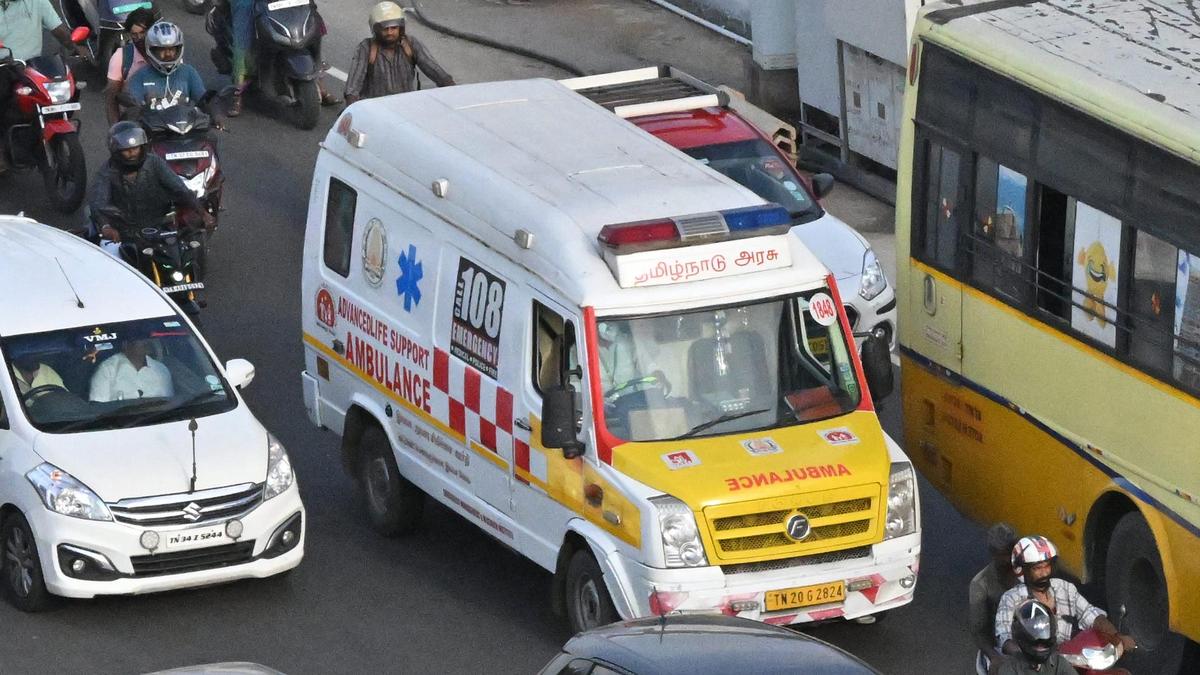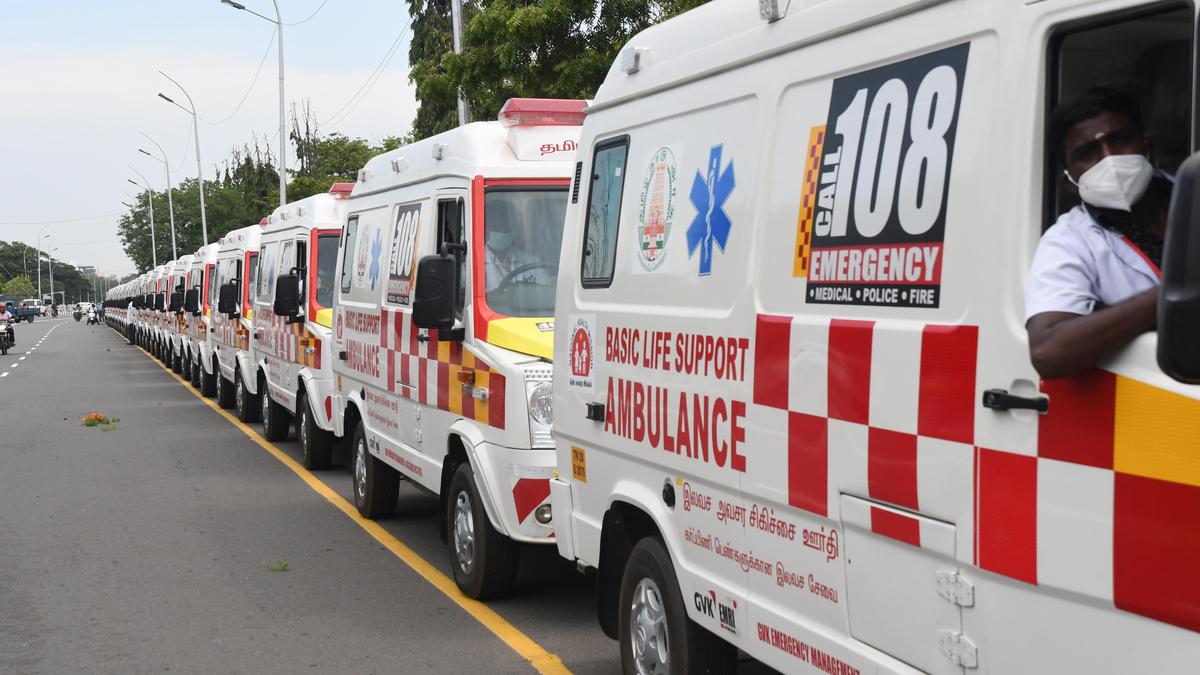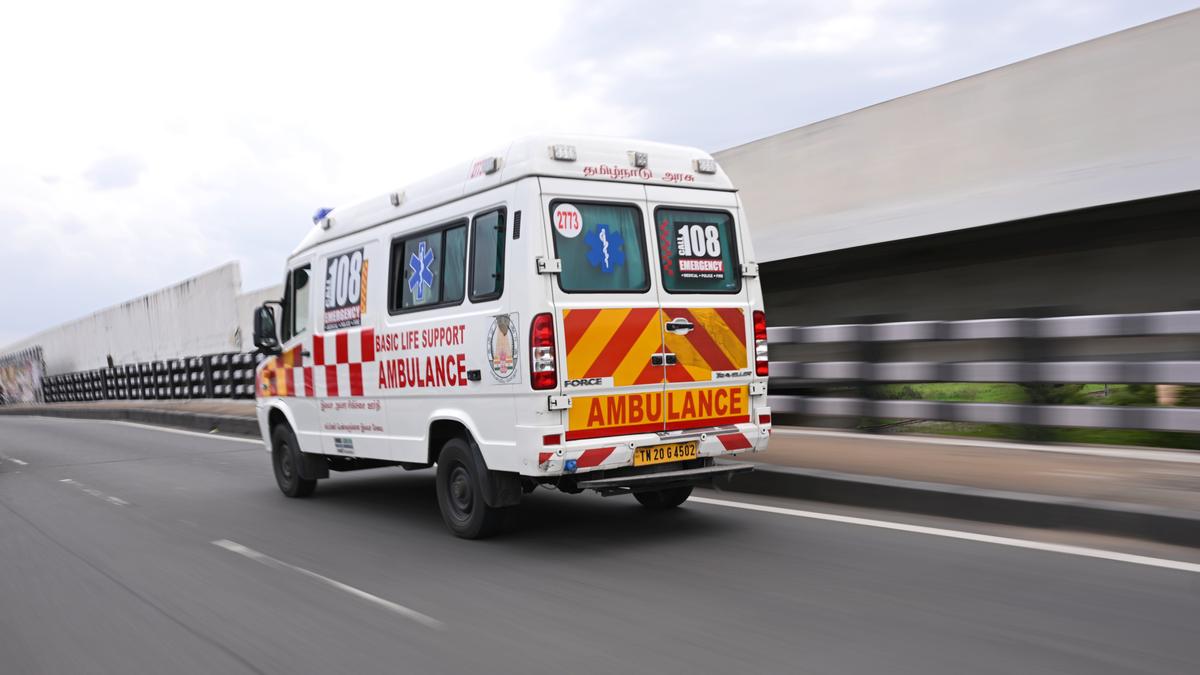
The ‘108’ emergency ambulance service, which was started in 2008 in Tamil Nadu as a Public Private Partnership (PPP) and initially received accolades for its rapid and prompt response system, has come under scrutiny in recent years due to alleged irregularities that put its working model into question.
Akin to other States, the non-profit joint initiative between the Tamil Nadu government and EMRI Green Health Services (formerly GVK EMRI) reportedly enabled a service model that combined public funding with technological support and managerial expertise from private entities, all with the common goal of achieving safe and timely transportation. But has this goal been achieved?
According to researchers and health professionals, the ‘108’ emergency services have enhanced the otherwise dormant Emergency Medical Service (EMS) into a more active one. They said that with the establishment of an integrated network of trauma centres through Government Taluk Hospitals, Primary Health Centres, Urban Primary Health Centres, and the Tamil Nadu Accident and Emergency Care Initiative (TAEI), the EMS has also evolved to meet the needs of a growing population.
However, alongside the evolution of medical health services came the inevitable aspect of profit-seeking.