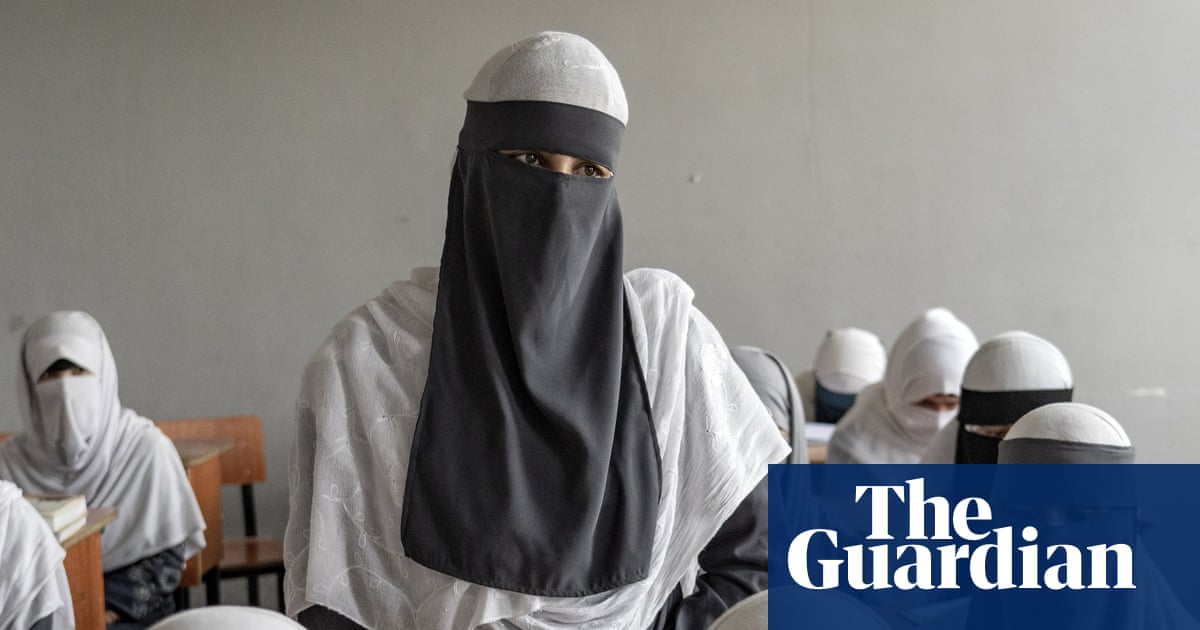
Food handouts and employment are increasingly tied to Afghan families’ agreement to strict Islamic education
When the Taliban returned to power in Afghanistan in August 2021, Nahid, 24, was midway through an economics degree. She had hoped to work in a university after she graduated.
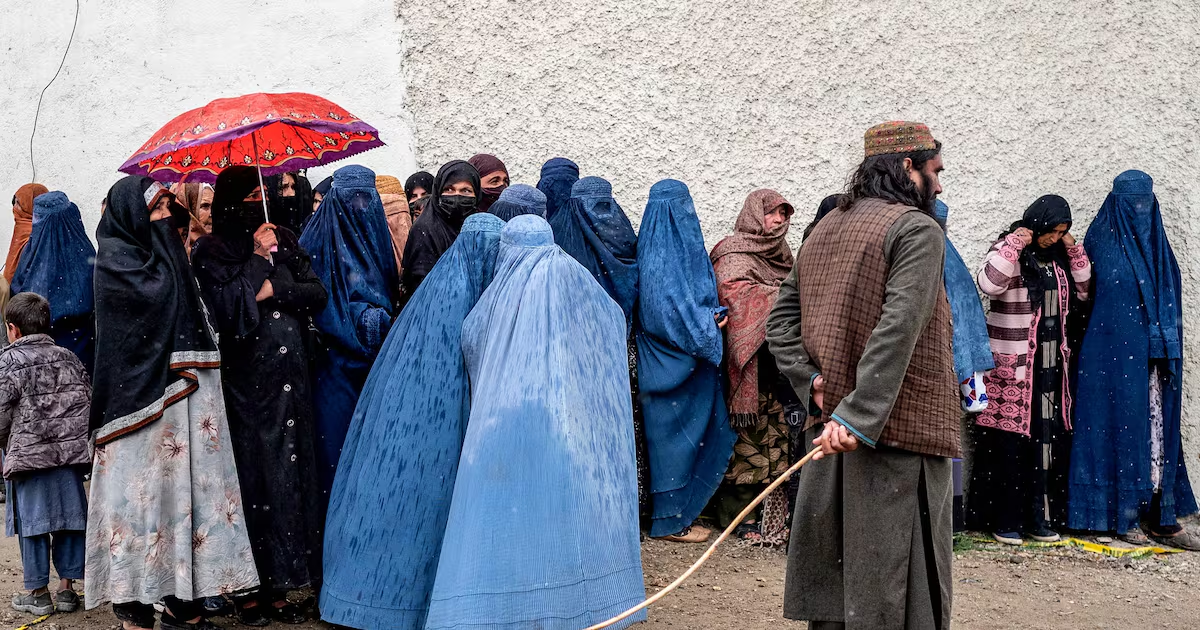
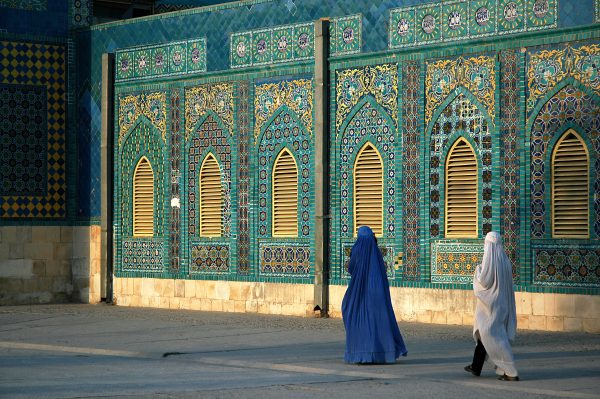
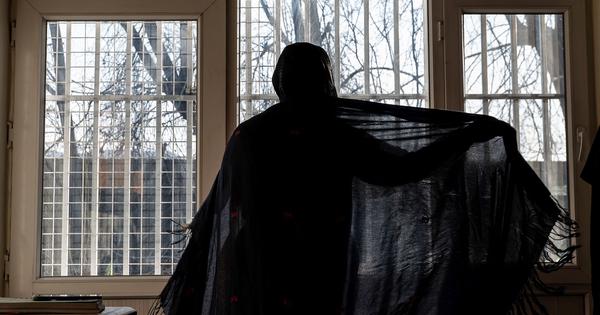
Instead, Nahid now spends her mornings at a religious school in the basement of a mosque in the western city of Herat, sitting on the floor and reciting scripture with 50 other women and girls, all dressed in black from head to toe.
She knows the Taliban is “trying to change women’s minds”, but says she attends the class because, “it’s the only way I can leave my home and fight depression”. The incentive of 1,000 Afghanis (£11) she receives every month also helps.
Nahid’s story is not unusual. A Guardian and Zan Times investigation across eight of Afghanistan’s 34 provinces has revealed the Taliban’s deliberate and calculated efforts to make religious studies the only education option available to women and girls in Afghanistan.